Archive
What Really Counts?

I recently saw this quote attributed to Winston Churchill: “Success is not final; failure is not fatal. It is the courage to continue that counts.”
As I thought about the sentiment behind this quote—that neither success nor failure defines a person, but what truly matters is the determination to keep going—I realized that while the language was inspiring, it wasn’t Biblical and therefore wasn’t true.
Churchill was emphasizing human determination rather than faith in God. He suggested that personal courage is the key to overcoming challenges, but Scripture teaches us that believers should rely on God’s strength rather than their own determination.
“Trust in the Lord with all your heart, and do not lean on your own understanding. In all your ways acknowledge Him, and He will make straight your paths.” Proverbs 3:5-6.
While Churchill’s statement implies that success and failure are transient, believers understand that both are under God’s sovereign control and part of God’s plan for His people.
“He changes times and seasons; He removes kings and sets up kings; He gives wisdom to the wise and knowledge to those who have understanding.” Daniel 2:21.
And lastly, what truly “counts” at the end of life is not courage, but faith in Christ.
“For by grace you have been saved through faith, and this is not your own doing; it is the gift of God, not a result of works, so that no one may boast.” Ephesians 2:8-9.
This is not to say that perseverance isn’t encouraged in the Christian life. Hebrews 12:1-2 says, “Let us run with endurance the race that is set before us, looking to Jesus, the founder and perfecter of our faith, who for the joy that was set before him endured the cross, despising the shame, and is seated at the right hand of the throne of God.”
However, it is only through God’s strength and guidance that believers endure.
What are you counting on when you can no longer count?
The Certainty of Doubt

“I think I figured out who the doubters are.” That’s what a reader emailed me after I released my newest book, Four Doubt.
She followed up that sentence by saying, “But I found more than four doubters in this book. If I counted correctly, there were at least eight. It was like everyone had doubts. Did you realize that?”
I write series, so as a way of making it easy for my readers to know which book to read next, and also as a way of having an author “brand,” I include the number of the book as part of the title.
However, the number also has meaning in the plot of the book. Thus, in this series, the Silas McKay Suspense Series, the number in each of the titles—One Wonders, Two Believe, Three Confess, and Four Doubt, can be linked to certain characters, while also signifying the book order.
For example, in Two Believe, Silas McKay finds it hard to believe in the goodness of God after his wife died of brain cancer. Then, as he and a colleague investigate a robbery, she confesses she doesn’t believe in God. I won’t give any specific spoilers, but by the end of the book, two believe.
The reader who emailed me was right about Four Doubt having a reoccurring theme of doubt running throughout the book. Although the four main characters in the plot expressed doubt of some sort, there were others as well.
The reason doubt was so pervasive among the characters is that I try to make my novels as realistic as possible—in a fictional sort of way, of course—and our culture today is permeated with doubt. We express skepticism toward institutions, government, politicians, medicine, and the list goes on and on. However, doubt isn’t necessarily a bad thing.
There are many instances in Scripture where doubt is expressed, and while Jesus pointed out to his disciples that their doubt showed their lack of faith, he didn’t condemn them for their doubt. Instead, he urged them to believe in Him.
When Silas, the main character in my novel, is asked whether he doubts something, he says, “In my line of work, I never shy away from having doubts. Doubt stems from a desire to know the truth, and if I engage in it, it’s only because I’m pursuing the truth.”
One of the certainties of life is that everyone will experience doubt, but pursuing truth dispels doubt. Where does that search begin?
Jesus said, “I am the way, and the truth, and the life.” John 14:6.
Have no doubt. It begins with Truth himself.
Who Has The Most Credibility?

Credibility. Politicians fake it. Pundits announce it. Actors crave it. Businesses sell it. However, when it comes right down to it, no one does credibility like God does credibility.
I was just about to finish up an interview with a book website about my Titus Ray Thriller series, when I was asked, “What are your credentials to write this series?” The question stumped me for a minute. Were they asking about my experience as a writer? Were they questioning my knowledge of the subject? Were they just wondering if I had enough creativity to write a series of books?
In the end, I answered the question by referring to the premise of the series and how my main character was growing in his faith while working as a covert operative. I decided not to make the case for my own credentials because, quite frankly, I wasn’t sure I could do that.
God, on the other hand, can always do that. He has the credibility. When God comes to the prophet Jeremiah to give him His message to the people of Israel in Jeremiah 33:2, He says, “Thus says the Lord who made the earth, the Lord who formed it to establish it—the Lord is his name.” On what basis does God come to the prophet? He comes as THE ONE who made the earth.
Those are pretty good credentials. In fact, they’re GLORIOUS. The God who created the world around us, the universe and all that’s in it, from the smallest particle to the biggest galaxy, is someone who has credentials. And this is what our God tells Jeremiah to do in Jeremiah 33:4: “Call to me and I will answer you, and will tell you great and hidden things that you have not known.”
With credentials like that, why wouldn’t we?


Book 8 in the Mylas Grey Mystery Series, Click on cover

Book 5 in the Silas McKay Suspense Series, Click on cover

Book 11 in the Titus Ray Thriller Series. Click cover
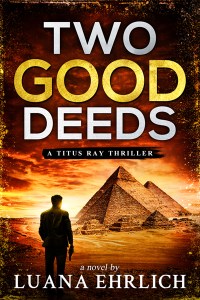
Book 7 in the Mylas Grey Mystery Series on Amazon. Click cover.
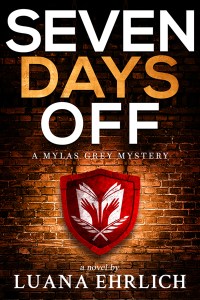
Book 4 in the Silas McKay Suspense Series on Amazon. Click cover.
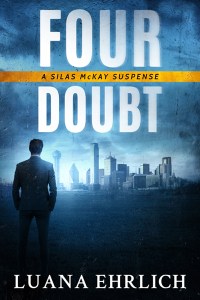
Book 10 in the Titus Ray Thriller Series on Amazon. Click cover.

PREQUEL to the Mylas Grey Mystery Series on Amazon. Click cover

Book VI in the Mylas Grey Mystery Series on Amazon. Click cover

Book III in the Silas McKay Suspense Series on Amazon. Click cover

Book IX in the Titus Ray Thriller Series on Amazon. Click cover

Book V in the Mylas Grey Mystery Series on Amazon. Click cover
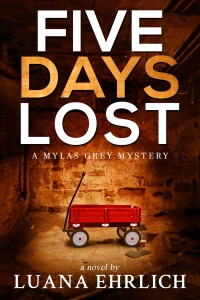
Book II in the Silas McKay Suspense Series on Amazon. Click cover

Book I in the Silas McKay Suspense Series, Available in Winter Deceptions

Ben in Trouble follows Four Steps Missed in the Titus Ray Thriller Series
Book IV in the Mylas Grey Mystery Series on Amazon. Click cover

Book VIII in the Titus Ray Thriller Series on Amazon. Click cover.

Ben in Charge, Follows Three Steps Away in the Titus Ray Thriller Series

Ben in Love, Follows Two Steps Forward in the Titus Ray Thriller Series

Two Days Taken:Book II in the Mylas Grey Mystery Series; Click cover.

Book VII in the Titus Ray Thriller Series on Amazon. Click on book cover

One Day Gone: Book I in the Mylas Grey Mystery Series; Click on Cover

NEWEST BOOK: Available on Amazon. Click on Cover.

Prequel to the Titus Ray Thriller Series is $0.99 on Amazon. Click book cover


Book I in the Titus Ray Thriller Series on Amazon. Click book cover


Book II in the Titus Ray Thriller Series on Amazon. Click on book cover
Book III in the Titus Ray Thriller Series on Amazon: Click on book cover


Book IV in the Titus Ray Thriller Series on Amazon. Click on book cover.


Book V in the Titus Ray Thriller Series on Amazon. Click on book cover.


Book VI in the Titus Ray Thriller Series on Amazon. Click on book cover.


Books 1 & 2 in the Titus Ray Series Available on Amazon. Click on cover.


 His Glory My Joy, a blog of Author Luana Ehrlich
You must be logged in to post a comment.