Archive
Afraid of God?
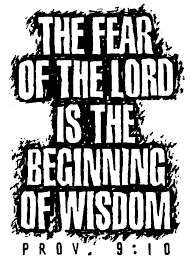 The notion of being afraid of God seems foreign to those of us who view God as the Lover of our Soul, who sing of His blessings, and who trust Him with our eternal soul.
Yet, one can’t read the Bible without encountering the oft-repeated admonition to “fear the Lord.” Throughout the Old Testament, there are numerous examples of God’s children receiving a blessing because they fear God. Also, because of fearing God, they do what He commands them to do. (Genesis 42:18; Exodus 1:17; Exodus 18:21)
Fear of God is not just an Old Testament concept, though. Jesus said in Matthew 10:28, “Don’t be afraid of those who want to kill your body; they cannot touch your soul. Fear only God, who can destroy both soul and body in hell.”
Nevertheless, there are times in my life when I’ve struggled with the concept of what it means to fear God. That’s why, when I recently came across a definition of fearing God in Drew Dyck’s book, Yawning At Tigers: You Can’t Tame God, So Stop Trying, I spent time meditating on it.
Dyck says, “To fear the Lord is to be grounded in reality, to have an accurate view of God’s holy nature and his awesome power.”
Fearing God doesn’t mean we cower in His presence—like a dog who knows he’s displeased his master—nor does it mean we run and hide instead of joyfully approaching Him. Instead, we embrace the fear of God because we recognize His to-be-feared characteristics, such as His all-powerful wrath toward sin, His unending sovereignty, and His unapproachable holiness, are an accurate understanding of who God really is.
The fearfulness of God is a reality, even if we don’t like it very much.
Having a true picture of God is the beginning of wisdom. Proverbs 9:10: “The fear of the LORD is the beginning of wisdom, and the knowledge of the Holy One is insight.”
I live in Norman, Oklahoma. That means I know what’s it’s like to watch a mile-wide tornado approaching my city. It’s a fearful thing. However, if I’m hunkered down inside an indestructible storm shelter, I’m able to be in awe of the storm’s fierceness without fearing for my life.
We should fear God. We should be in awe of His wrath and His judgment. Yet, at the same time, we should have peace, knowing He is shielding us from wrath, sheltering us in His arms forever.
Who’s in Charge?
 As I was viewing posts on a writer’s site describing the results of methods used to advertise a new book’s release, I ran into a common theme–frustration and discouragement.
Some authors lamented their publishers weren’t being aggressive enough in advertising their latest release. Others felt their own methods had failed to generate sufficient sales. Yet, both were engaged in time-tested efforts book publishers usually employed to market books, getting them in the hands–and, thus, the hearts–of readers.
Since all my spy novels are in the Christian fiction category, what interested me most about these posts were comments by Christian authors. Several of them posted they had felt led of the Lord to write their book, yet many posted they weren’t happy about they way the book was selling. Did that mean they felt He wasn’t in command of how their book was selling, even though God had been in charge of writing their book?
Sometimes, when it appears God is leading us in one direction and we commit to that course of action, the results are not what we anticipated. We expected success, and we experienced failure–or, at least, less than successful results.
I believe this is a common misconception when it comes to feeling led of the Lord to do something.
Just because I felt led of the Lord to initiate a project, support a cause, or engage in some personal pursuit, and His hand was on me in the doing of it, that doesn’t mean, when it comes to the results, I’m suddenly in charge.
God is still in charge when it comes to all outcomes–not me and not you. Proverbs 16:9, “The heart of man plans his way, but the Lord establishes his steps.”
This is a common theme throughout the Scriptures, but as self-sufficient, self-determining human beings, we failed to remember or perhaps just refuse to heed, what the Lord is saying to us on the subject of who’s in charge.
Isaiah 55:8-11, “For my thoughts are not your thoughts, neither are your ways my ways . . . it shall accomplish that which I purpose, and shall succeed in the thing for which I sent it.”
What are your plans today? Will God be responsible for the results or will you decide to assign the blame–or maybe even the credit–to yourself?
Are You Tired of Waiting?
 Not long ago, as I was dealing with some of my dad’s health issues, I spent several hours in various doctors’ offices, imaging centers, and hospitals. Most of my time in those places was spent in a waiting room.
During one long day, I found myself thinking about all the times I’ve been in God’s Waiting Room.
God’s Waiting Room is a place familiar to all praying believers. Those who petition the Father for answers, for relief, for deliverance, for guidance, and for comfort often find such requests are not answered immediately. That’s why God designed His Waiting Room.
If the waiting goes on for months, even years, God’s Waiting Room can become a place of discontentment, anger, frustration, and unbelief.
I know. It’s happened to me. Don’t let it happen to you.
I’ve learned that waiting on God doesn’t have to be unbearable as long as I follow the same basic principles I follow when waiting on a loved one in a hospital waiting room.
1. Don’t wait alone. Waiting is always easier if the wait is shared.
2. Find something to do while waiting. Occupying body, mind, and spirit makes the wait easier.
3. Encourage others as you wait. Empathy for others who may be going through similar circumstances lightens your burden and blesses your soul.
4. Recognize God has a sovereign purpose in the length of your wait. Waiting is no different from anything in your life—God is working all things for His Glory and your benefit.
Those willing to wait on God are given a special promise. It’s found in Isaiah 64:4: “No eye has seen a God like you, who works for those who wait for him.”
While you’re in God’s Waiting Room, He’s out there working for you.
Keep on waiting.
Trust Isn’t To Be Trusted
 Placing trust in someone doesn’t mean they are trustworthy. Trusting a chair to hold you up doesn’t mean it’s sturdy enough to do the job of bearing your weight. Trust must have a basis. Otherwise, it’s not to be trusted.
Trust is a word that’s being discussed a lot these days. That’s probably why I was intrigued by a story about trust in the Old Testament.
Without getting too caught up in the details, here’s the background: The King of Assyria sends an army to fight the Israelites led by King Hezekiah. When the envoy from the King of Assyria arrives outside the gates of Jerusalem with a huge army, he has a message for King Hezekiah.
“Say to Hezekiah, ‘Thus says the great king, the king of Assyria: On what do you rest this trust of yours?'” 2 Kings 18:19
“On what do you rest this trust of yours?” Hezekiah rested his trust in the Lord. His trust was in the Almighty God, the God of his fathers, his Creator. He trusted Him for deliverance rather than an army of thousands. This was a trust to be trusted.
Hezekiah demonstrated his trust by praying for deliverance to a trustworthy God. “O Lord … you are the God, you alone, of all the kingdoms of the earth.”
Hezekiah’s trust was well-placed. God delivered the Israelites from the Assyrian army in a miraculous way (2 Kings 18-20).
One of Hezekiah’s ancestors, King Solomon, left instructions about how to trust the Lord. Those instructions are found in Proverbs 3:5-6. They involve two commands. 1) Don’t rely on your own understanding and 2) Acknowledge the Lord’s right to control your life.
“Trust in the Lord with all your heart, and do not lean on your own understanding. In all your ways acknowledge him, and he will make your path straight.”
“On what do you rest this trust of yours?”
Lost Your Way?
 It’s easy to lose your way in the world. Our modern world has a myriad of paths from which to choose, and we can explore them all, saturating ourselves with facts and philosophies and desires and practices and beliefs.
However, like hikers exploring a new trail, there are some precautions we should take before we head off into the unknown. Otherwise, we’re sure to lose our way. These practices should serve us well, whether we’re looking at a belief system, a career choice, a new set of friends or anything requiring our time, money, and effort.
First, FIND a way to have a Daily Quiet Time
Spend at least thirty minutes every day in Bible study and prayer. It doesn’t matter how you do this. There’s a Bible reading plan out there that will match up with anyone’s learning style and preferences. The important thing is to put yourself in a position where your Father in heaven can communicate His love, His plan, and His desires for you, and in return, you can catch a glimpse of His Glory.
Second, FIND a way to meet with others to worship God
Praising, loving, and serving God with other people will strengthen and enhance an individual’s faith. However, being with others in a faith-based group isn’t always about the individual’s needs. It’s about a people who together desire to give glory, honor and praise to an Almighty Creator who sacrificed His only son to make such a relationship possible.
Third, FIND a way to express your faith
Our belief in God requires an outlet. Otherwise, stagnation sets in. This expression can take many forms, and it may be different according to personality types. For some, it may mean singing, speaking, teaching or preaching. For others, it may mean journaling, writing, serving, or counseling.
Jeremiah 6:16: “Thus says the Lord: Stand by the roads, and look, and ask for the ancient paths, where the good way is; and walk in it, and find rest for your souls.”
What In The World Is God Doing?
 Often, God’s work in our lives seems hidden, a barely discernible matter. That’s true in the life of an individual, the life of a church, and especially in the world itself. Yet, the Bible assures believers this is simply not the case. God is doing something in all areas of our life, our church, and the world. He’s doing it all the time.
So, what is God doing when we can’t see what He’s doing?
When God made His presence known to Moses through the flame shooting up from the non-burning bush, He told Moses what had been going on with Him while the children of Israel were suffering under the oppression of the Egyptian pharaoh. God said, “I have surely seen the affliction of my people who are in Egypt and have heard their cry because of their taskmasters. I know their sufferings” (Exodus 3:7).
That’s what God was doing then. That’s what God is doing now. He’s doing it in your life and He’s doing it in my life. He’s doing it throughout the world today.
God told Moses He “had surely seen.” Nothing escapes His attention. He sees it all. From the beheadings in the Middle East to the hairs on my head, not one thing gets past God. He’s observing every minutiae and every big thing.
God said He “had heard.” Not one word coming from my mouth escapes God’s ears. He hears my sweet words as well as my harsh words. He hears what your boss utters as well as what you utter about your boss. He hears words of profanity and words of praise. His ears are never closed; He hears it all.
“I know,” God said. God is aware, thoroughly knowledgeable, about me. That means He is completely cognizant of my every thought, my every motive, my every desire, my every sin, my every . . . my everything. This is true of a church body. This is true of a family, This is true of a nation. This is true of our universe.
When God told Moses what was going on with Him, He did so, not to instill fear, but to give Moses comfort. Moses was afraid of God, so God wanted to reassure Moses that the manifestation of His presence wasn’t to be feared. God described what He was up when He spoke from the midst of a flame in a non-burning bush. God did it again when He spoke in the form of His Son Jesus. “The Word became flesh and dwelt among us” (John 1:14).
We can be comforted by what’s going on with God both now and in the future. God not only told Moses what He was doing in the present, He also told Moses what He was about to do for His children. “I have come down to deliver them” (Exodus 3:8).
God will do the same for His children today. “Yes, I am coming soon” (Revelation 22:20).
Fear The Lord!
The notion of being afraid of God seems foreign to those of us who view God as the Lover of our Soul, who sing of His blessings, and who trust Him with our eternal soul.
Yet, one can’t read the Bible without encountering the oft-repeated admonition to “fear the Lord.” Throughout the Old Testament, there are numerous examples of God’s children receiving a blessing because they fear God. Also, because of fearing God, they do what He commands them to do. (Genesis 42:18; Exodus 1:17; Exodus 18:21)
Fear of God is not just an Old Testament concept, though. Jesus said in Matthew 10:28, “Don’t be afraid of those who want to kill your body; they cannot touch your soul. Fear only God, who can destroy both soul and body in hell.”
Nevertheless, there are times in my life when I’ve struggled with the concept of what it means to fear God. That’s why, when I recently came across a definition of fearing God in Drew Dyck’s book, Yawning At Tigers: You Can’t Tame God, So Stop Trying, I spent time meditating on it.
Dyck says, “To fear the Lord is to be grounded in reality, to have an accurate view of God’s holy nature and his awesome power.”
Fearing God doesn’t mean we cower in His presence—like a dog who knows he’s displeased his master—nor does it mean we run and hide instead of joyfully approaching Him. Instead, we embrace the fear of God because we recognize His to-be-feared characteristics, such as His all-powerful wrath toward sin, His unending sovereignty, and His unapproachable holiness, are an accurate understanding of who God really is.
The fearfulness of God is a reality, even if we don’t like it very much.
Having a true picture of God is the beginning of wisdom. Proverbs 9:10: “The fear of the LORD is the beginning of wisdom, and the knowledge of the Holy One is insight.”
I live in Norman, Oklahoma. That means I know what’s it’s like to watch a mile-wide tornado approaching my city. It’s a fearful thing. However, if I’m hunkered down inside an indestructible storm shelter, I’m able to be in awe of the storm’s fierceness without fearing for my life.
We should fear God. We should be in awe of His wrath and His judgment. Yet, at the same time, we should have peace, knowing He is shielding us from wrath, sheltering us in His arms forever.
Had Any Surprises Lately?

Christmas is a season of the year when we think about surprises—parents surprising their children, children surprising their parents, friends surprising each other—but God is a God of surprises throughout the year.
God reveals Himself in Scripture as a God who loves surprises. Throughout the Old Testament, God manifests Himself in surprising ways, He chooses surprising people, He acts in surprising circumstances.
God Manifests Himself in Surprising Ways:
- A burning bush
- A whirlwind
- A bunch of dry bones
- A barren womb
God Chooses Surprising People:
- An idol worshiper
- A murderer
- A con man
- A shepherd boy
- A prostitute
God Acts in Surprising Circumstances:
- A Flood
- A Battlefield
- A Famine
- A Murder
In the New Testament, God Himself becomes the surprise. From His birth announcement, His earthly life, His horrible death, and His anticipated return, it’s one surprise after another.
His Birth Announcement Surprised:
- His mother Mary
- His father Joseph
- The shepherds
- King Herod
His Earthly Life Brought Surprising:
- Miracles
- Teachings
- Revelations
His Horrible Death Surprised:
- The Disciples
- The Unbelievers
- The Roman Soldiers
His Anticipated Return Will Surprise:
- The Unprepared
- The Uninformed
- The Unbeliever
How will God surprise you in 2016? It could be a way in the wilderness or a river in the desert. “Behold, I am doing a new thing; now it springs forth, do you not perceive it? I will make a way in the wilderness and rivers in the desert.” Isaiah 43:19.
God will surprise you. Anticipate it. Look for it. Embrace it.
3 Things Make Life Better
 I love the story of the little girl whose mother found her crying in the kitchen. When her mother asked her what was wrong, she said, “I’m in the kitchen, but I still don’t know how to cook.” Her mother put her up on a kitchen stool and proceeded to help her bake some cookies. Later, as they munched on the delicacies, the little girl observed, “If I let you do it, I can do anything.”
There are times when I’m standing in the middle of life, and I suddenly realize I don’t know how to live. That’s when I try to remember to do these three things. By doing so, I feel as if I can do anything.
1. Ask God to take over.
There’s a popular song entitled “Jesus Take The Wheel.” It’s almost comical to think of Jesus of Nazareth in a long white robe and dusty sandals sitting in the driver’s seat and tooling along the highway of life with me in the passenger seat. However, while the picture may be amusing, the concept is theologically sound. John 16:33, “I have said these things to you, that in me you may have peace. In the world you will have tribulation. But take heart; I have overcome the world.” You can have peace; He’s overcome all the obstacles. Trust Him.
2. Allow others to help you.
It’s an all-American ideal to “make it on our own” or to “act independently,” but, that’s not a Biblical concept. When Paul speaks of believers in Christ, he describes each one as part of a whole. In fact, he sees this whole as if it were a human body. He says in 1 Corinthians 12:14, “the body is not one member, but many.” When I ask help from a fellow believer, I’m functioning in the way God intended His Spiritual body on earth to function.
3. Accept the personality God gave you.
Are you an introvert? Then don’t expect to live as an extrovert. Do you enjoy talking? Then don’t expect to stay silent. God says in Psalm 17, “You are the apple of my eye,” and in Isaiah 44:2, “This is what the LORD says– he who made you, who formed you in the womb, and who will help you:” Perhaps the best passage for understanding the hand of God upon the life of every individual is Psalm 139. The message in these verses is that God made you the way you are, and you glorify Him when you accept this truth.
Ask God.
Allow Others.
Accept Yourself.
Remember this pyramid with God at the pinnacle. “I can do all things through Christ who gives me strength.” Philippians 4:13.
Four Pieces Of Advice
 It’s that time of year when news organizations show clips of famous people giving speeches at graduation ceremonies. Some are funny. Some are practical. Some are full of platitudes. But, perhaps not surprisingly, most of the words won’t be remembered beyond the graduate’s walk across the stage.
That’s tragic because most college graduates could use some advice as they prepare to paddle their own boat across the ocean called life. Graduates who are professing Christians should be particularly concerned as they seek to discern the will of God about their future, and they should be wary of equating the secular principles of living the American Dream to the principles found in God’s Word, especially when it comes to what their future accomplishments should look like.
Here are four things I would tell a college graduate–or anyone for that matter–about measuring success in God’s Kingdom.
1. Your greatest asset isn’t your own abilities. While you may have been told all you need to do is work hard and keep on keeping on, don’t believe it. Your greatest asset is your utter dependence on God. “Apart from me, you can do nothing.” John 15:5.
2. While our sinful nature is bent toward making much of ourselves and looking out for our own interests, the gospel tells us to make much of Jesus and look out for His Kingdom. “But seek first the kingdom of God and his righteousness, and all these things will be added to you.” Matthew 6:33.
3. There’s no blueprint, formula, or method out there which will enable you to gauge what God is doing in your life. It simply doesn’t exist. If it did, you wouldn’t rely on God when He takes you to places you wouldn’t ordinarily go and has you do things you aren’t equipped to handle. God is too delighted in seeing your faith grow to tell you what He’s up to. Most of what He’s doing can only be understood through a rearview mirror. “For we walk by faith, and not by sight.” 2 Corinthians 5:7.
4. If God’s Word is any gauge of how God operates–and it most definitely is–then He uses the weak, the nobody, the frightened soul, the lowly, and the despised to be a blessing and give Him glory. If you’re willing to be a piece of clay in the potter’s hands, He’s willing to fashion you into a beautiful vessel for His Kingdom’s work. “But now, O Lord, you are our Father; we are the clay, and you are our potter.” Isaiah 64:8.


Book 8 in the Mylas Grey Mystery Series, Click on cover

Book 5 in the Silas McKay Suspense Series, Click on cover

Book 11 in the Titus Ray Thriller Series. Click cover

Book 7 in the Mylas Grey Mystery Series on Amazon. Click cover.

Book 4 in the Silas McKay Suspense Series on Amazon. Click cover.

Book 10 in the Titus Ray Thriller Series on Amazon. Click cover.

PREQUEL to the Mylas Grey Mystery Series on Amazon. Click cover

Book VI in the Mylas Grey Mystery Series on Amazon. Click cover

Book III in the Silas McKay Suspense Series on Amazon. Click cover

Book IX in the Titus Ray Thriller Series on Amazon. Click cover

Book V in the Mylas Grey Mystery Series on Amazon. Click cover

Book II in the Silas McKay Suspense Series on Amazon. Click cover

Book I in the Silas McKay Suspense Series, Available in Winter Deceptions

Ben in Trouble follows Four Steps Missed in the Titus Ray Thriller Series

Book IV in the Mylas Grey Mystery Series on Amazon. Click cover

Book VIII in the Titus Ray Thriller Series on Amazon. Click cover.

Ben in Charge, Follows Three Steps Away in the Titus Ray Thriller Series

Ben in Love, Follows Two Steps Forward in the Titus Ray Thriller Series

Two Days Taken:Book II in the Mylas Grey Mystery Series; Click cover.

Book VII in the Titus Ray Thriller Series on Amazon. Click on book cover

One Day Gone: Book I in the Mylas Grey Mystery Series; Click on Cover

NEWEST BOOK: Available on Amazon. Click on Cover.

Prequel to the Titus Ray Thriller Series is $0.99 on Amazon. Click book cover


Book I in the Titus Ray Thriller Series on Amazon. Click book cover


Book II in the Titus Ray Thriller Series on Amazon. Click on book cover

Book III in the Titus Ray Thriller Series on Amazon: Click on book cover


Book IV in the Titus Ray Thriller Series on Amazon. Click on book cover.


Book V in the Titus Ray Thriller Series on Amazon. Click on book cover.


Book VI in the Titus Ray Thriller Series on Amazon. Click on book cover.


Books 1 & 2 in the Titus Ray Series Available on Amazon. Click on cover.


 His Glory My Joy, a blog of Author Luana Ehrlich
You must be logged in to post a comment.