What Really Counts?

I recently saw this quote attributed to Winston Churchill: “Success is not final; failure is not fatal. It is the courage to continue that counts.”
As I thought about the sentiment behind this quote—that neither success nor failure defines a person, but what truly matters is the determination to keep going—I realized that while the language was inspiring, it wasn’t Biblical and therefore wasn’t true.
Churchill was emphasizing human determination rather than faith in God. He suggested that personal courage is the key to overcoming challenges, but Scripture teaches us that believers should rely on God’s strength rather than their own determination.
“Trust in the Lord with all your heart, and do not lean on your own understanding. In all your ways acknowledge Him, and He will make straight your paths.” Proverbs 3:5-6.
While Churchill’s statement implies that success and failure are transient, believers understand that both are under God’s sovereign control and part of God’s plan for His people.
“He changes times and seasons; He removes kings and sets up kings; He gives wisdom to the wise and knowledge to those who have understanding.” Daniel 2:21.
And lastly, what truly “counts” at the end of life is not courage, but faith in Christ.
“For by grace you have been saved through faith, and this is not your own doing; it is the gift of God, not a result of works, so that no one may boast.” Ephesians 2:8-9.
This is not to say that perseverance isn’t encouraged in the Christian life. Hebrews 12:1-2 says, “Let us run with endurance the race that is set before us, looking to Jesus, the founder and perfecter of our faith, who for the joy that was set before him endured the cross, despising the shame, and is seated at the right hand of the throne of God.”
However, it is only through God’s strength and guidance that believers endure.
What are you counting on when you can no longer count?
It Doesn’t Make Sense

A newly remodeled house burns to the ground. A long-awaited child is stillborn. A businessman dies on the day he retires.
It doesn’t make sense.
Abraham waiting twenty-five years before his promised child is born. A chosen people suffering in slavery 400 years before freedom comes.
It doesn’t make sense.
The son of God becomes a man and lives among His creation. His creation despises and rejects Him.
It doesn’t make sense.
The One who never sinned takes on the sin of all mankind. Their punishment becomes his punishment.
It doesn’t make sense.
No, God’s ways don’t always make sense, and neither should our response.
Habakkuk, an Old Testament prophet, didn’t understand what God was doing, but after voicing his confusion, this was his response. “Though the fig tree should not blossom, nor fruit be on the vines, the produce of the olive fail, and the fields yield no food, the flock be cut off from the fold, and there be no herd in the stalls, yet I will rejoice in the Lord; I will take joy in the God of my salvation.” Habakkuk 3:17-18.
When God doesn’t make sense, we are to rejoice in the Lord.
No, it doesn’t make sense, but as Paul said, “What is seen is temporary, but what is unseen is eternal.”
2 Corinthians 4:18.
Eternity, when all will make sense.
A Most Unusual Christmas

No matter what age you are, you probably have a Christmas tale about a sad Christmas, one that didn’t go exactly as planned, one that was disappointing, one that was so sorrowful you can’t think about it without the tears flowing.
Or you may have a Christmas tale about a happy Christmas, one where someone surprised you with an unexpected gift, one where you reconciled with a loved one, one where everyone loved the gifts you bought them, or one where you had enough money to buy someone the gift they wanted but didn’t think they’d get.
Some of you may even have a Christmas tale about an unusual Christmas, one where events unfolded in a non-traditional way, so much so that you can remember the circumstances as if they happened yesterday.
I’ve had all of the above, and although space—and my introverted personality—doesn’t lend itself to reciting the details of each situation, here’s a partial list of my most unusual Christmases.
- A Christmas morning when a family member had a kidney stone, and we had to spend the entire day in the ER.
- A Christmas when an ice storm struck so no family members were able to make it to our house to participate in our gift-giving and holiday meal together.
- A Christmas Day when my husband, young daughter, and I had to travel to a foreign country where we would be living for the next three years—a frightening and very lonely day.
- A Christmas Eve when I had to call an ambulance for my husband, who thought he was having a heart attack. In the ER, we learned it was acute pancreatitis, and he ended up spending the next three months hooked up to an IV.
Although it may be hard to believe, I could list several more unusual Christmases during my lifetime. But strangely enough, in all of these circumstances, I found peace by focusing on the most unusual day in all of human history—the First Christmas Day—the day God arrived on planet Earth in a human body.
It was a day like no other day, an unusual day, a unique day, a day we should celebrate even if our Christmas Day ends up being sad, happy, or unusual.
Jesus tells us why in His own words. “I have come into the world as light, so that whoever believes in me may not remain in darkness.” John 12:46.
Choose to Chuckle

During our college days, my husband and I befriended Benjamin, a student from Lagos, Nigeria, who traveled halfway around the world to attend a Baptist college in East Texas after becoming a believer through the witness of some Baptist missionaries.
Benjamin, who was the son of a tribal witch doctor, was at least fifteen years older than we were, and he seemed much wiser. His wisdom came from years of lived experiences, and he wasn’t shy about sharing those stories with us, something we encouraged him to do whenever we invited him to have a meal with us.
Decades later, many of his stories still have an impact on my life, primarily because the culture he grew up in was so different from my own, so consequently, his perspective caused me to look at the world and my faith through a different lens.
One of my favorite stories was the one he told us about the time he and his best friend were on their way to another village and were attempting to cross a flooded river. He described the difficulty he had in making it across, and then he told us how anxious he felt when he saw his friend fighting the current, eventually going under, but then emerging a little later and grabbing a tree branch along the riverbank.
Benjamin began laughing as he got to this part of the story, so we assumed it had a happy ending, but then he said, “But as God would have it, the branch broke off, and my friend drowned.”
When we questioned him about why he laughed even though he must have felt sad at the loss of his friend, he said, “In my culture, when something is so sad that you can’t cry about it, then we choose to laugh. Choosing to laugh will eventually overcome your sadness.”
I’ve often remembered Benjamin’s advice during difficult periods in my life, and each time I’ve followed his advice and chosen laughter to get me through the rough patch, I’ve always found it made the situation better.
I was reminded of this as I was reading some verses from the Bible this week about joy, and I came across some similar advice from the writer of Proverbs.
Proverbs 17:22 says, “A joyful heart is good medicine, but a crushed spirit dries up the bones.”
Are you going through a hard time?
Choose to chuckle.
I believe you’ll find it’s good medicine.
Need Comfort?

Body language experts are on the news a lot these days. Because it’s an election season, they’re asked to interpret the subtle, nonverbal cues that give insight into a political candidate’s feelings.
One particular observation got my attention recently, because I had never heard anyone put a name to certain gestures a speaker makes, like clutching hands together, putting hands to the face, or massaging an arm. Body language experts call these “comfort gestures.”
Such actions serve to soothe the speaker and indicate the person is feeling anxious, stressed, or uncertain. One expert says that everyone has these “self-comforting movements,” which we all engage in many times during our day.
Although we may not be aware of how often we feel the need to comfort ourselves, the Bible is full of verses that address our universal need for comfort. I immediately thought of several, which made me curious, so I did an internet search and discovered over 100 verses that either mention comfort directly or describe how God provides comfort to us. Bible verses that speak of how God comforts us.
Here’s one of my favorites: “Now may our Lord Jesus Christ himself, and God our Father, who loved us and gave us eternal comfort and good hope through grace, comfort your hearts and establish them in every good work and word.”
2 Thessalonians 2:16-17.
This verse tells me that Jesus Christ himself will comfort our hearts, and He does so on the basis of His love for us, a love that caused him to give “his life for us, that whoever believes in him should not perish, but have everlasting life.” John 3:16.
Now that’s comforting!
The Certainty of Doubt

“I think I figured out who the doubters are.” That’s what a reader emailed me after I released my newest book, Four Doubt.
She followed up that sentence by saying, “But I found more than four doubters in this book. If I counted correctly, there were at least eight. It was like everyone had doubts. Did you realize that?”
I write series, so as a way of making it easy for my readers to know which book to read next, and also as a way of having an author “brand,” I include the number of the book as part of the title.
However, the number also has meaning in the plot of the book. Thus, in this series, the Silas McKay Suspense Series, the number in each of the titles—One Wonders, Two Believe, Three Confess, and Four Doubt, can be linked to certain characters, while also signifying the book order.
For example, in Two Believe, Silas McKay finds it hard to believe in the goodness of God after his wife died of brain cancer. Then, as he and a colleague investigate a robbery, she confesses she doesn’t believe in God. I won’t give any specific spoilers, but by the end of the book, two believe.
The reader who emailed me was right about Four Doubt having a reoccurring theme of doubt running throughout the book. Although the four main characters in the plot expressed doubt of some sort, there were others as well.
The reason doubt was so pervasive among the characters is that I try to make my novels as realistic as possible—in a fictional sort of way, of course—and our culture today is permeated with doubt. We express skepticism toward institutions, government, politicians, medicine, and the list goes on and on. However, doubt isn’t necessarily a bad thing.
There are many instances in Scripture where doubt is expressed, and while Jesus pointed out to his disciples that their doubt showed their lack of faith, he didn’t condemn them for their doubt. Instead, he urged them to believe in Him.
When Silas, the main character in my novel, is asked whether he doubts something, he says, “In my line of work, I never shy away from having doubts. Doubt stems from a desire to know the truth, and if I engage in it, it’s only because I’m pursuing the truth.”
One of the certainties of life is that everyone will experience doubt, but pursuing truth dispels doubt. Where does that search begin?
Jesus said, “I am the way, and the truth, and the life.” John 14:6.
Have no doubt. It begins with Truth himself.
What Can I Give You?

If I asked you, “What can I give you?” you might not be as excited about the prospect of getting something from me as you would be if God Himself were to ask you that question.
After all, this is the God who made heaven and earth, who created man from a handful of dirt, who owns the cattle on a thousand hills, who speaks with the voice of thunder, who is sovereign over all His creation.
While it may sound like I’m engaging in a spiritual fantasy, this actually happened when David’s son, Solomon, was anointed King of Israel. The account is in I Kings 3. At Gibeon the Lord appeared to Solomon in a dream by night, and God said, “Ask what I shall give you.” I Kings 3:5.
Pastors and Bible teachers often use this question to get their listeners to ask themselves what they would do in this situation. “What would you say if God offered to give you anything? What is one thing you would ask God to give you?”
Although there are always some humorous answers like, “I’d ask Him for fifty more things,” most answers aren’t of a selfish nature. In moments like these, most believers focus on eternal values.
Here’s what Solomon answered: “Give your servant therefore an understanding mind to govern your people, that I may discern between good and evil, for who is able to govern this your great people?” I Kings 3:9.
Some might think God would just naturally give Solomon all he needed to do the task he had given him, and Solomon had just wasted this request by asking for wisdom. But how did God feel about it? “It pleased the Lord that Solomon had asked this.” I Kings 3:10.
It pleased Him because before Solomon asked for wisdom, he acknowledged he was humbled to be chosen as King of Israel, but he felt inadequate for the task and could only accomplish it by God’s help.
As unique as it sounds, Solomon wasn’t the only person to be given the opportunity to ask something of God. Jesus said to all believers in Matthew 7:7-8 “Ask, and it will be given to you; seek, and you will find; knock, and it will be opened to you. For everyone who asks receives, and the one who seeks finds, and to the one who knocks it will be opened.”
Like Solomon, God will be pleased to answer your request if you come with a heart of humility and selflessness, acknowledging your inadequacies, and trusting Him to answer your request in a way that honors His name.
“What can I give you?” asks God the Father, who has already given us His Son.
Words Don’t Really Matter

Do words really matter? We tell our children they do. We defend our use of words. We remind ourselves to choose our words carefully.
However, at the end of our life, whether we die of old age, disease, violence, or an accident, our words don’t really matter. There’s only one word that matters—His Word—the Word of God.
It was His Word that brought our world into existence, His Word that brought comfort to sinful Man in the Garden, His Word that promised a coming redemption.
It was the Word who became a man, the Word who healed a cripple, the Word who restored sight to the blind, the Word who brought a dead man to life, the Word who said, “Father, forgive them.”
It was the Word who took the punishment for our sins, the Word who conquered death for us, the Word who rose to give us life.
Our words don’t really matter, but His Word does.
His Word says, “I am the way, and the truth, and the life. No one comes to the Father except through me.” John 14:7
No other words matter.
Do you really want to believe?

Why do you believe in God?
I’ve seldom had to answer that question. In fact, when I heard it the other day, it surprised me. That’s like asking me why I breathe or why I love my grandkids. The answer seems obvious.
Then again, maybe it isn’t.
Why do I believe in God?
It’s certainly not because I’ve had some tangible experience. I’ve never seen God or had an angelic visitation, nor have I received some special sign—a cross in the sky or writing on the wall—to prove He’s real.
The answer to why I believe in God involves trust; it involves faith. I trust what the Bible tells me about God. Ironically, the faith to believe in Him and what the Scriptures tell me about Him is a gift, a gift from God. It is, as Ephesians 2:9 says, “not by works, so that no one can boast.”
Believing in God is not something I can do for myself. The ability to believe in God comes from God.
Any person who sincerely wants to know God will find Him. “You will seek me and find me when you seek me with all your heart.” Jeremiah 29:13.
I believe in God because He created the desire, provided the means, and made the provision for me to believe in Him.
From Sin to Forgiveness
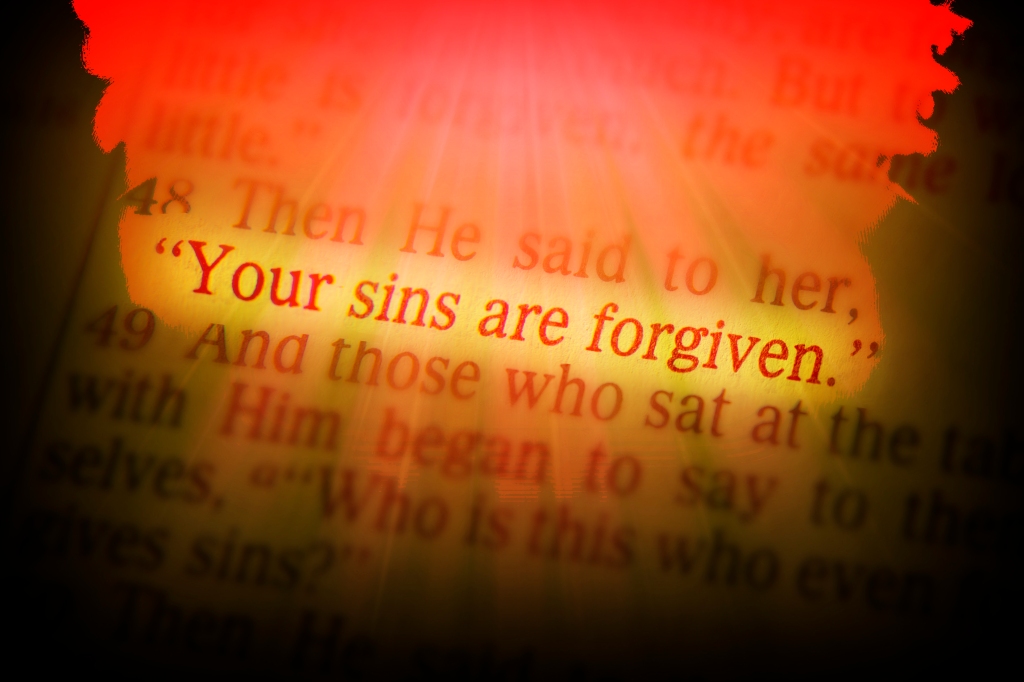
In my three Christian fiction series—Titus Ray Thrillers, Mylas Grey Mysteries, and Silas McKay Suspense—each of my protagonists is at a different place in his spiritual journey.
However, of the three, Titus Ray, a covert operative, has the most difficulty forgiving others for past mistakes.
Titus was brought to faith in Christ through the influence of an Iranian Christian couple in Tehran who hid him in their home for three months while he was on the run from the secret police.
Even though Titus grew up in “Christian” America, he knew nothing about Christianity. He came from a family who never attended church, who never mentioned God—except in a swear word—and who never went inside a church unless it was to attend a funeral.
Thus, it wasn’t surprising that Titus didn’t know how to live out his faith when he became a believer and returned to the States to resume his career at the CIA. However, he remembered the Iranian Christians read their Bible every day, so he purchased his first Bible and began reading the gospel of John.
From reading his Bible and being mentored by more mature believers, he gradually figured out how to control his volatile temper, and how to recognize the difference between deceiving others as part of his profession and doing so willfully to further his own agenda.
By far, the most difficult part of his Christian walk so far has been learning to forgive others—from his alcoholic father to other operatives who made foolish decisions that cost people their lives—but his journey toward real and lasting forgiveness only began when he heard these words from Ephesians 5:32: “And be kind to one another, tender-hearted, forgiving each other, just as God in Christ also has forgiven you.”
Jesus himself showed us the example when he was in the throes of agony on the cross and cried out, “Father, forgive them, for they know not what they do.” Luke 23:34.
Titus realized he was to forgive others even as he had been forgiven, for no one had ever wronged him as much as the Son of God had been wronged.
A lesson from a fictional character to real believers.


Book 8 in the Mylas Grey Mystery Series, Click on cover

Book 5 in the Silas McKay Suspense Series, Click on cover

Book 11 in the Titus Ray Thriller Series. Click cover
Book 7 in the Mylas Grey Mystery Series on Amazon. Click cover.

Book 4 in the Silas McKay Suspense Series on Amazon. Click cover.

Book 10 in the Titus Ray Thriller Series on Amazon. Click cover.

PREQUEL to the Mylas Grey Mystery Series on Amazon. Click cover

Book VI in the Mylas Grey Mystery Series on Amazon. Click cover

Book III in the Silas McKay Suspense Series on Amazon. Click cover

Book IX in the Titus Ray Thriller Series on Amazon. Click cover

Book V in the Mylas Grey Mystery Series on Amazon. Click cover

Book II in the Silas McKay Suspense Series on Amazon. Click cover

Book I in the Silas McKay Suspense Series, Available in Winter Deceptions

Ben in Trouble follows Four Steps Missed in the Titus Ray Thriller Series

Book IV in the Mylas Grey Mystery Series on Amazon. Click cover

Book VIII in the Titus Ray Thriller Series on Amazon. Click cover.

Ben in Charge, Follows Three Steps Away in the Titus Ray Thriller Series

Ben in Love, Follows Two Steps Forward in the Titus Ray Thriller Series

Two Days Taken:Book II in the Mylas Grey Mystery Series; Click cover.

Book VII in the Titus Ray Thriller Series on Amazon. Click on book cover

One Day Gone: Book I in the Mylas Grey Mystery Series; Click on Cover

NEWEST BOOK: Available on Amazon. Click on Cover.

Prequel to the Titus Ray Thriller Series is $0.99 on Amazon. Click book cover


Book I in the Titus Ray Thriller Series on Amazon. Click book cover


Book II in the Titus Ray Thriller Series on Amazon. Click on book cover

Book III in the Titus Ray Thriller Series on Amazon: Click on book cover


Book IV in the Titus Ray Thriller Series on Amazon. Click on book cover.


Book V in the Titus Ray Thriller Series on Amazon. Click on book cover.


Book VI in the Titus Ray Thriller Series on Amazon. Click on book cover.


Books 1 & 2 in the Titus Ray Series Available on Amazon. Click on cover.


 His Glory My Joy, a blog of Author Luana Ehrlich
You must be logged in to post a comment.