Bits and Pieces 5/23/12
 How To Handle Animals In The Bible: “Have you ever pondered that the Lord not only designed the animals for naturalistic functions such as pollinating plants or providing you with food and clothing, but to be an intentional, constant reflection to you of spiritual lessons?” Read the full article here.
How To Handle Some Important Rocks In The Bible: Lisa leads on how to build an altar of grace, and more importantly, not to waste rocks.
How To Handle The Ten Most Unbelieved Letters In The Bible: “It’s 10 letters found in Ephesians 2:9. The hardest words for unbelievers to believe. Often the hardest words for believers to keep on believing. Read more here.
Dental Work and The Psalms
 I recently had to have some dental work done, and that brought me to the Psalms. A strange statement, maybe, but I get anxious when there’s drilling and grinding and cutting taking place in the neighborhood of my brain. Reading a Psalm helps me with that anxiety. Something similar occurred when we were missionaries in Venezuela, and I needed to have a wisdom tooth extracted. The small town where we lived didn’t have a dentist that could do the job, so we traveled to the capital city of Caracas for the “procedure.” We had to wait several weeks for the appointment, so that gave me lots of time to be anxious.
The Psalms were a great comfort to me while I waited. I wrote out several of them on a notecard and spent time meditating on them during the day. Psalm 121:8, “The Lord will watch over your coming and going,” and Psalm 142:3, “When my spirit grows faint within me, it is you who know my way.” These and several other verses calmed my spirit, and I was able to endure the pain and discomfort.
During my recent dental work, I was reminded of that wisdom tooth extraction and I realized that was the time when I began studying the Psalms in earnest. Now, I make reading a Psalm every day a regular part of my morning devotional time. I love the term David Murray uses to describe the Psalms in his blog, Therapeutic Praise.
Here are two points to remember when reading, memorizing and meditating on the Psalms:
1. They are extremely instructive about God. While I’m thankful I have access to the complete Bible and revelation of God, nevertheless, if I could only have the book of Psalms, I believe I would be able to know God intimately. Each Psalm paints colorful pictures of His mercy, His grace, His love, His wrath, His judgment, His saving power and His desire to comfort His children.
2. They are meant to stir our emotions. These words were written as poetry, as songs. They elicit reactions from deep within our very beings. The writers speak of weeping, of hurting, of joy, of anguish, of shame, of loneliness. Every human emotion is described in the pages of this book, and God is either at the focus of these deep-seated feelings or lingering in the shadows. The Psalms teach me that our emotions are of great concern to Him.
So, “open wide” and take in some nourishment from the Psalms today.
A Passion For His Stripes
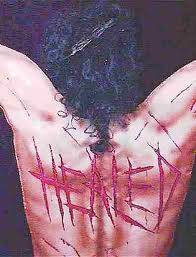
of black and blue
and red
of gashes and slashes
and stripes
of hits and harm
and hurt
He bows and stumbles
and falls
He kneels and bends
and crumbles
He gasps and cries
and moans
for my healing and help
and guiding
for my blessing and loving
and keeping
for my hoping and holding
and saving
for my saving
–Luana Ehrlich
Isaiah 53:4-5
Birthdays and Books
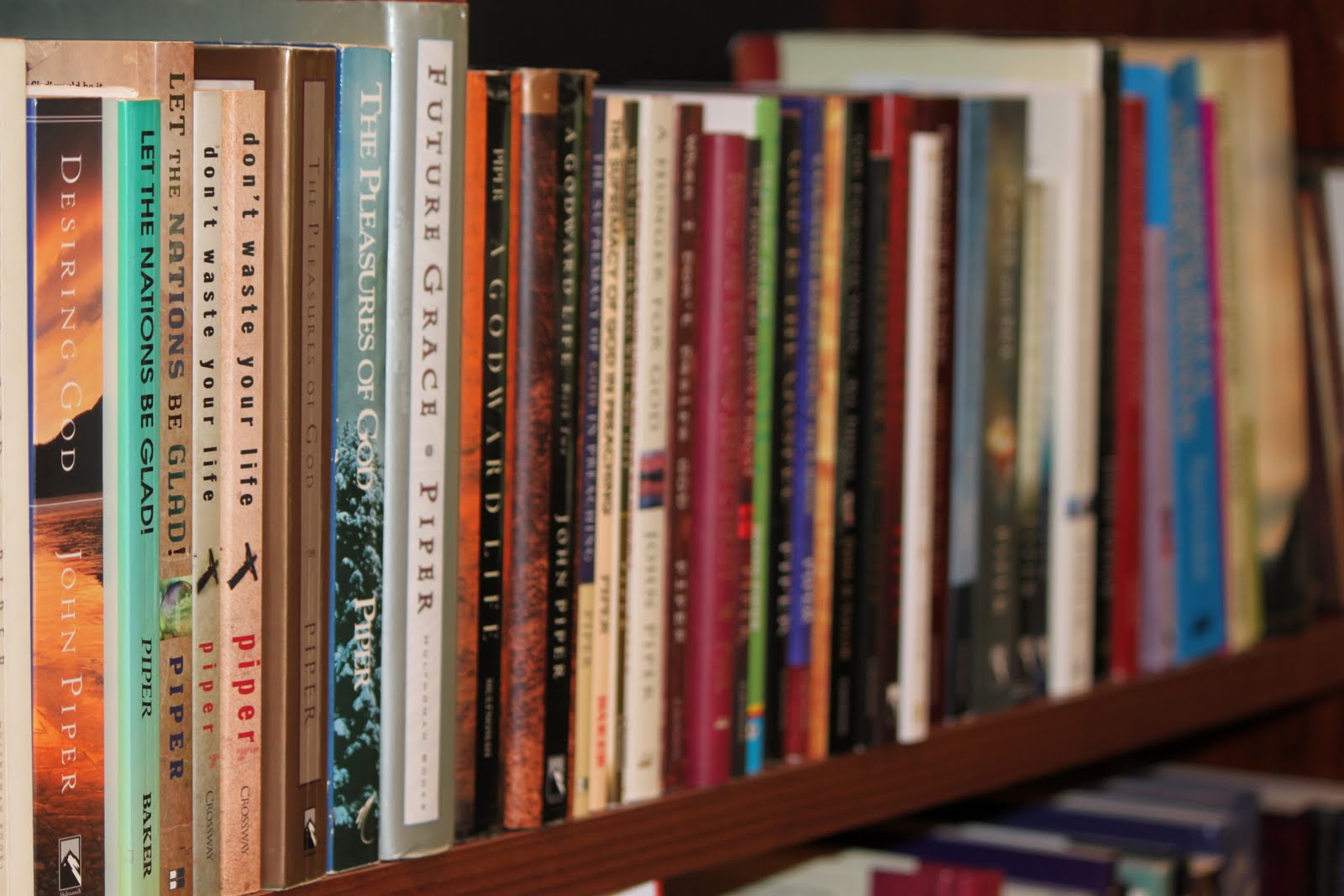 I just celebrated another birthday (not a milestone, but close) and one thing I do enjoy about having another birthday is that someone usually gives me a book. Birthdays and books just seem to go together in my life. This year was no exception when a friend gave me a new devotional book, plus I gave myself a book, or rather downloaded a new fiction book to my iPad.
From the moment I learned to read, books have played an enormously important role in my life. In my elementary school years, we lived in a very small town of less than 1,000 people, and the town’s library was located in a tiny, one-room building. From third grade through sixth grade, I managed to read every biography they had, plus all the Hardy boys and Nancy Drew mysteries in their collection.
From that small Missouri town, our family moved to a large city near Chicago. Their library was an impressive brick building located downtown, containing stacks upon stacks of books, several reading rooms, an entire room devoted to children and racks of magazines and newspapers. I was there every week, often taking the city bus from my house in the suburbs to get there. Sometimes I imagine I can still smell the slightly musty odor of that place.
I read today for both pleasure and entertainment (mysteries and thrillers mainly) and also as a means of spiritual growth. I doubt if I could name five fiction books that have changed my life, but I can easily name the top five non-fiction books that have changed my life. Besides the Bible, these books have done more to shape my life and draw me closer to the Lord than any other reading material.
1. Knowing God by J. I. Packer: This book, first published in 1973, has had a resurgence since the 1990’s. I first read it around 1980, and for several years after that I read it once every year. Packer is able to do what the title suggests–he helps you to really know God, with each chapter drawing you closer to His majesty and glory. I know God better because of this book.
2. Desiring God by John Piper: Piper opens up a whole new avenue of pleasure–the absolute mind-boggling joy of glorifying God by finding your pleasure in Him. I read this book again and again and get more out of it each time. This is Piper’s signature work.
3. Future Grace by John Piper: Because I have a sinful tendency toward worry, this is another of Piper’s writings that I return to every few years. In this book, he urges believers to believe in God’s grace for the future even as we have believed in God’s grace for our past. There is much insight here on our sinful nature.
4. The Pursuit of Holiness by Jerry Bridges: None of us take holiness seriously even though God said, “Be holy for I am holy.” In this book, Bridges challenges us to seek after holiness, to recognize our own sinfulness, and to learn the ways of Satan. Although it was first published in 1978, I didn’t read it until the latter part of the 1980’s, but it still stands today as a classic work, highly recommended by evangelical writers.
5. Experiencing God by Henry Blackaby: To know and do God’s will is the core desire of every growing Christian. How can we know His will and thus do it? That’s the question Blackaby explores in this study. His answer is found in a study of Moses and the basic premise is to “join God where He is working.” I found much practical truth in this study.
Bits and Pieces 3/15/12
Tornadoes, Why? When we view the damage caused by the devastating tornado that almost wiped Henryville, Indiana off of the map recently, we are tempted to ask why? John Piper provides some answers here.
What Happens To Children Who Die? This is a question I’ve been asked often. I found it helpful to read Tim Challies’ approach to answering this question. Read his article here.
KONY 2012: Like many of you, I have watched the video campaign Kony 2012 which seeks to bring peace to Uganda by making the world aware of the atrocities committed by Joseph Kony and his rebels. The speed at which this went viral on YouTube was amazing. I was also very interested in a blog by a Ugandan from the Africa Renewal Christian College on Joseph Kony. You can read his blog here.
How Do You Fill Your Day? Whatever you do during you day (home, school, office), your activities can probably be organized under five types of headings according to Scott Belsky. In a recent blog by David Murray he applied these five headings in a classroom on leadership and noted that leaders/pastors spend most of their time in reacting to events and people. I’m not so sure that’s a bad thing. Mark’s gospel displays a similar picture of Jesus’ days spent doing exactly that. Read Murray’s blog on organizing your day here.
What Is He Thinking?
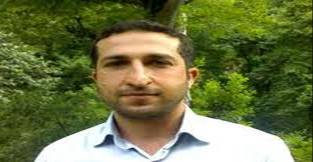 Youcef Nadarkhani is being held today in an Iranian prison, condemned for being a follower of Jesus Christ. His execution could be just hours away. His story has gotten worldwide attention, and the U.S. House of Representatives recently passed a resolution calling for his release. Read the full story here. Arrests of Christians are not unusual in Iran, and estimates are that over a dozen are being detained at any one time. Many are released only to be rearrested.
Nadarkhani was arrested in 2010 and has been offered numerous opportunities to recant his faith and accept the teachings of Islam. If he did so, he would supposedly be given his freedom and be allowed to return home to his wife and two young sons. However, he has repeatedly refused to deny his faith in Christ.
Not long after he was arrested, he sent a letter out of his prison cell. Some of his correspondence sounded much like the Apostle Paul. Nardarkhani wrote, “As a small servant, necessarily in prison to carry out what I must do, I say with faith in the word of God that he will come soon.’However, when the Son of Man comes, will he find faith on the earth?'” You can read the full text here.
Few, if any of us, could begin to imagine what he must be thinking today two years after languishing in prison and losing his last appeal for release to the Iranian Supreme Court. Is he more concerned about his family that his own life? Is he aware of several other Christians arrested at their house church this past month and praying for them? Is he experiencing doubt about his ability to stay true to his beliefs in Christ?
(Voice of the Martyrs is a good resource of information on persecuted Christians around the world.)
Our responsibility as fellow Christians must be to pray for Nadarkhani and for all those under similar persecution. The Psalmist wrote, “May the groans of the prisoners come before you; by the strength of your arm preserve those condemned to die.” Psalm 79:11. Would you join with me in praying the Lord will preserve Nadarkhani’s life or if he is to be martyred that his witness will bring God glory?
Satan In The News
 Satan has hit the news recently in a speech Presidential candidate Rick Santorum made in 2008 at Ave Maria University. Santorum said Satan was attacking the United States on several different fronts, asking, “If you were Satan, who would you attack in this day and age?” News commentators have labeled his remarks as controversial, weird and even provocative. Read the CBS account of Santorum’s speech here.
Students of God’s Word find these remarks anything but controversial. Jesus spoke often of Satan (Matthew 13, Luke 10), and the letters of Paul, James and Peter all give warnings about his plans and desires for believers and unbelievers alike. John in Revelation gives a graphic portrait of his ultimate end. When Jesus was tempted by Satan (Matthew 4, Luke 4, Mark 1), He didn’t disagree that Satan could offer Him the kingdoms of the world and all of their splendor. Satan is an incredibly evil being who seeks to destroy God’s people.
Not only does Satan attack nations, he also attacks the followers of Christ as individuals. If you belong to Christ, here are 20 ways Satan will attack you this week.
Jesus’ work on the cross redeemed us from Satan (Colossians 2:15). As Satan and the fallen angels he controls (demons) seek to manifest authority over believers, the Bible says to “submit yourselves therefore to God. Resist the devil, and he will flee from you.” (James 4:7). As individuals submit to God and resist Satan, so does a nation.
Living In The Real World
 Most of us realize the food ads we see in magazines and on television are photographed by highly skilled photographers; even the food itself has been artfully produced and posed to make it mouth-watering appealing. But one photographer decided to professionally photograph the real thing, say a taco just purchased from Taco Bell alongside an appealing ad for the same product. The results are humorous, though not too surprising.
In God’s Word, He has presented us a “photograph” of the best, His Son. Placed alongside Him, we fare badly, never able to fully measure up to His beauty, to His holiness, to His lovingkindness. Just like fast food from the real world isn’t exactly like fast food from the advertising world, we live in the real world and have the scars to prove it. However, one day, an expert photographer will appear and airbrush away all our flaws. Then we will look our best, able to live in the best world, able to live with The Best. You can view Fast Foods, Ads vs Reality here.
“Beloved, now are we the sons of God, and it doth not yet appear what we shall be: but we know that, when he shall appear, we shall be like him; for we shall see him as he is.” 1 John 3:2
Bits and Pieces 2/8/12
I Once Was Lost: Jesus’ parable of the lost sheep comes alive in this personal story from Patti Brown. It’s not the Father’s will that even one of us should perish. Get a fresh perspective here.
Items Our Tech Age Will Kill: I found this list of 40 plus items that will soon disappear due to “technology” rather fascinating. See if you agree. Read the list here.
Visualize This: Tim Challies has been exploring Visual Theology. He says it is “an attempt to display theological realities in infographic form.” This probably appeals to those of us who love to see our world in an ordered format. What this means can be seen here.
I Can Do This!
 As I continually seek to be a student and teacher of God’s Word, I encounter many different methods, programs and suggestions about how to memorize, use, remember and put into practice what I’ve studied and taught, and it usually doesn’t take me very long when I’m reading through a suggestion to recognize if something will work for me or not. More often than not though, I find myself saying, “I will never do this” or “I can’t even begin to understand how this would work.” However, here are three helpful suggestions I recently read that made me say, “I can do this!”
How To Talk To God: In this blog, Lisa gives some pointers about using God’s Word to talk to Him. What happens when you speak God’s own words back to Him? Find out here.
How To Walk By The Spirit: In this sermon from John Piper on 1 Thessalonians 3, you’ll find a wonderful acronym called APTAT, which you can use to remember what to do when asked to do something you don’t believe you can do. Piper ‘s message is entitled “The Word Of God Is At Work In You,” and the application of this (which is about 30 minutes into the video if you want to watch it) is outlined in the written sermon called Applying The Text To Your Life. Watch the video or read the sermon here.
How To View The Bible: Along with many of you, I am reading the Bible through again this year. In my plan I’m about to finish up Genesis, and I’ve seen the grace of God at every turn, from the moment of creation to God’s dealings with Joseph. But this will not be the end of God’s grace. In fact, the grace of God can be found in every book of the Bible. Dane Ortlund outlines how every book of the Bible shows God’s grace. You can read it here.


Book 8 in the Mylas Grey Mystery Series, Click on cover

Book 5 in the Silas McKay Suspense Series, Click on cover

Book 11 in the Titus Ray Thriller Series. Click cover
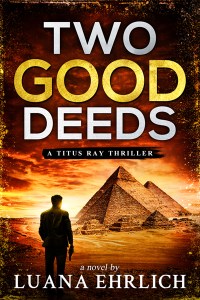
Book 7 in the Mylas Grey Mystery Series on Amazon. Click cover.

Book 4 in the Silas McKay Suspense Series on Amazon. Click cover.
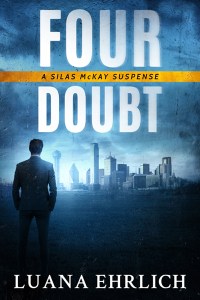
Book 10 in the Titus Ray Thriller Series on Amazon. Click cover.

PREQUEL to the Mylas Grey Mystery Series on Amazon. Click cover

Book VI in the Mylas Grey Mystery Series on Amazon. Click cover

Book III in the Silas McKay Suspense Series on Amazon. Click cover

Book IX in the Titus Ray Thriller Series on Amazon. Click cover

Book V in the Mylas Grey Mystery Series on Amazon. Click cover
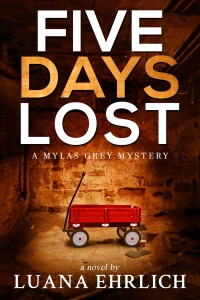
Book II in the Silas McKay Suspense Series on Amazon. Click cover

Book I in the Silas McKay Suspense Series, Available in Winter Deceptions

Ben in Trouble follows Four Steps Missed in the Titus Ray Thriller Series

Book IV in the Mylas Grey Mystery Series on Amazon. Click cover

Book VIII in the Titus Ray Thriller Series on Amazon. Click cover.

Ben in Charge, Follows Three Steps Away in the Titus Ray Thriller Series

Ben in Love, Follows Two Steps Forward in the Titus Ray Thriller Series

Two Days Taken:Book II in the Mylas Grey Mystery Series; Click cover.

Book VII in the Titus Ray Thriller Series on Amazon. Click on book cover

One Day Gone: Book I in the Mylas Grey Mystery Series; Click on Cover

NEWEST BOOK: Available on Amazon. Click on Cover.

Prequel to the Titus Ray Thriller Series is $0.99 on Amazon. Click book cover


Book I in the Titus Ray Thriller Series on Amazon. Click book cover


Book II in the Titus Ray Thriller Series on Amazon. Click on book cover
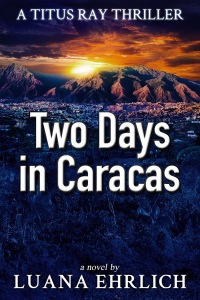
Book III in the Titus Ray Thriller Series on Amazon: Click on book cover


Book IV in the Titus Ray Thriller Series on Amazon. Click on book cover.


Book V in the Titus Ray Thriller Series on Amazon. Click on book cover.


Book VI in the Titus Ray Thriller Series on Amazon. Click on book cover.


Books 1 & 2 in the Titus Ray Series Available on Amazon. Click on cover.


 His Glory My Joy, a blog of Author Luana Ehrlich
You must be logged in to post a comment.