Archive
I Had To Do It

One day last week, I had to run away from home. It wasn’t—as some of you may be thinking—the result of having a retired husband at home all day. No, it was the roofers. Hundreds of them were on top of my house pounding away. Well, maybe there were only six, but it sounded like an army up there. It was Chinese water torture with sound. So, I left for a few hours.
I believe living in our modern culture with its massive information overload, constant communication and 24/7 news cycle can torture us just like the constant, irritating noise of six hammers beating out an irregular rhythm. Each of us needs a break from this daily onslaught.
So, how can we find a peaceful retreat?
The Bible gives the seeker of peace a definitive answer. “You keep him in perfect peace whose mind is stayed on you, because he trusts in you.” Isaiah 26:3 (ESV).
Retreat. Get away. Find time during the day to get your mind “stayed” on the Lord. Read His Word, pray, fellowship with Him and the hammering will stop..
Granny’s Garden Looks Good
 One gorgeous spring day, my grandson and I were in my kitchen having a conversation about the nice weather. I pointed out to him that I had already put my patio furniture outside, and we would soon be able to plant a beautiful flower garden. He looked out the window at my weed-infested flowerbeds and replied, “But, Granny, your garden already looks good.”
In his eyes, the purple flowers produced by the weeds made a good-looking garden. While his assessment was delightful to me, I knew it was flawed because, having seen exquisite flowerbeds before, I recognized that, in its current state, mine was very ugly.
My grandson’s perception of what constituted a good-looking garden was skewed because his standards were minimal and based on limited knowledge. This same principle can be applied to an individual or a society when the perception of what is good or evil is based solely, or in part, on the thoughts, practices, and writings of fallen man and not on the standard supplied to us by God in His Word.
I believe my grandson will adopt a more stringent requirement for what constitutes a beautiful garden if he’s exposed to lovely flowers. In the same way, the more time we spend reading, studying, and meditating on God’s Word, the more our moral standards will be aligned with the standards God requires of us–made possible to all believers by His Spirit living within us.
“All Scripture is breathed out by God and is profitable for teaching, for reproof, for correction, and for training in righteousness.” 2 Timothy 3:16.
Having A Dinner Party?
 I’ve discovered having a successful Quiet Time is a lot like having a dinner party. To have a successful dinner party, you’ve got to plan well. I do that by asking myself several questions. Who will I invite to the party? What will be the main course? What will I use for a table decoration? Will I use the good china or my everyday dishes?
It’s the same with having a daily devotional time. I have to plan for a successful outcome by asking some pertinent questions. What version of the Bible will I use? Will I read the Bible through this year or study one book at a time? Will I record my thoughts in a journal? What’s the best time for me to be alone with God?
I seldom have a party without something unexpected happening. There might be a quick solution to the problem, like making a fast trip to the grocery store when the ice maker stops working. Sometimes, however, there is no easy solution, and things just don’t turn out the way you’d hoped, although your guests will probably not notice when things go wrong.
You need to expect the unexpected during your Quiet Time too. There will be days when the telephone rings, the dog needs to go out, or the kids wake up early. At those times, you might be able to resume your appointment with the Lord. On the other hand, some interruptions don’t have quick solutions, and your daily devotional time may seem like a failure, although I doubt the Lord will ever feel your time with Him is ever a failure.
My most enjoyable dinner parties aren’t necessarily those rare ones where everything turns out beautifully. Instead, it’s the one where I forgot to make the gravy because I was hearing about my friend’s hurt feelings or the one where I decided to stop looking for the wooden salad bowl so I could hear a funny story from someone who never tells funny stories.
Having an enjoyable daily Quiet Time may not always involve high moments of ecstatic wonder or theological insight. A pleasing time with the Lord may be consumed with painful confessions or heartbreaking requests. Yet, in the end, the real reason for having a Quiet Time, like the real reason for the dinner party, is to set aside time in your day for sharing yourself with a friend.
Complimentary words from guests as they leave your home when the party’s over are always nice to hear. But, listen to these complimentary words from the writer of Psalm 119 after spending time with the Lord, “How sweet are Your words to my taste! Yes, sweeter than honey to my mouth!” (Psalm 119:103)
Make 2013 the year you followed through on your commitment to have a daily Quiet Time. I think I’ll try to have a few more dinner parties too!
Dental Work and The Psalms
 I recently had to have some dental work done, and that brought me to the Psalms. A strange statement, maybe, but I get anxious when there’s drilling and grinding and cutting taking place in the neighborhood of my brain. Reading a Psalm helps me with that anxiety. Something similar occurred when we were missionaries in Venezuela, and I needed to have a wisdom tooth extracted. The small town where we lived didn’t have a dentist that could do the job, so we traveled to the capital city of Caracas for the “procedure.” We had to wait several weeks for the appointment, so that gave me lots of time to be anxious.
The Psalms were a great comfort to me while I waited. I wrote out several of them on a notecard and spent time meditating on them during the day. Psalm 121:8, “The Lord will watch over your coming and going,” and Psalm 142:3, “When my spirit grows faint within me, it is you who know my way.” These and several other verses calmed my spirit, and I was able to endure the pain and discomfort.
During my recent dental work, I was reminded of that wisdom tooth extraction and I realized that was the time when I began studying the Psalms in earnest. Now, I make reading a Psalm every day a regular part of my morning devotional time. I love the term David Murray uses to describe the Psalms in his blog, Therapeutic Praise.
Here are two points to remember when reading, memorizing and meditating on the Psalms:
1. They are extremely instructive about God. While I’m thankful I have access to the complete Bible and revelation of God, nevertheless, if I could only have the book of Psalms, I believe I would be able to know God intimately. Each Psalm paints colorful pictures of His mercy, His grace, His love, His wrath, His judgment, His saving power and His desire to comfort His children.
2. They are meant to stir our emotions. These words were written as poetry, as songs. They elicit reactions from deep within our very beings. The writers speak of weeping, of hurting, of joy, of anguish, of shame, of loneliness. Every human emotion is described in the pages of this book, and God is either at the focus of these deep-seated feelings or lingering in the shadows. The Psalms teach me that our emotions are of great concern to Him.
So, “open wide” and take in some nourishment from the Psalms today.
I Can Do This!
 As I continually seek to be a student and teacher of God’s Word, I encounter many different methods, programs and suggestions about how to memorize, use, remember and put into practice what I’ve studied and taught, and it usually doesn’t take me very long when I’m reading through a suggestion to recognize if something will work for me or not. More often than not though, I find myself saying, “I will never do this” or “I can’t even begin to understand how this would work.” However, here are three helpful suggestions I recently read that made me say, “I can do this!”
How To Talk To God: In this blog, Lisa gives some pointers about using God’s Word to talk to Him. What happens when you speak God’s own words back to Him? Find out here.
How To Walk By The Spirit: In this sermon from John Piper on 1 Thessalonians 3, you’ll find a wonderful acronym called APTAT, which you can use to remember what to do when asked to do something you don’t believe you can do. Piper ‘s message is entitled “The Word Of God Is At Work In You,” and the application of this (which is about 30 minutes into the video if you want to watch it) is outlined in the written sermon called Applying The Text To Your Life. Watch the video or read the sermon here.
How To View The Bible: Along with many of you, I am reading the Bible through again this year. In my plan I’m about to finish up Genesis, and I’ve seen the grace of God at every turn, from the moment of creation to God’s dealings with Joseph. But this will not be the end of God’s grace. In fact, the grace of God can be found in every book of the Bible. Dane Ortlund outlines how every book of the Bible shows God’s grace. You can read it here.
Did God Make Extra-Terrestrials?
 There have been several amazing announcements in the last month concerning the discovery of earth-size planets orbiting a sun-like star. These discoveries have come from NASA’s Kepler Mission, whose task is to survey the Milky Way galaxy to discover earth-size planets. Because of recent advances in technology, Kepler’s astronomers are speculating that our galaxy alone may have millions of planets.
I’m excited about what earth’s telescopes find in the heavens because “the heavens declare the glory of God,” but most often when discoveries of this nature are made, they are reported under a headline like the one from commentator Charles Krauthammer who asks, “Are We Alone In The Universe?”
Krauthammer voices a hope that many people express, a hope for intelligent life, for other beings living like us but under distant stars. He writes that the search for other planets “betrays a profound melancholy—a lonely species in a merciless universe anxiously awaits an answering voice amid utter silence.” He believes it makes no sense that in this vast universe of countless galaxies, human beings on planet earth are unique and speculates that other alien civilizations must have destroyed themselves. Krauthammer, a political commentator, concludes the article by urging mankind to get politics right or risk extinction. Read his full article here.
What fascinates and yet profoundly saddens me about this article and many like it is the failure to see Earth and the descendants of Adam who live on it as, yes, unique. Our uniqueness, our being the ONLY intelligent life in the universe God made, should make us acutely aware of how much our Creator God not only loves us but has a very unique plan for us. This very “specialness” elicits praise and knee-bowing awe in some, while it frightens others.
It is frightening to think the focus of creation was entirely mankind on planet earth. That carries an overwhelming measure of responsibility on us as human beings to acknowledge God, to express gratitude, to seek meaning of life in Him. Whereas if “matter just came into existence” and intelligence just “evolved,” and other rocky planets are inhabited by alien forms, then what need is there for me to turn my face toward a Sovereign Maker?
God’s spectacular display of His glory in the heavens was not so that man would seek others out there like himself, but that man would become God-centered, recognizing, as John wrote of those who believe in His son, “how great a love the Father has bestowed on us, that we should be called the children of God.” (1 John 3:1)
Did God make extra-terrestrials? No, “God created man in his own image, in the image of God he created him; male and female he created them.” (Genesis 1:27)
Do You Have A Plan?
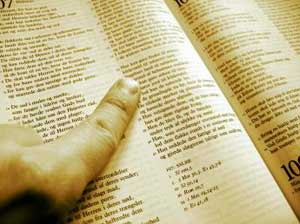 It’s that time of year, the transitional week between putting away the Christmas decorations and bringing out next year’s calendar, between eating the last of the Christmas cookies and considering a good diet to begin New Year’s Day. But the main thing I do during this week is to finalize my decision as to what plan I’ll use to read the Bible next year. Every year I try to read through the Bible using a different plan. Occasionally, I’ll skip a year of reading the whole Bible and just do either the Old Testament or the New, and I’ve even opted to just do one whole book for the whole year, like the Gospel of John, reading it several times and reading someone’s commentary on it.
This year our church is reading through the Bible together as a church body, using a comprehensive plan in which the pastor will also preach each Sunday’s sermon on the material the congregation has just finished reading the week before. This plan is called “Read The Bible For Life.” You can read more about the plan and access the readings here.
I’ve also decided to do my reading on my iPad using the ESV Study Bible app. Instead of making notes in the margins of my Bible (which is plenty full of notes already), I’ll be using the note feature of the app and typing in my notes. I also plan to take my iPad to church with me and make notes in the Bible app as the pastor preaches. (I just hope no one thinks I’m playing my Words With Friends during the sermon!)
There’s a very good reason to feed on God’s Word every day: Jesus said to do so. He explained that daily physical eating was not enough and admonished us not to live that way, “but by every word that comes from the mouth of God.” (Matthew 4:4) Paul in Colossians 3:16 said that God’s Word should build a home within our hearts and teach us wisdom. I don’t believe this happens by hearing a once-a-week sermon. I believe a daily intake of Scripture is the only means of discovering the beautiful jewels hidden in the bountiful treasure of God’s revelation of Himself.
Do you have a plan? Here’s a comprehensive link for discovering some great Reading Plans For The Bible.
Prophecy Posting 12/7/11
 As I mentioned in a previous post (see My Love Of Prophecy ), I take seriously the study of prophecy, of End Times, and of our Lord’s Second Coming, and I also believe Paul’s exhortation in 1 Thessalonians 5:4 that we as believers in Christ and students of His Word, “are not in darkness so that this day should surprise you like a thief. ”
One of the surest ways to understand today’s prophetic events in God’s calendar is to remain alert and vilgilant about what is transpiring in Israel, for this little sliver of land (not much bigger than the state of New Jersey) plays an integral part in God’s plans for our future. God has promised the Jewish people He will allow them to live in the land given to their forefathers (Ezekial 36:24-28). Yet He also noted in Zechariah 12 that Jerusalem itself would be a “cup of trembling” and a “burdensome stone.” to all the nations. Seldom a day goes by that Jerusalem is not on our national news, whether it’s the Islamic nations of the world threatening to annilate Israel and her people or it’s the leaders of the world calling on Israel to make concessions, negotiate a peace treaty and relinquish control of Jerusalem itself.
I believe Islam will probably play a significant role in the Tribulation (the seven years of turmoil on the earth just prior to Christ’s Second Coming, prophesied by Daniel and described by Jesus as a time of horror like the world has never experienced before or ever shall again–Matthew 24). The key to the possible role Islam may play in these events is found in its own prophetic beliefs, for the very individual they call Mahdi or the 12th Imam, who is to appear before the end of the world and is considered to be the Muslim savior, shares many of the same characteristics of the individual described in the Bible as the Antichrist.
Joel Rosenberg, an author and lecturer who has written and spoken extensively on the subject of Israel, Islam and prophectic events and has served as an advisor to both American and Israeli leaders alike on these subjects, has written several fiction books depicting possible scenarios of events that could begin to unfold in the coming days. The Twelfth Imam is his first book in a series of books about the Muslim messiah. You can read more about the book on my Book Review page on this blog. Here’s a trailer about the book:
Earthquakes: A Message From God?
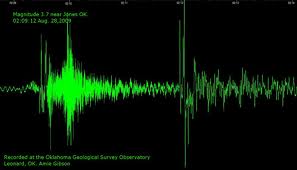 As a resident of Oklahoma in the year 2011, I’m never too surprised when our state makes the national news. We’ve had record-breaking snowstorms, the nation’s hottest weather, extreme drought conditions and swarms of destructive tornadoes, but this week Oklahoma made the national news because we’ve experienced several earthquakes. The largest one measured 5.6 on the Richter scale, followed two days later by an aftershock of 4.7 which happened while some areas were under a tornado warning.
As we heard the rumbling sounds of these unexpected earthquakes and saw the walls shake and the floor beneath us move, we seemed more alarmed about this geological phenomenon than any of our state’s harshest weather events. There was no loss of life, and very few experienced any property damage, yet there was a sense of unease and insecurity among many of us. Why was this happening? Was God trying to get our attention? Are these earthquakes a sign for us?
A study of earthquakes in the Bible (there are 17 references) shows that God “shakes the earth” for either judgment, deliverance or as a means of revealing Himself. The most well-known quakes are those surrounding the revelation of Himself. The first instance of this is found in Exodus 19:18 where the people of Israel are camped around Mt. Sinai, and God speaks directly to them so they will know Him for themselves and also to authenticate Moses as His spokesman. The Scripture says, “the mountain trembled greatly” when this revelation happened. Psalm 68:8, in describing the same event, says, “the earth quaked” at the presence of the Lord.
The second example happened immediately after Jesus took his last breath on the cross and Matthew 27:51 records, “the earth shook and the rocks were split.” In the third example, Matthew tells us in 28:2 when Mary and the other women arrived at the tomb on the third day, “there was a great earthquake.” God seems to emphasize some really momentous events with earthquakes.
There are at least two future “great earthquakes” coming which John writes about in Revelation 6:12 and 16:16-20. Enormous geological changes will occur as a result of these upheavals, and I doubt there will be a seismograph in existence which will be able to measure their intensity.
The fact that God seems to mark important events with earthquakes is probably one of the reasons we sensed our recent rumblings could “mean something.” But another more obvious reason is that Jesus, when asked about the sign of His coming and the end of the age in Matthew 24, declared that a number of ongoing circumstances, including wars, famines and earthquakes, would be present and could be thought of as “labor pains” to His return. Since a woman’s labor pains begin slowly and continue to increase in frequency and intensity until the birth, most Biblical scholars believe Jesus meant that wars, famines and earthquakes would be happening with more frequency and intensity when His return was about to happen.
Jesus also specifically stated that the earthquakes would be in “various” places. Some translations have “different” places for the Greek word He used here. It would seem natural to assume He meant that the earthquakes of the latter days would not just be occurring in Israel, but would, in fact, be happening all over the world, perhaps even in different places not known for earthquakes.
While I cannot begin to know or understand the mind of God in moving the Teutonic plates in the earth’s crust in Oklahoma this week, I do know this trembling intrusion into my life caused my heart to turn toward Him, to pray for those who seemed so unsettled by them, and to realize if these movements were indeed harbingers of His coming soon, I had nothing to fear. The Psalmist said it for me in 46:2, “Therefore we will not fear, though the earth give way and the mountains fall into the heart of the sea.”
Have A Blessed Day
 Several years ago I stopped saying, “have a nice day” to those people I encountered in everyday situations. Instead, I began to use “have a blessed day” as I paid the check, picked up the cleaning or engaged in a conversation with a store clerk. I thought perhaps this phrase would be a kind of witness, a reminder to me and to them that the blessings of all our days come from God. In effect, I hoped these words would turn hearts toward God if only for a brief moment or two.
A simple word like “bless” bears a powerful message because it contains the concept of God’s favor. That God is the author of blessings first appears in Genesis 12:2 when God says to Abram, “And I will make of you a great nation, and I will bless you and make your name great.”
God blesses us, but did you know you are also to bless others–that is, verbally pronounce a blessing from God to others? The Lord told Aaron to bless the people and this blessing, found in Numbers 6:22-27, is often used today by pastors as the Sunday worship service is ending. 1 Peter 3:8-9 speaks of how believers are to treat each other and ends by saying, “giving a blessing.”
There are numerous passages in the New Testament which can be prayed or spoken as blessings upon others (Acts 20:32; Romans 15:13; Hebrews 13:21; 2 John 1:3), but my favorite is 1 Thessalonians 5: 23: “Now may the God of peace Himself sanctify you entirely; and may your spirit and soul and body be preserved complete, without blame at the coming of our Lord Jesus Christ.”
Have a blessed day!


Book 8 in the Mylas Grey Mystery Series, Click on cover

Book 5 in the Silas McKay Suspense Series, Click on cover

Book 11 in the Titus Ray Thriller Series. Click cover
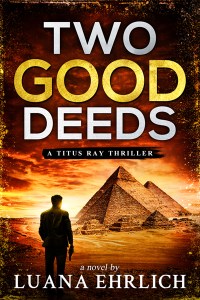
Book 7 in the Mylas Grey Mystery Series on Amazon. Click cover.

Book 4 in the Silas McKay Suspense Series on Amazon. Click cover.

Book 10 in the Titus Ray Thriller Series on Amazon. Click cover.

PREQUEL to the Mylas Grey Mystery Series on Amazon. Click cover

Book VI in the Mylas Grey Mystery Series on Amazon. Click cover

Book III in the Silas McKay Suspense Series on Amazon. Click cover

Book IX in the Titus Ray Thriller Series on Amazon. Click cover

Book V in the Mylas Grey Mystery Series on Amazon. Click cover

Book II in the Silas McKay Suspense Series on Amazon. Click cover

Book I in the Silas McKay Suspense Series, Available in Winter Deceptions

Ben in Trouble follows Four Steps Missed in the Titus Ray Thriller Series

Book IV in the Mylas Grey Mystery Series on Amazon. Click cover

Book VIII in the Titus Ray Thriller Series on Amazon. Click cover.

Ben in Charge, Follows Three Steps Away in the Titus Ray Thriller Series

Ben in Love, Follows Two Steps Forward in the Titus Ray Thriller Series

Two Days Taken:Book II in the Mylas Grey Mystery Series; Click cover.

Book VII in the Titus Ray Thriller Series on Amazon. Click on book cover

One Day Gone: Book I in the Mylas Grey Mystery Series; Click on Cover

NEWEST BOOK: Available on Amazon. Click on Cover.

Prequel to the Titus Ray Thriller Series is $0.99 on Amazon. Click book cover


Book I in the Titus Ray Thriller Series on Amazon. Click book cover


Book II in the Titus Ray Thriller Series on Amazon. Click on book cover

Book III in the Titus Ray Thriller Series on Amazon: Click on book cover


Book IV in the Titus Ray Thriller Series on Amazon. Click on book cover.


Book V in the Titus Ray Thriller Series on Amazon. Click on book cover.


Book VI in the Titus Ray Thriller Series on Amazon. Click on book cover.


Books 1 & 2 in the Titus Ray Series Available on Amazon. Click on cover.


 His Glory My Joy, a blog of Author Luana Ehrlich
You must be logged in to post a comment.