Archive
Here, Take Mine

I can’t count the number of times I heard my mother say, “Here, take mine,” when I was growing up.
After she said this, she’d offer me or one of my siblings something from her plate—her piece of cake, the rest of her French fries, her pancakes. It was her portion of the meal, but she willingly sacrificed and gave it to us.
My mother’s willingness to offer me something that belonged to her beautifully illustrates the meaning of the word “portion” that appears more than one hundred times in the Old Testament.
David declares in Psalm 142:5, “I cry to you, O Lord; You are my refuge, my portion in the land of the living.”
And in Psalm 16:5, he says, “The Lord is my chosen portion.”
Jeremiah, in Lamentations 3:24, says, “‘The Lord is my portion,’ says my soul, ‘therefore I will hope in Him.’”
In each of these passages, the portion God gives us is something far better than anything physical.
He gives us Himself.
He is our portion.
In the New Testament, the picture is just as precious.
We see it in the story of Jesus’s visit to the home of Mary and Martha. While Mary sits at Jesus’s feet, listening to His every word, Martha complains that Mary isn’t helping her in the kitchen. Jesus responds to Martha this way: “Mary has chosen the good portion, which will not be taken away from her” (Luke 10:42).
What was the good portion Mary had chosen?
She chose Jesus.
He was her portion. He was her joy. He was her security. He was her sustenance.
And He can be ours as well.
If we take the Lord for our portion, we have this promise from Psalm 73:26: “My flesh and my heart may fail, but God is the strength of my heart and my portion forever.”
Our circumstances may change. Our strength may fail. Even our hearts may fail us.
But our portion never will.
God will be our portion forever, and one day we’ll hear the Lord say, “You have chosen the good portion.”
An Indescribable Gift

Mary gazes down on sweetness in a manger,
Bright eyes, soft skin, pure delight,
A gift from heaven.
John sees the Lamb at the Jordan,
Without spot, without blemish, without sin,
A gift from heaven.
Nicodemus questions the Rabbi in darkness,
New answers, fresh hope, glad heart,
A gift from heaven.
Zacchaeus climbs the sycamore tree,
Delighted, repentant, forgiven,
A gift from heaven.
The Savior dies on a Roman cross,
Bloodied, rejected, scorned,
A gift from heaven.
A sinner hears a message full of grace,
Good tidings, great joy, blessed hope,
A gift from heaven.
“Thanks be to God for His indescribable gift.” 2 Corinthians 9:15
I’m Not Able

When someone makes the statement, “I’m not able,” it can be an admission of weakness, but it can also be an admission of faith.
When a person realizes they’re not able to stand before God as blameless, they’re not expressing weakness; they’re validating the truth of Romans 3:23: “For all have sinned and fall short of the glory of God.”
But that’s not the full story. Even though everyone has sinned, Hebrews 7:25 tells us that Jesus, the Son of God, “is able to save to the uttermost those who draw near to God.”
And there’s this from Jude 24, where the writer says that Jesus “is able to keep you from stumbling and to present you blameless before the presence of his glory with great joy.”
Admitting I am not able to deliver myself from my sins, nor appear before God as blameless, is an expression of faith, and accepting the truth that He is able—by means of His sacrificial death—to accomplish it, is a confession of that faith.
But that’s still not the full story. In 1 Timothy 4:12, the apostle Paul says, “I know whom I have believed, and I am convinced that he is able to guard until that day what has been entrusted to me.”
And lastly, from Hebrews 2:18: “For because he himself has suffered when tempted, he is able to help those who are being tempted.”
I am not able, but God is able.
He is able to save those who come to Him.
He is able to keep you from stumbling.
He is able to present you as blameless.
He is able to guard you.
He is able to help you in temptation.
As the apostle Paul urges us in Ephesians 3:20-21, we give Him glory for He is able.
“Now to him who is able to do far more abundantly than all that we ask or think, according to the power at work within us, to him be glory in the church and in Christ Jesus throughout all generations, forever and ever. Amen.”
Fifteen Minutes Earlier

Whenever I come to the last day of a year, I always remember something that happened to me almost fifty years ago. That memory is triggered because at the end of every year, I finish reading all 66 books of the Bible.
Once I finish, I always record it in the front of the Bible I’ve been using for that year. Not surprisingly, I’ve gone through several Bibles in those fifty years.
Even though I write down each time I’ve read it through, I don’t do so to show I’ve met some goal. I do it to remind myself that I’ve kept my commitment to the Lord to spend the first fifteen minutes of every morning with Him.
In reality, I usually spend an hour reading the Bible and praying before I start my day, but when I first made this commitment, I only agreed to do it for fifteen minutes.
I made this promise as I was convalescing at my parents’ house while recovering from gallbladder surgery. That’s when I came across a little booklet in my mother’s collection of books that was entitled “Time Alone With God.”
Even though I would often read my Bible, it was sporadic and not a daily practice. However, this author challenged me to set my alarm fifteen minutes early and spend that time reading the Bible, using a plan included in the booklet that would mean I would read the Bible through in a year.
The author promised that if I would make this commitment, the Lord would meet me in the pages of His Word every morning, and I would come to know Him in a more intimate way.
There was a commitment page I could sign, along with the location of where I planned to have my “Time Alone With God.” Once I signed it, I noticed that below my signature, it said something like, “Remember this commitment, because the Lord will always be here waiting for you, whether you honor your promise or not.”
From that day forward, I’ve always set my alarm to get up in plenty of time to keep my commitment—despite obligations with my family and a work scheduled—and I’m convinced that having that time with the Lord has brought Him glory and honor and transformed my life into one of joy, peace, happiness, and contentment.
Tomorrow, January 1st (or a day of your choosing),you have the opportunity to experience this for yourself. I urge you to do so, and here’s a link where you can find a daily Bible reading plan to help you on your way.
He Came! Yes, He Did!!
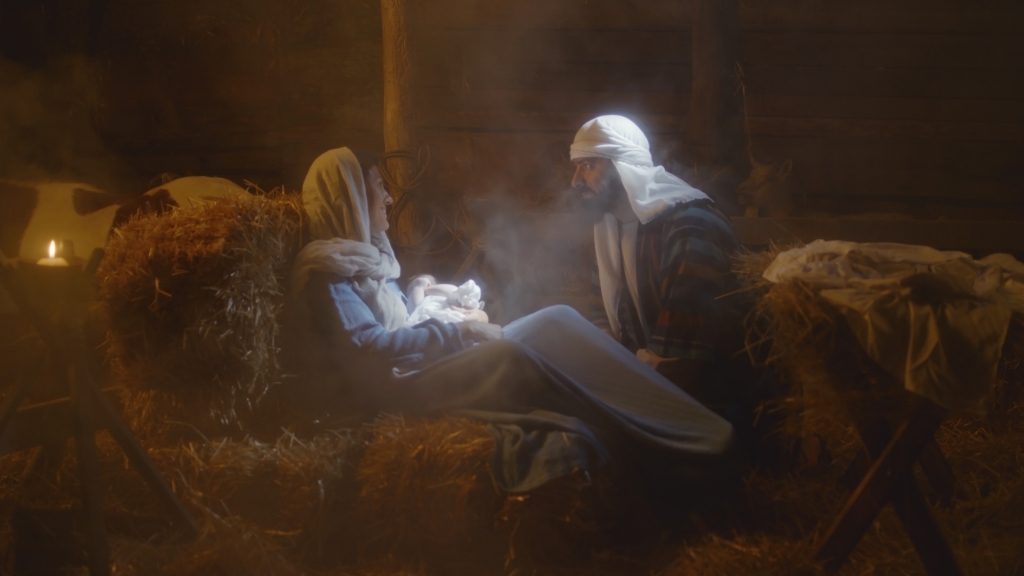
A hush
A rustling
A stirring
A head
A push
A cry
A miracle
A birth
A life
A love
A light
A death
A time
A choice
A future
“For unto you is born this day in the city of David a Savior, who is Christ the Lord.” Luke 2:11
Looking For Something?

As the Christmas holidays get near, I often go to a store “looking for something” to give as a present, without really having something specific in mind. I just know I’ll recognize it as something the person might like or need.
When I was reading through the gospel of John recently, I noticed that God is also “looking.” John 4:23 says, “But the time is coming—indeed it’s here now—when true worshipers will worship the Father in spirit and in truth. The Father is looking for those who will worship him that way.”
So God is “looking” or “seeking,” as some translations say, for people to worship Him.
There’s no doubt God deserves to be worshiped.
Throughout the Bible, from Genesis to Revelation, we are presented with reasons to worship Him—for what He has made, for what He has done, for who He is, for His attributes—so it’s not surprising in Revelation 4:11 that we find worshipers in heaven declaring a beautiful summary of why we should worship Him. “Worthy are you, our Lord and God, to receive glory and honor and power, for you created all things, and by your will they existed and were created.”
But what about now? Jesus said God was seeking people to worship him as we go about our earthly lives. He’s looking for true worshipers, those who give him honor and glory in their spirit as well as in their lives. As He’s seeking, will he find you?
To Know Him is to Fear Him
Be afraid. Be very afraid. Being afraid of God seems foreign to those of us who sing of His blessings, who trust Him with our eternal soul, and who pray daily to Him for guidance, for help, for comfort.
Yet, one can’t read the Bible without encountering the oft-repeated admonition to “fear the Lord.” Throughout the Old Testament, there are numerous examples of God’s children receiving a blessing because they fear God. Also, because of fearing God, they do what He commands them to do. (Genesis 42:18; Exodus 1:17; Exodus 18:21)
Fear of God is not just an Old Testament concept. Jesus said in Matthew 10:28, “Don’t be afraid of those who want to kill your body; they cannot touch your soul. Fear only God, who can destroy both soul and body in hell.”
Nevertheless, there are times in my life when I’ve struggled with the concept of what it means to fear God. Yet, I’ve come to realize that having a fear of God gives us a more realistic view of God’s holiness and His power.
Fearing God doesn’t mean we cower in His presence—like a dog who knows he’s displeased his master—nor does it mean we run and hide instead of joyfully approaching Him. Instead, we embrace the fear of God because we recognize His characteristics—His all-powerful wrath toward sin, His unending sovereignty, and His unapproachable holiness—are an accurate understanding of who God really is.
The fearfulness of God is a reality, even if we don’t like it very much.
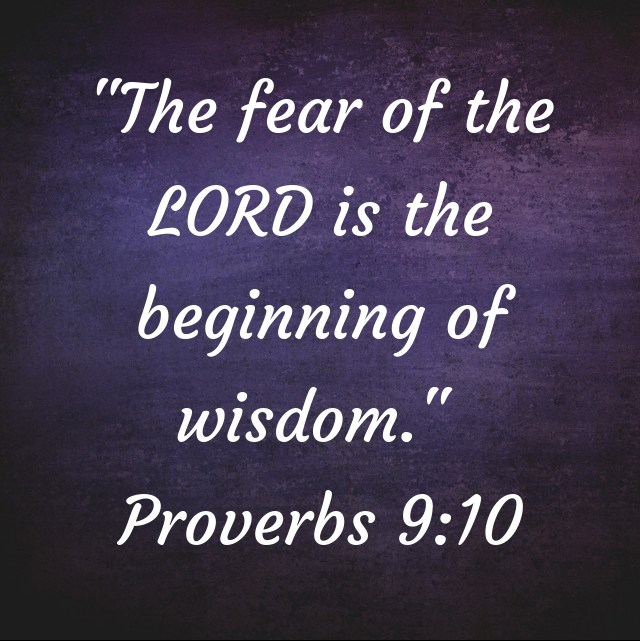
Having a true picture of God is the beginning of wisdom. Proverbs 9:10: “The fear of the LORD is the beginning of wisdom, and the knowledge of the Holy One is insight.”
We should fear God. We should be in awe of His wrath and His judgment. Yet, at the same time, we should have peace, knowing He is shielding us from wrath, sheltering us in His arms forever.
Why Was He Born?
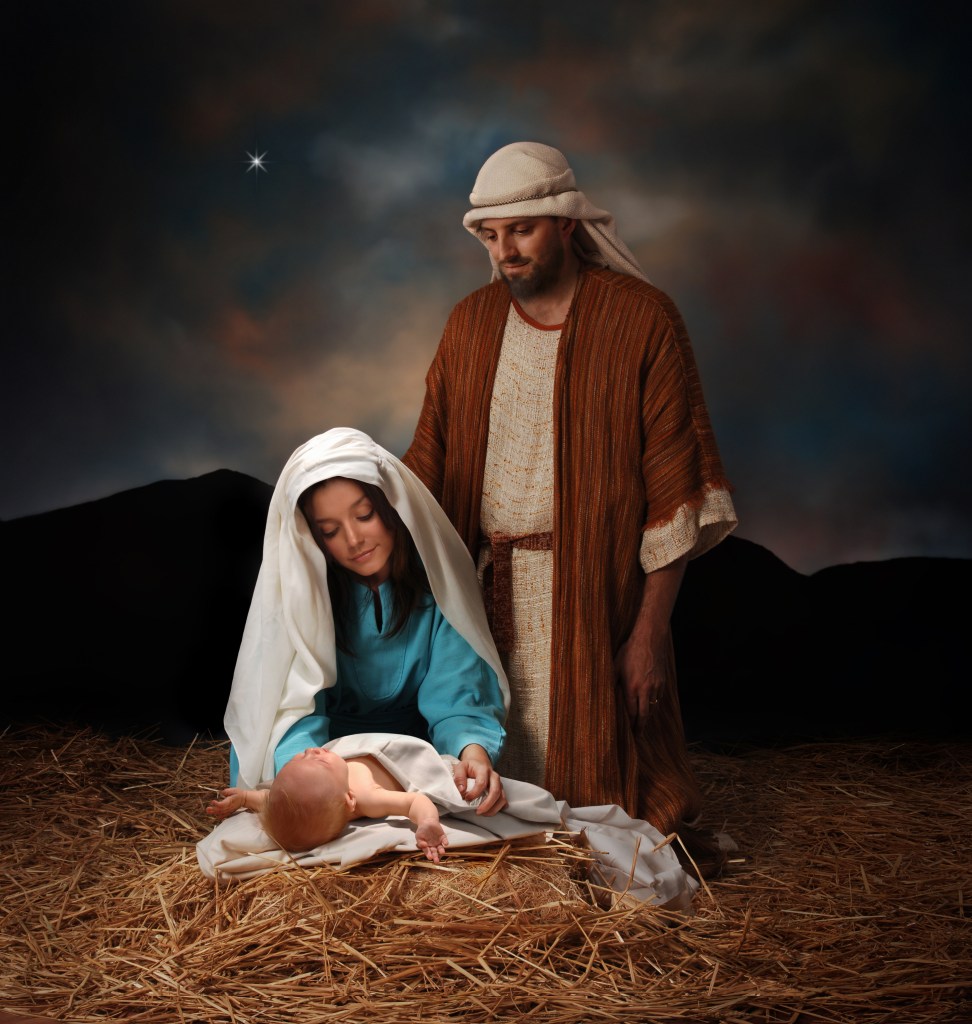
Born to be cursed, not to curse.
Born for sinners, not to sin.
Born to love, not to hate.
Born to accept, not to reject.
Born for failure, not for success.
Born to poverty, not to wealth.
Born for hope, not for despair.
Born for healing, not for affliction.
Born to set free, not to bind up.
Born to reveal, not to conceal.
Born for laughter, not for tears.
Born for compassion, not for anger.
Born to die, not to live.
Born for you.
Why Was He Born?
Born to be cursed, not to curse.
Born for sinners, not to sin.
Born to love, not to hate.
Born to accept, not to reject.
Born for failure, not for success.
Born to poverty, not to wealth.
Born for hope, not despair.
Born for healing, not for affliction.
Born to set free, not to bind up.
Born to reveal, not to conceal.
Born for laughter, not tears.
Born for compassion, not anger.
Born to die, not to live.
A God Who Loves Dirt
 I love the way David describes how God treats His children in Psalm 103. David says He “satisfies your desires with good things.”(Psalm 103:5).
Later on in this Psalm, David writes, “He remembers we are but dust,” and he writes this in connection with the compassion of God. “As a father has compassion on his children, so the Lord has compassion on those who fear him; for he knows how we are formed, he remembers that we are but dust.” (Psalm 103:13-14).
God created human beings out of a common substance, a substance of little worth, just a handful of dirt. Inside this dirt-formed vessel, He placed an image of Himself. When that happened, something of little value became something of infinite value—a living human being. Every human being born after Adam reflects this God-likeness.
Even though we bear His likeness, we are still just dirt, and He remembers this. He knows our frailties, our weaknesses, our dirt, and because of this, He has compassion on us. The Psalmist says, “He crowns you with love and compassion.” (Psalm 103:4).
Even though we’re made of dirt, we have a regal bearing because, as God’s children, we wear the crown of His compassion and love. That’s why David begins and ends this Psalm with these words. “Praise the Lord, my soul; all my inmost being, praise his holy name.” (Psalm 103:22).


Book 6 in the Silas McKay Suspense Series; Click on Cover

Book 12 in the Titus Ray Thriller Series Click on cover

Book 8 in the Mylas Grey Mystery Series, Click on cover

Book 5 in the Silas McKay Suspense Series, Click on cover

Book 11 in the Titus Ray Thriller Series. Click cover
Book 7 in the Mylas Grey Mystery Series on Amazon. Click cover.

Book 4 in the Silas McKay Suspense Series on Amazon. Click cover.

Book 10 in the Titus Ray Thriller Series on Amazon. Click cover.

PREQUEL to the Mylas Grey Mystery Series on Amazon. Click cover

Book VI in the Mylas Grey Mystery Series on Amazon. Click cover

Book III in the Silas McKay Suspense Series on Amazon. Click cover

Book IX in the Titus Ray Thriller Series on Amazon. Click cover

Book V in the Mylas Grey Mystery Series on Amazon. Click cover

Book II in the Silas McKay Suspense Series on Amazon. Click cover

Book I in the Silas McKay Suspense Series on Amazon. Click here

Ben in Trouble follows Four Steps Missed in the Titus Ray Thriller Series

Book IV in the Mylas Grey Mystery Series on Amazon. Click cover

Book VIII in the Titus Ray Thriller Series on Amazon. Click cover.

Ben in Charge, Follows Three Steps Away in the Titus Ray Thriller Series

Ben in Love, Follows Two Steps Forward in the Titus Ray Thriller Series

Two Days Taken:Book II in the Mylas Grey Mystery Series; Click cover.

Book VII in the Titus Ray Thriller Series on Amazon. Click on book cover

One Day Gone: Book I in the Mylas Grey Mystery Series; Click on Cover

Three Days Clueless, Book 3 in the Mylas Grey Mystery Series. Click on Cover.


You must be logged in to post a comment.