Archive
Get A Grip

I thought of the expression,“get a grip,” the other day when I had to face the reality of a serious medical condition that I’ve been dealing with for the past several months, a medical condition that’s going to require surgery to fix it—brain surgery.
The medical condition I’ve been having is Trigeminal Neuralgia, and the neurosurgeon at OU Medical Center told me that he would perform a Microvascular Decompression on my brain to correct it.
However, when I thought of the phrase, “get a grip,” I wasn’t thinking in terms of its usual usage, that is, I wasn’t telling myself to control my emotions so I wouldn’t have a breakdown when I heard what the surgeon said he needed to do.
This surgery requires him to remove a portion of my skull near my ear and separate the superior cerebellar artery in my brain from the trigeminal nerve that controls the feeling in my face. (This artery sits so close to the trigeminal nerve that it has worn it down on the right side of my brain, which is why it’s continually sending painful electrical shocks to the right side of my face, and unfortunately, I’m allergic to the medicines that are usually able to control this condition.)
When I heard what the surgeon said he needed to do, instead of thinking about the usual meaning of “get a grip,” I thought about all the Scriptures that assure me that God will give me strength and uphold me during the difficult times I face in my life—a promise He’s given to all believers.
Isaiah 41:10 is one of those verses: “Fear not, for I am with you; be not dismayed, for I am your God; I will strengthen you, I will help you, I will uphold you with my righteous right hand.”
Not only does God uphold me—that is, He grips me tight—He also tells me to hold onto Him—yes, He’s told me to get a grip on Him.
A verse that says this very thing is Proverbs 4:13: “Take hold of my instructions; don’t let them go. Guard them, for they are the key to life.”
As I undergo this procedure and the recovery period that follows—which could be several weeks—I’m going to “get a grip”by holding on to everything God has promised me in His Word, all those verses that assure me that whatever He allows to come into my life has first passed through His hands and will ultimately bring Him glory and be for my good and benefit.
These are the same promises you can lean on to “get a grip” during the trials you’re facing. I’ve listed a few of those promises below, but there are many more in His Word.
Joshua 1:9—“Do not be afraid or discouraged, for the Lord your God is with you wherever you go.”
Psalm 73:26—“My flesh and my heart may fail, but God is the strength of my heart and my portion forever.”
Philippians 4:13—“I can do all things through him who strengthens me.”
Are You Prepared?

One day—although it’s probably happened to you already—you’ll experience disappointment, loss, suffering, hurt, betrayal, or a number of other painful situations you didn’t anticipate would come your way.
Even though you may have thought you were prepared for every possible hardship a human being can have, there’s a good possibility a situation will arise that will surprise you—something you weren’t prepared for, something you never imagined would happen.
Thankfully, God has graciously instructed His followers how to respond when difficulties come our way.
First, He tells us to expect difficulties:
“Beloved, do not be surprised at the fiery trial when it comes upon you to test you, as though something strange were happening to you.” 1 Peter 4:12.
Difficulties and hardships aren’t strange. They happen to every human being on the planet, including followers of Jesus Christ.
Second, learn from difficulties:
“. . . you have been grieved by various trials, so that the tested genuineness of your faith—more precious than gold that perishes though it is tested by fire—may be found to result in praise and glory and honor at the revelation of Jesus Christ.” 1 Peter 1:6-7.
In His infinite wisdom, God allows us to suffer various hardships in order to test the “genuineness” of our faith. Although we may not understand His purpose for it until we walk through the portals of Heaven, we can be assured He designed it for our ultimate good.
Third, recognize our difficulties won’t last forever:
“And after you have suffered a little while, the God of all grace, who has called you to his eternal glory in Christ, will himself restore, confirm, strengthen, and establish you.” 1 Peter 5:10.
We won’t be in this difficult situation forever. There is an end to it—whether in this life or in death.
Lastly, rejoice in difficulties:
“ In this you rejoice, though now for a little while, if necessary, you have been grieved by various trials.” 1 Peter 1:6.
Rejoicing when we experience trials doesn’t mean we aren’t grieving or hurting. It means in our prayers and by our testimony, we are trusting God, giving Him glory, and relying on His goodness during our suffering.
“Therefore, let those who suffer according to God’s will, entrust their souls to a faithful Creator while doing good.” 1 Peter 4:19.
Be prepared to suffer. In doing so, you will honor and glorify our Lord, “. . . who for the joy that was set before him endured the cross . . .” Hebrews 12:2.
It Doesn’t Make Sense

A newly remodeled house burns to the ground. A long-awaited child is stillborn. A businessman dies on the day he retires.
It doesn’t make sense.
Abraham waiting twenty-five years before his promised child is born. A chosen people suffering in slavery 400 years before freedom comes.
It doesn’t make sense.
The son of God becomes a man and lives among His creation. His creation despises and rejects Him.
It doesn’t make sense.
The One who never sinned takes on the sin of all mankind. Their punishment becomes his punishment.
It doesn’t make sense.
No, God’s ways don’t always make sense, and neither should our response.
Habakkuk, an Old Testament prophet, didn’t understand what God was doing, but after voicing his confusion, this was his response. “Though the fig tree should not blossom, nor fruit be on the vines, the produce of the olive fail, and the fields yield no food, the flock be cut off from the fold, and there be no herd in the stalls, yet I will rejoice in the Lord; I will take joy in the God of my salvation.” Habakkuk 3:17-18.
When God doesn’t make sense, we are to rejoice in the Lord.
No, it doesn’t make sense, but as Paul said, “What is seen is temporary, but what is unseen is eternal.”
2 Corinthians 4:18.
Eternity, when all will make sense.
A Most Unusual Christmas

No matter what age you are, you probably have a Christmas tale about a sad Christmas, one that didn’t go exactly as planned, one that was disappointing, one that was so sorrowful you can’t think about it without the tears flowing.
Or you may have a Christmas tale about a happy Christmas, one where someone surprised you with an unexpected gift, one where you reconciled with a loved one, one where everyone loved the gifts you bought them, or one where you had enough money to buy someone the gift they wanted but didn’t think they’d get.
Some of you may even have a Christmas tale about an unusual Christmas, one where events unfolded in a non-traditional way, so much so that you can remember the circumstances as if they happened yesterday.
I’ve had all of the above, and although space—and my introverted personality—doesn’t lend itself to reciting the details of each situation, here’s a partial list of my most unusual Christmases.
- A Christmas morning when a family member had a kidney stone, and we had to spend the entire day in the ER.
- A Christmas when an ice storm struck so no family members were able to make it to our house to participate in our gift-giving and holiday meal together.
- A Christmas Day when my husband, young daughter, and I had to travel to a foreign country where we would be living for the next three years—a frightening and very lonely day.
- A Christmas Eve when I had to call an ambulance for my husband, who thought he was having a heart attack. In the ER, we learned it was acute pancreatitis, and he ended up spending the next three months hooked up to an IV.
Although it may be hard to believe, I could list several more unusual Christmases during my lifetime. But strangely enough, in all of these circumstances, I found peace by focusing on the most unusual day in all of human history—the First Christmas Day—the day God arrived on planet Earth in a human body.
It was a day like no other day, an unusual day, a unique day, a day we should celebrate even if our Christmas Day ends up being sad, happy, or unusual.
Jesus tells us why in His own words. “I have come into the world as light, so that whoever believes in me may not remain in darkness.” John 12:46.
Need Comfort?

Body language experts are on the news a lot these days. Because it’s an election season, they’re asked to interpret the subtle, nonverbal cues that give insight into a political candidate’s feelings.
One particular observation got my attention recently, because I had never heard anyone put a name to certain gestures a speaker makes, like clutching hands together, putting hands to the face, or massaging an arm. Body language experts call these “comfort gestures.”
Such actions serve to soothe the speaker and indicate the person is feeling anxious, stressed, or uncertain. One expert says that everyone has these “self-comforting movements,” which we all engage in many times during our day.
Although we may not be aware of how often we feel the need to comfort ourselves, the Bible is full of verses that address our universal need for comfort. I immediately thought of several, which made me curious, so I did an internet search and discovered over 100 verses that either mention comfort directly or describe how God provides comfort to us. Bible verses that speak of how God comforts us.
Here’s one of my favorites: “Now may our Lord Jesus Christ himself, and God our Father, who loved us and gave us eternal comfort and good hope through grace, comfort your hearts and establish them in every good work and word.”
2 Thessalonians 2:16-17.
This verse tells me that Jesus Christ himself will comfort our hearts, and He does so on the basis of His love for us, a love that caused him to give “his life for us, that whoever believes in him should not perish, but have everlasting life.” John 3:16.
Now that’s comforting!
The Certainty of Doubt

“I think I figured out who the doubters are.” That’s what a reader emailed me after I released my newest book, Four Doubt.
She followed up that sentence by saying, “But I found more than four doubters in this book. If I counted correctly, there were at least eight. It was like everyone had doubts. Did you realize that?”
I write series, so as a way of making it easy for my readers to know which book to read next, and also as a way of having an author “brand,” I include the number of the book as part of the title.
However, the number also has meaning in the plot of the book. Thus, in this series, the Silas McKay Suspense Series, the number in each of the titles—One Wonders, Two Believe, Three Confess, and Four Doubt, can be linked to certain characters, while also signifying the book order.
For example, in Two Believe, Silas McKay finds it hard to believe in the goodness of God after his wife died of brain cancer. Then, as he and a colleague investigate a robbery, she confesses she doesn’t believe in God. I won’t give any specific spoilers, but by the end of the book, two believe.
The reader who emailed me was right about Four Doubt having a reoccurring theme of doubt running throughout the book. Although the four main characters in the plot expressed doubt of some sort, there were others as well.
The reason doubt was so pervasive among the characters is that I try to make my novels as realistic as possible—in a fictional sort of way, of course—and our culture today is permeated with doubt. We express skepticism toward institutions, government, politicians, medicine, and the list goes on and on. However, doubt isn’t necessarily a bad thing.
There are many instances in Scripture where doubt is expressed, and while Jesus pointed out to his disciples that their doubt showed their lack of faith, he didn’t condemn them for their doubt. Instead, he urged them to believe in Him.
When Silas, the main character in my novel, is asked whether he doubts something, he says, “In my line of work, I never shy away from having doubts. Doubt stems from a desire to know the truth, and if I engage in it, it’s only because I’m pursuing the truth.”
One of the certainties of life is that everyone will experience doubt, but pursuing truth dispels doubt. Where does that search begin?
Jesus said, “I am the way, and the truth, and the life.” John 14:6.
Have no doubt. It begins with Truth himself.
To Know Him is to Fear Him
Be afraid. Be very afraid. Being afraid of God seems foreign to those of us who sing of His blessings, who trust Him with our eternal soul, and who pray daily to Him for guidance, for help, for comfort.
Yet, one can’t read the Bible without encountering the oft-repeated admonition to “fear the Lord.” Throughout the Old Testament, there are numerous examples of God’s children receiving a blessing because they fear God. Also, because of fearing God, they do what He commands them to do. (Genesis 42:18; Exodus 1:17; Exodus 18:21)
Fear of God is not just an Old Testament concept. Jesus said in Matthew 10:28, “Don’t be afraid of those who want to kill your body; they cannot touch your soul. Fear only God, who can destroy both soul and body in hell.”
Nevertheless, there are times in my life when I’ve struggled with the concept of what it means to fear God. Yet, I’ve come to realize that having a fear of God gives us a more realistic view of God’s holiness and His power.
Fearing God doesn’t mean we cower in His presence—like a dog who knows he’s displeased his master—nor does it mean we run and hide instead of joyfully approaching Him. Instead, we embrace the fear of God because we recognize His characteristics—His all-powerful wrath toward sin, His unending sovereignty, and His unapproachable holiness—are an accurate understanding of who God really is.
The fearfulness of God is a reality, even if we don’t like it very much.
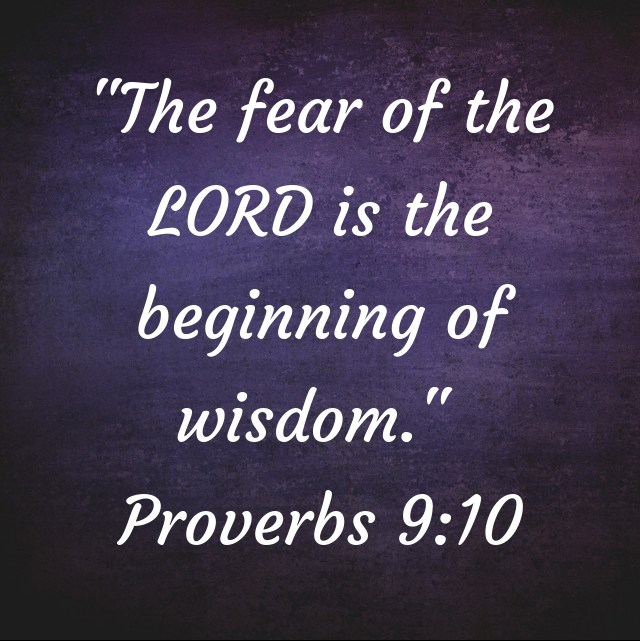
Having a true picture of God is the beginning of wisdom. Proverbs 9:10: “The fear of the LORD is the beginning of wisdom, and the knowledge of the Holy One is insight.”
We should fear God. We should be in awe of His wrath and His judgment. Yet, at the same time, we should have peace, knowing He is shielding us from wrath, sheltering us in His arms forever.
Don’t Stay Away!

There’s a verse of Scripture in Hebrews that gives me pause whenever I read it. It’s Hebrews 10:22, “Therefore . . . let us draw near with a true heart in full assurance of faith.”
Drawing near to God sounds like a terrific idea. So, why don’t we draw near? What makes us stay away?
Believers don’t stay away from God on purpose. It’s usually the result of not doing something, rather than actually doing something.
Not confessing sin.
After the writer of Hebrews described what Jesus did for sinners by his death on the cross, he writes in verse 27, “If we go on sinning deliberately after receiving the knowledge of the truth, there no longer remains a sacrifice for sins, but a fearful expectation of judgment, and a fury of fire that will consume the adversaries.” Unconfessed sin makes us reluctant to be near the One whose responsibility it is to judge sin. We’re afraid, so we stay away.
Not knowing truth.
The writer uses the word,”therefore,” before telling believers to draw near to God. That’s because he’s been explaining great truths having to do with the meaning of the Lamb-like sacrifice and what the shedding of Christ’s blood did for sinners. He says such knowledge gives us confidence to come before God. The reverse is also true. By not knowing what Christ did when He laid down His life for us, we have no confidence and cannot draw near to Him.
Not having faith.
The writer says we are to come before God “with full assurance of faith.” Hebrews 11:6 says, “Without faith, it is impossible to please Him, for he who draws near to God must believe that He is and that He is a rewarder of those who seek Him,” While our faith in God is a gift from Him (Ephesians 2:8-9), we must be willing to act on that faith or we will never draw near to Him.
What happens when we draw near?
Hebrews 4:16 tells us we receive “mercy and grace to help in time of need,” and Hebrews 7:25 says those who draw near to God will discover, “He always lives to make intercession for them.”
Draw near. Take the pathway into His Presence made just for you.
Don’t stay away!!
What Does God Know About Worry?

Everything, of course. That’s why we should follow his instructions about living a worry-free life. “Therefore I tell you, do not be anxious about your life.” Matthew 6:25.
Even though it’s worded a little differently each time, the command not to worry appears in all of the gospels, including a double warning in the gospel of John. “Let not your hearts be troubled, neither let them be afraid.” John 14:27.
Paul also teaches the worry-free life in his letters. “Do not be anxious about anything . . .” Philippians 4:6. As clear as that command is, the “how to” of dealing with worry is equally straightforward.
Philippians 4:7, “but in everything by prayer and supplication with thanksgiving let your requests be made known to God. And the peace of God, which surpasses all understanding, will guard your hearts and your minds in Christ Jesus.”
Not surprisingly, Peter echoes Paul’s solution to worry in 1 Peter 5:6-7: “Humble yourselves . . . casting all your anxieties upon him, for he cares for you.”
The writer of Hebrews says we can be sure of his help when we are troubled. He writes, “So we can confidently say, “The Lord is my helper; I will not fear . . .” Hebrews 13:6.
According to God’s Word, by bringing our worries and cares to the Lord, we are rewarded with the strength and peace to deal with life’s inevitable anxieties.
And, because God is always overflowing in his care for us, He promises to do this for us anew every morning. Lamentations 3:22-23, “The steadfast love of the Lord never ceases; his mercies never come to an end; they are new every morning . . .”
What does God know about worry? Everything.
Trust Him. He’s got this. Leave your worries with Him.
We Keep Waiting
 Are you tired of waiting? I know I am.
During this Covid-19 pandemic, it feels like the whole world is in a waiting room. I’m sure you’ve been stuck in a waiting room before, so you know that feeling of helplessness that comes over you after you been there an hour—or two.
While I’ve been waiting to be released from our city’s quarantine restrictions, I’ve found myself thinking about all the times I’ve been in God’s Waiting Room.
God’s Waiting Room is a place familiar to all praying believers. Those who petition the Father for answers, for relief, for deliverance, for guidance, for comfort, often find such requests are not answered immediately. That’s why God designed His Waiting Room.
If the waiting goes on for months, even years, God’s Waiting Room can become a place of discontentment, anger, frustration, and unbelief.
It’s happened to me. Don’t let it happen to you.
Through the years, I’ve learned waiting on God doesn’t have to be unbearable, not as long as I follow some basic principles.
1. Don’t wait alone. Waiting is always easier if the wait is shared, even if it’s virtual sharing.
2. Find something to do while waiting. Occupying body, mind, and spirit makes the wait easier.
3. Encourage others as you wait. Empathy for others who may be going through similar circumstances lightens your burden and blesses your soul.
4. Recognize God has a sovereign purpose in the length of your wait. Waiting is no different from anything else in your life—God is working all things for His Glory and your benefit no matter what it is.
Those willing to wait on God are given a special promise. It’s found in Isaiah 64:4: “No eye has seen a God like you, who works for those who wait for him.”
While you’re in God’s Waiting Room, He’s out there working for you.
Keep on waiting.


Book 8 in the Mylas Grey Mystery Series, Click on cover

Book 5 in the Silas McKay Suspense Series, Click on cover

Book 11 in the Titus Ray Thriller Series. Click cover

Book 7 in the Mylas Grey Mystery Series on Amazon. Click cover.

Book 4 in the Silas McKay Suspense Series on Amazon. Click cover.

Book 10 in the Titus Ray Thriller Series on Amazon. Click cover.

PREQUEL to the Mylas Grey Mystery Series on Amazon. Click cover

Book VI in the Mylas Grey Mystery Series on Amazon. Click cover

Book III in the Silas McKay Suspense Series on Amazon. Click cover

Book IX in the Titus Ray Thriller Series on Amazon. Click cover

Book V in the Mylas Grey Mystery Series on Amazon. Click cover

Book II in the Silas McKay Suspense Series on Amazon. Click cover

Book I in the Silas McKay Suspense Series, Available in Winter Deceptions

Ben in Trouble follows Four Steps Missed in the Titus Ray Thriller Series

Book IV in the Mylas Grey Mystery Series on Amazon. Click cover

Book VIII in the Titus Ray Thriller Series on Amazon. Click cover.

Ben in Charge, Follows Three Steps Away in the Titus Ray Thriller Series

Ben in Love, Follows Two Steps Forward in the Titus Ray Thriller Series

Two Days Taken:Book II in the Mylas Grey Mystery Series; Click cover.

Book VII in the Titus Ray Thriller Series on Amazon. Click on book cover

One Day Gone: Book I in the Mylas Grey Mystery Series; Click on Cover

NEWEST BOOK: Available on Amazon. Click on Cover.

Prequel to the Titus Ray Thriller Series is $0.99 on Amazon. Click book cover


Book I in the Titus Ray Thriller Series on Amazon. Click book cover


Book II in the Titus Ray Thriller Series on Amazon. Click on book cover

Book III in the Titus Ray Thriller Series on Amazon: Click on book cover


Book IV in the Titus Ray Thriller Series on Amazon. Click on book cover.


Book V in the Titus Ray Thriller Series on Amazon. Click on book cover.


Book VI in the Titus Ray Thriller Series on Amazon. Click on book cover.


Books 1 & 2 in the Titus Ray Series Available on Amazon. Click on cover.


 His Glory My Joy, a blog of Author Luana Ehrlich
You must be logged in to post a comment.