Archive
It’s Not The End

It’s not the end of the story! Have you ever come to the end of a book, where the inevitable conflicts have been resolved, and you were reading the last chapter, and yet, you felt a little unsatisfied with how the story ended?
Then, at that moment, just when you were trying to come to grips with your feelings, you turned the page and found another chapter?
What a relief!
That’s what happens in the gospel of Matthew when Jesus is crucified. He’s dead. The body’s in the grave. The disciples have been grieving for three days. His enemies are happy. At last, He’s gone. End of Matthew chapter 27.
But it’s not the end.
Turn the page. There’s another chapter. Chapter 28. A big chapter. A significant chapter. A life-changing chapter.
Jesus isn’t dead. Yes, He died. There was no doubt about that—the Roman soldiers thrust a sword through His side just to make sure He was dead.
But, because He lived a sinless life, the breath of life, God’s breath, returned, and He walked out of that grave to a new life, a different life, a resurrected life.
Now, here’s one of the best parts about this very true story: this immortal life, this eternal life, is available to anyone who’s willing who put their trust in Him.
John 11:25-26: “Jesus said to her, “I am the resurrection and the life. The one who believes in me will live, even though they die; and whoever lives by believing in me will never die.”
Believe me, the life story of anyone who does that will end well.
In fact, their story will continue for all eternity.
I’m Not Able

When someone makes the statement, “I’m not able,” it can be an admission of weakness, but it can also be an admission of faith.
When a person realizes they’re not able to stand before God as blameless, they’re not expressing weakness; they’re validating the truth of Romans 3:23: “For all have sinned and fall short of the glory of God.”
But that’s not the full story. Even though everyone has sinned, Hebrews 7:25 tells us that Jesus, the Son of God, “is able to save to the uttermost those who draw near to God.”
And there’s this from Jude 24, where the writer says that Jesus “is able to keep you from stumbling and to present you blameless before the presence of his glory with great joy.”
Admitting I am not able to deliver myself from my sins, nor appear before God as blameless, is an expression of faith, and accepting the truth that He is able—by means of His sacrificial death—to accomplish it, is a confession of that faith.
But that’s still not the full story. In 1 Timothy 4:12, the apostle Paul says, “I know whom I have believed, and I am convinced that he is able to guard until that day what has been entrusted to me.”
And lastly, from Hebrews 2:18: “For because he himself has suffered when tempted, he is able to help those who are being tempted.”
I am not able, but God is able.
He is able to save those who come to Him.
He is able to keep you from stumbling.
He is able to present you as blameless.
He is able to guard you.
He is able to help you in temptation.
As the apostle Paul urges us in Ephesians 3:20-21, we give Him glory for He is able.
“Now to him who is able to do far more abundantly than all that we ask or think, according to the power at work within us, to him be glory in the church and in Christ Jesus throughout all generations, forever and ever. Amen.”
It Doesn’t Make Sense

A newly remodeled house burns to the ground. A long-awaited child is stillborn. A businessman dies on the day he retires.
It doesn’t make sense.
Abraham waiting twenty-five years before his promised child is born. A chosen people suffering in slavery 400 years before freedom comes.
It doesn’t make sense.
The son of God becomes a man and lives among His creation. His creation despises and rejects Him.
It doesn’t make sense.
The One who never sinned takes on the sin of all mankind. Their punishment becomes his punishment.
It doesn’t make sense.
No, God’s ways don’t always make sense, and neither should our response.
Habakkuk, an Old Testament prophet, didn’t understand what God was doing, but after voicing his confusion, this was his response. “Though the fig tree should not blossom, nor fruit be on the vines, the produce of the olive fail, and the fields yield no food, the flock be cut off from the fold, and there be no herd in the stalls, yet I will rejoice in the Lord; I will take joy in the God of my salvation.” Habakkuk 3:17-18.
When God doesn’t make sense, we are to rejoice in the Lord.
No, it doesn’t make sense, but as Paul said, “What is seen is temporary, but what is unseen is eternal.”
2 Corinthians 4:18.
Eternity, when all will make sense.
Choose to Chuckle

During our college days, my husband and I befriended Benjamin, a student from Lagos, Nigeria, who traveled halfway around the world to attend a Baptist college in East Texas after becoming a believer through the witness of some Baptist missionaries.
Benjamin, who was the son of a tribal witch doctor, was at least fifteen years older than we were, and he seemed much wiser. His wisdom came from years of lived experiences, and he wasn’t shy about sharing those stories with us, something we encouraged him to do whenever we invited him to have a meal with us.
Decades later, many of his stories still have an impact on my life, primarily because the culture he grew up in was so different from my own, so consequently, his perspective caused me to look at the world and my faith through a different lens.
One of my favorite stories was the one he told us about the time he and his best friend were on their way to another village and were attempting to cross a flooded river. He described the difficulty he had in making it across, and then he told us how anxious he felt when he saw his friend fighting the current, eventually going under, but then emerging a little later and grabbing a tree branch along the riverbank.
Benjamin began laughing as he got to this part of the story, so we assumed it had a happy ending, but then he said, “But as God would have it, the branch broke off, and my friend drowned.”
When we questioned him about why he laughed even though he must have felt sad at the loss of his friend, he said, “In my culture, when something is so sad that you can’t cry about it, then we choose to laugh. Choosing to laugh will eventually overcome your sadness.”
I’ve often remembered Benjamin’s advice during difficult periods in my life, and each time I’ve followed his advice and chosen laughter to get me through the rough patch, I’ve always found it made the situation better.
I was reminded of this as I was reading some verses from the Bible this week about joy, and I came across some similar advice from the writer of Proverbs.
Proverbs 17:22 says, “A joyful heart is good medicine, but a crushed spirit dries up the bones.”
Are you going through a hard time?
Choose to chuckle.
I believe you’ll find it’s good medicine.
Need Comfort?

Body language experts are on the news a lot these days. Because it’s an election season, they’re asked to interpret the subtle, nonverbal cues that give insight into a political candidate’s feelings.
One particular observation got my attention recently, because I had never heard anyone put a name to certain gestures a speaker makes, like clutching hands together, putting hands to the face, or massaging an arm. Body language experts call these “comfort gestures.”
Such actions serve to soothe the speaker and indicate the person is feeling anxious, stressed, or uncertain. One expert says that everyone has these “self-comforting movements,” which we all engage in many times during our day.
Although we may not be aware of how often we feel the need to comfort ourselves, the Bible is full of verses that address our universal need for comfort. I immediately thought of several, which made me curious, so I did an internet search and discovered over 100 verses that either mention comfort directly or describe how God provides comfort to us. Bible verses that speak of how God comforts us.
Here’s one of my favorites: “Now may our Lord Jesus Christ himself, and God our Father, who loved us and gave us eternal comfort and good hope through grace, comfort your hearts and establish them in every good work and word.”
2 Thessalonians 2:16-17.
This verse tells me that Jesus Christ himself will comfort our hearts, and He does so on the basis of His love for us, a love that caused him to give “his life for us, that whoever believes in him should not perish, but have everlasting life.” John 3:16.
Now that’s comforting!
The Certainty of Doubt

“I think I figured out who the doubters are.” That’s what a reader emailed me after I released my newest book, Four Doubt.
She followed up that sentence by saying, “But I found more than four doubters in this book. If I counted correctly, there were at least eight. It was like everyone had doubts. Did you realize that?”
I write series, so as a way of making it easy for my readers to know which book to read next, and also as a way of having an author “brand,” I include the number of the book as part of the title.
However, the number also has meaning in the plot of the book. Thus, in this series, the Silas McKay Suspense Series, the number in each of the titles—One Wonders, Two Believe, Three Confess, and Four Doubt, can be linked to certain characters, while also signifying the book order.
For example, in Two Believe, Silas McKay finds it hard to believe in the goodness of God after his wife died of brain cancer. Then, as he and a colleague investigate a robbery, she confesses she doesn’t believe in God. I won’t give any specific spoilers, but by the end of the book, two believe.
The reader who emailed me was right about Four Doubt having a reoccurring theme of doubt running throughout the book. Although the four main characters in the plot expressed doubt of some sort, there were others as well.
The reason doubt was so pervasive among the characters is that I try to make my novels as realistic as possible—in a fictional sort of way, of course—and our culture today is permeated with doubt. We express skepticism toward institutions, government, politicians, medicine, and the list goes on and on. However, doubt isn’t necessarily a bad thing.
There are many instances in Scripture where doubt is expressed, and while Jesus pointed out to his disciples that their doubt showed their lack of faith, he didn’t condemn them for their doubt. Instead, he urged them to believe in Him.
When Silas, the main character in my novel, is asked whether he doubts something, he says, “In my line of work, I never shy away from having doubts. Doubt stems from a desire to know the truth, and if I engage in it, it’s only because I’m pursuing the truth.”
One of the certainties of life is that everyone will experience doubt, but pursuing truth dispels doubt. Where does that search begin?
Jesus said, “I am the way, and the truth, and the life.” John 14:6.
Have no doubt. It begins with Truth himself.
Words Don’t Really Matter

Do words really matter? We tell our children they do. We defend our use of words. We remind ourselves to choose our words carefully.
However, at the end of our life, whether we die of old age, disease, violence, or an accident, our words don’t really matter. There’s only one word that matters—His Word—the Word of God.
It was His Word that brought our world into existence, His Word that brought comfort to sinful Man in the Garden, His Word that promised a coming redemption.
It was the Word who became a man, the Word who healed a cripple, the Word who restored sight to the blind, the Word who brought a dead man to life, the Word who said, “Father, forgive them.”
It was the Word who took the punishment for our sins, the Word who conquered death for us, the Word who rose to give us life.
Our words don’t really matter, but His Word does.
His Word says, “I am the way, and the truth, and the life. No one comes to the Father except through me.” John 14:7
No other words matter.
Let’s Talk Happiness

It’s been a cold, rainy week in Oklahoma. Not much sunshine. I’m not a person who gets depressed, and I really like some rainy days every now and then, but I’ve been longing for sunshine for two days now. People seem to be happier when the sun is shining.
As I thought about what makes people happy, I came across a devotional that references mankind’s universal search for happiness.
In the article, a book by C. S. Lewis called Mere Christianity is referenced. Here are two quotes from it that I believe give clarity and substance to the idea of happiness.
“All that we call human history–money, poverty, ambition, war, prostitution, classes, empires, slavery–is the long terrible story of man trying to find something other than God which will make him happy.”
“God designed the human machine to run on Himself. He Himself is the fuel our spirits were designed to burn, or the food our spirits were designed to feed on. There is no other. That is why it is just no good asking God to make us happy in our own way without bothering about religion. God cannot give us a happiness and peace apart from Himself, because it is not there. There is no such thing.” –C.S. Lewis, Mere Christianity.
A bright cloudless day can’t really make a person happy. Only God can do that.
Turn your face toward the Son. Bask in the warmth and happiness of His Light today.
“You make known to me the path of life, in your presence there is fullness of joy; at your right hand are pleasures forevermore.” Psalm 16:11.
What Difference Does It Make?

All of us have a story. It may be your parenting story, your pregnancy story, your career story, or the story of your life. A story I’ve always enjoyed hearing is the story of someone’s salvation—all the details surrounding how a person came to faith in Christ.
When we lived in Indiana in the late 1980’s, the editor of our denomination’s weekly state paper, The Indiana Baptist, asked me to do a weekly column on a different individual each week and emphasize the details of their conversion experience. I decided to call the column “A Story To Tell.”
My husband’s job at that time was in Baptist missions, and we traveled to a different church in Indiana every week. We usually arrived at the church at least an hour before he was to preach, so I had time to seek out a friendly man or woman, get their permission to record our conversation, and then ask them to tell me their salvation experience. After the interview, I would write down our conversation in a story format.
While all the stories culminated when the person became a born-again Christian, each convert’s circumstances were unique. However, after several months of writing salvation stories, the common thread I saw in each person’s experience was the way God used a friend, a neighbor, a relative, or even a stranger to draw the unsaved person to Christ.
An example of this was the young man who had not been brought up in the church, knew nothing of the Lord and was planning on becoming a professional golfer. One evening, when he was about to enter a nightclub to enjoy several hours of partying, he noticed a group of people carrying picket signs. They were protesting what was going on inside the establishment. One of the signs read “The wages of sin is death.”
For weeks the young man was haunted by these words, but he had no idea what they meant. However, after he followed his girlfriend’s suggestion to talk to a pastor, he was led to the Lord, and his life was forever transformed.
I’m sure the man who had picketed the nightclub that night carrying a sign with the words from Romans 6:23 written on it, never realized his small gesture eventually made an eternal difference in someone’s life.
What difference will you make in someone’s salvation story?
Comfort Food Needed

What’s your comfort food? My husband loves mashed potatoes and gravy. I love bread products. Oh, and chocolate, and maybe some cinnamon rolls thrown in too. And pizza! Don’t forget pizza.
But real comfort food can only be found in the Bible. Here are some of my favorites.
“Be strong, and let your heart take courage, all you who wait for the Lord!” Psalm 31:24.
“Our soul waits for the Lord; he is our help and our shield. For our heart is glad in him, because we trust in his holy name.” Psalm 33:20-21.
For the Lord your God is gracious and merciful and will not turn away his face from you, if you return to him.” 2 Chronicles 30:9.
Most of all, turn to the ONE who gives comfort.
“Blessed be the God and Father of our Lord Jesus Christ, the Father of mercies and God of all comfort.” 2 Corinthians 1:3


Book 8 in the Mylas Grey Mystery Series, Click on cover

Book 5 in the Silas McKay Suspense Series, Click on cover

Book 11 in the Titus Ray Thriller Series. Click cover
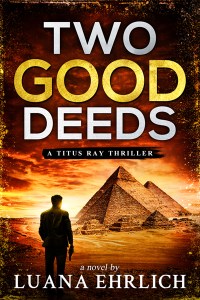
Book 7 in the Mylas Grey Mystery Series on Amazon. Click cover.

Book 4 in the Silas McKay Suspense Series on Amazon. Click cover.

Book 10 in the Titus Ray Thriller Series on Amazon. Click cover.

PREQUEL to the Mylas Grey Mystery Series on Amazon. Click cover

Book VI in the Mylas Grey Mystery Series on Amazon. Click cover

Book III in the Silas McKay Suspense Series on Amazon. Click cover

Book IX in the Titus Ray Thriller Series on Amazon. Click cover

Book V in the Mylas Grey Mystery Series on Amazon. Click cover

Book II in the Silas McKay Suspense Series on Amazon. Click cover

Book I in the Silas McKay Suspense Series, Available in Winter Deceptions

Ben in Trouble follows Four Steps Missed in the Titus Ray Thriller Series

Book IV in the Mylas Grey Mystery Series on Amazon. Click cover

Book VIII in the Titus Ray Thriller Series on Amazon. Click cover.

Ben in Charge, Follows Three Steps Away in the Titus Ray Thriller Series

Ben in Love, Follows Two Steps Forward in the Titus Ray Thriller Series

Two Days Taken:Book II in the Mylas Grey Mystery Series; Click cover.

Book VII in the Titus Ray Thriller Series on Amazon. Click on book cover

One Day Gone: Book I in the Mylas Grey Mystery Series; Click on Cover

NEWEST BOOK: Available on Amazon. Click on Cover.

Prequel to the Titus Ray Thriller Series is $0.99 on Amazon. Click book cover


Book I in the Titus Ray Thriller Series on Amazon. Click book cover


Book II in the Titus Ray Thriller Series on Amazon. Click on book cover

Book III in the Titus Ray Thriller Series on Amazon: Click on book cover


Book IV in the Titus Ray Thriller Series on Amazon. Click on book cover.


Book V in the Titus Ray Thriller Series on Amazon. Click on book cover.


Book VI in the Titus Ray Thriller Series on Amazon. Click on book cover.


Books 1 & 2 in the Titus Ray Series Available on Amazon. Click on cover.


 His Glory My Joy, a blog of Author Luana Ehrlich
You must be logged in to post a comment.