Archive
I Got Irritated

On a visit to Sam’s Club the other day, I got mildly irritated—not angry or mad—just irritated.
It happened as I came into the produce section and went by an area of the store where a Sam’s Club worker was putting oranges through a machine to make freshly squeezed orange juice.
I usually enjoy the tangy fragrance as I go through the aisles selecting the produce I need, but today, I was assaulted by a high-pitched noise coming from the machinery that automatically squeezes the oranges to produce the juice.
As I passed other customers, they gave me a smile, so I felt sure they were as irritated as I was that someone in management hadn’t shut the machine down.
The noise seemed to be getting worse as I hurried to make my selections and move out of the area, and for a brief moment, I considered saying something to the person restocking the apples.
Instead, I quickly made my way over to the dairy section.
But, despite the fact I’d moved several feet away, I could still hear the high-pitched squeaking.
Suddenly, it dawned on me.
I was the one causing the irritating noise.
Or rather, as I made my way around the store, the squeaky wheels on my cart were responsible for the awful racket.
While I’d been blaming everyone else for my discomfort, I was responsible for it all along.
I immediately found myself smiling, and yes, I saw a lesson in it as well.
The fact that I was looking somewhere else for the source of my irritation reminded me of Jesus’ words in Matthew 7:3-5: “Why do you see the speck that is in your brother’s eye, but do not notice the log that is in your own eye? … First take the log out of your own eye, and then you will see clearly to take the speck out of your brother’s eye.”
It was a reminder that before blaming someone else for whatever is bothering me, I should examine myself first.
Once I’ve looked inward, I may not need to look outward.
James 1: 14-15: “But each person is tempted when he is lured and enticed by his own desire. Then desire when it has conceived gives birth to sin, and sin when it is fully grown brings forth death.”
It’s a Joy Thing

Whether you spend time reading the Bible on a daily basis, or you’re only familiar with it from hearing a minister preach from the Bible, you can’t miss the fact that joy is one of the predominate themes in the Bible.
Depending on which Bible translation you’re using, there are over 200 verses that talk about experiencing joy, which I would define as a deep sense of well-being that comes from knowing Christ through the presence of his Holy Spirit.
Joy isn’t happiness, which is a temporary emotion based on outward circumstances which brings pleasure or satisfaction for a short length of time and can easily disappear when a situation changes.
Instead, joy is rock solid, permanent, anchored in the unchanging nature and promises of God and expresses itself outwardly through our prayers and praises to Him.
Here are a few instances of what the Bible says about how we experience joy:
Joy is found in God’s presence
“You make known to me the path of life; in your presence there is fullness of joy; at your right hand are pleasures forevermore.” Psalm 16:11.
Joy is found in believing God
“May the God of hope fill you with all joy and peace in believing, so that by the power of the Holy Spirit you may abound in hope.” Romans 15:13.
Joy is found in worshiping God
“Shout for joy in the Lord, O you righteous! Praise befits the upright.” Psalm 33:1.
Joy is found in hearing the words of God.
“These things I have spoken to you, that my joy may be in you, and that your joy may be full.” John 15:11.
This deep, abiding joy is exclusively given to those who are believers in Christ, who have trusted His death on the cross as the ultimate sacrifice to pay for their sins, and who are anticipating spending an eternity basking in the light of His glorious beauty.
“And the ransomed of the Lord shall return and come to Zion with singing; everlasting joy shall be upon their heads; they shall obtain gladness and joy, and sorrow and sighing shall flee away.” Isaiah 51:11
Words Don’t Really Matter

Do words really matter? We tell our children they do. We defend our use of words. We remind ourselves to choose our words carefully.
However, at the end of our life, whether we die of old age, disease, violence, or an accident, our words don’t really matter. There’s only one word that matters—His Word—the Word of God.
It was His Word that brought our world into existence, His Word that brought comfort to sinful Man in the Garden, His Word that promised a coming redemption.
It was the Word who became a man, the Word who healed a cripple, the Word who restored sight to the blind, the Word who brought a dead man to life, the Word who said, “Father, forgive them.”
It was the Word who took the punishment for our sins, the Word who conquered death for us, the Word who rose to give us life.
Our words don’t really matter, but His Word does.
His Word says, “I am the way, and the truth, and the life. No one comes to the Father except through me.” John 14:7
No other words matter.
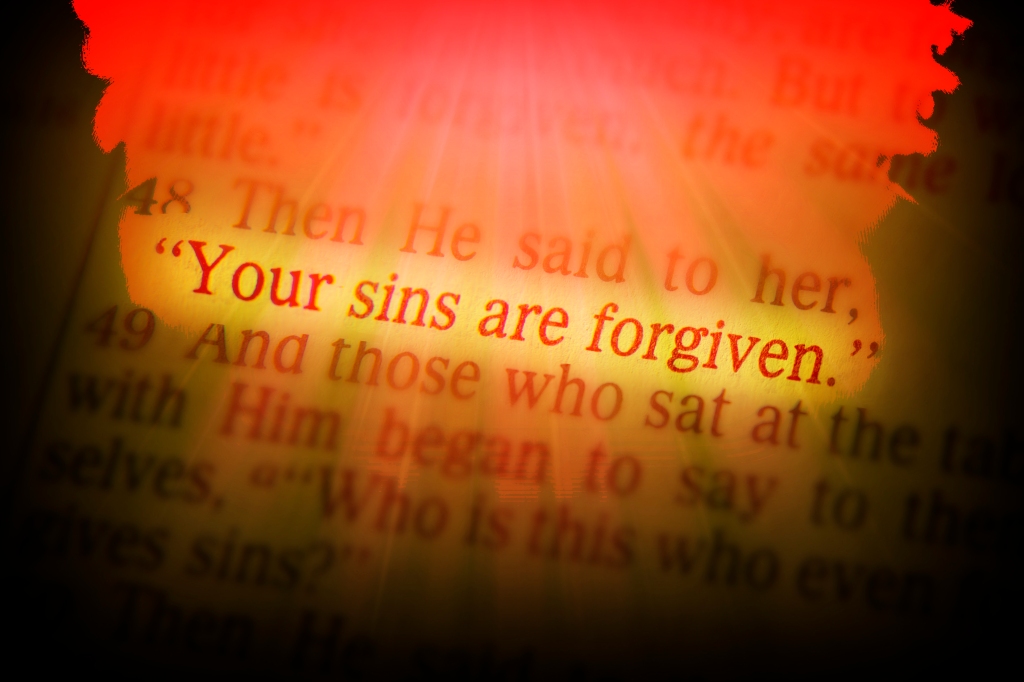
From Sin to Forgiveness
In my three Christian fiction series—Titus Ray Thrillers, Mylas Grey Mysteries, and Silas McKay Suspense—each of my protagonists is at a different place in his spiritual journey.
However, of the three, Titus Ray, a covert operative, has the most difficulty forgiving others for past mistakes.
Titus was brought to faith in Christ through the influence of an Iranian Christian couple in Tehran who hid him in their home for three months while he was on the run from the secret police.
Even though Titus grew up in “Christian” America, he knew nothing about Christianity. He came from a family who never attended church, who never mentioned God—except in a swear word—and who never went inside a church unless it was to attend a funeral.
Thus, it wasn’t surprising that Titus didn’t know how to live out his faith when he became a believer and returned to the States to resume his career at the CIA. However, he remembered the Iranian Christians read their Bible every day, so he purchased his first Bible and began reading the gospel of John.
From reading his Bible and being mentored by more mature believers, he gradually figured out how to control his volatile temper, and how to recognize the difference between deceiving others as part of his profession and doing so willfully to further his own agenda.
By far, the most difficult part of his Christian walk so far has been learning to forgive others—from his alcoholic father to other operatives who made foolish decisions that cost people their lives—but his journey toward real and lasting forgiveness only began when he heard these words from Ephesians 5:32: “And be kind to one another, tender-hearted, forgiving each other, just as God in Christ also has forgiven you.”
Jesus himself showed us the example when he was in the throes of agony on the cross and cried out, “Father, forgive them, for they know not what they do.” Luke 23:34.
Titus realized he was to forgive others even as he had been forgiven, for no one had ever wronged him as much as the Son of God had been wronged.
A lesson from a fictional character to real believers.
What is God Thinking?

I love looking at NASA’s Hubble image of the day, and I subscribe to several daily news feeds which send me announcements about the latest space and astronomy happenings.
I’m drawn to the heavens because I’m able to see the incredible beauty of God’s handiwork there. “The heavens declare the glory of God and the sky above declares his handiwork.” Psalm 19:1.
Scientists tell us when we look at the heavens above our heads, even with the most powerful of telescopes, we’re only able to see a minuscule portion of the universe. Human beings can never fully grasp the vastness of the world our Creator has made all in order to display His glory.
I believe God intended it to be that way.
God created an incomprehensible universe because He is incomprehensible. The immense heavens reflect an immense God, giving us, at best, only the barest pinhole glimpses of a God of unlimited power.
Someone has suggested perhaps the Universe is just ONE of God’s thoughts. How mind-blowing is that?
Trying to comprehend the power behind a Being who can create the Universe is impossible for a finite human creature. It’s just as impossible to understand the grace of God in making provision through His Son for human beings to live with Him in His Universe forever and to enjoy a personal relationship with him.
Psalm 8:3-4 “When I look at your heavens, the work of your fingers, the moon and the stars, which you have set in place, what is man that you mindful of him, and the son of man that you care for him?”
What to know more about the possibility of a personal relationship with God? Watch the video below.
Why Was He Born?
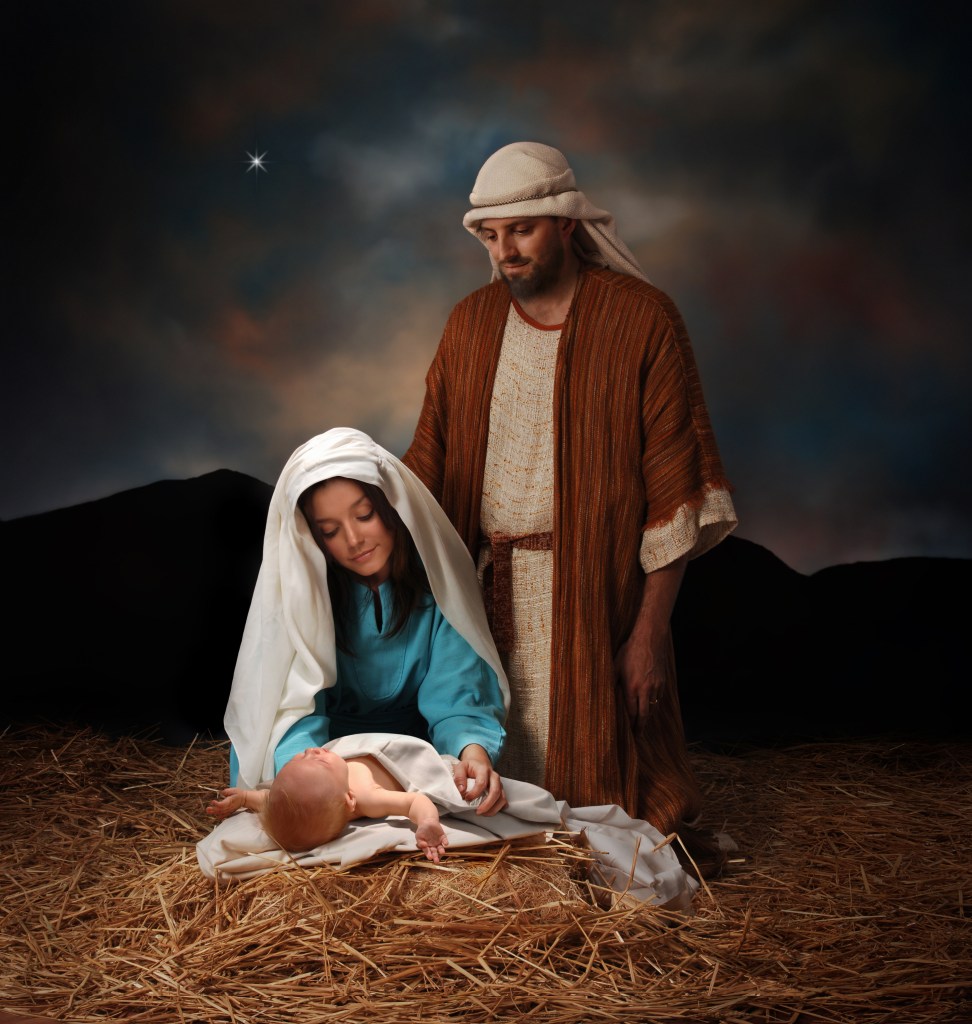
Born to be cursed, not to curse.
Born for sinners, not to sin.
Born to love, not to hate.
Born to accept, not to reject.
Born for failure, not for success.
Born to poverty, not to wealth.
Born for hope, not for despair.
Born for healing, not for affliction.
Born to set free, not to bind up.
Born to reveal, not to conceal.
Born for laughter, not for tears.
Born for compassion, not for anger.
Born to die, not to live.
Born for you.
Hidden in Plain Sight

Because I write mystery/suspense/thrillers, I’m always doing research on technology like hidden cameras, spy drones, and everyday objects that can be used for surveillance. Do you know the very best place to hide something? Hide it in plain sight. People tend to overlook things that are right in front of them.
How many people look at a button on a shirt and think it could be a hidden camera? No one but a spy or a thriller writer, which is all the more reason why it’s the perfect spot for one.
But “hidden in plain sight” doesn’t just apply to spies and detectives and hidden cameras. There are all kinds of hidden words for us in Scripture—staring us right there in the face just waiting for us to discover them.
I recently discovered one of these hidden jewels in Jude. Jude? That’s right. No wonder I’ve overlooked it. How often do you read from the book of Jude? It’s the book just before Revelation, so small it doesn’t even have chapters.
Here’s a “hidden in plain sight” treasure from Jude 24-25: “Now to him who is able to keep you from stumbling and to present you blameless before the presence of his glory with great joy, to the only God, our Savior, through Jesus Christ our Lord, be glory, majesty, dominion, and authority, before all time and now and forever.”
There are several reasons why these verses got my attention, but here are just three of them: 1) God not only helps us as we struggle with sin, He’s “able to keep us from stumbling.” 2) When we appear before Him in His presence, He’ll present us blameless in His sight. 3) When he presents us blameless before His presence, he’ll do it “with great joy.”
Okay, here’s one more: So often, we think of Jesus as our Savior, and rightly so, for his sacrifice on Calvary “saved” us from the wrath of God we all deserve. Yet Jude 25 calls God the Father our Savior: “to the only God, our Savior . . .”
No wonder Jude ends his letter with a praise to Him that we give him “glory, majesty, dominion, and authority . . .”
There you go—a magnificent truth hidden in plain sight for you to treasure and enjoy.
Why Was He Born?
Born to be cursed, not to curse.
Born for sinners, not to sin.
Born to love, not to hate.
Born to accept, not to reject.
Born for failure, not for success.
Born to poverty, not to wealth.
Born for hope, not despair.
Born for healing, not for affliction.
Born to set free, not to bind up.
Born to reveal, not to conceal.
Born for laughter, not tears.
Born for compassion, not anger.
Born to die, not to live.
The Being of “Not”

I’ve always been fascinated by what John the Baptist said when someone asked him if he was the long-awaited promised Messiah. “I am not the Messiah,” he said (John 1:20).
Why does his answer fascinate me?
First, since they asked him the question, some in the crowd obviously thought he might be the Messiah. The gospel writers don’t tell us whether it was his dress, his demeanor, or his preaching, but evidently some saw this as a possibility.
John could have claimed the title easily enough.
He had an extraordinary, miraculous birth. An angel appeared in person to his father to announce his birth. His mother had been unable to have children, and she was already past the age of bearing children when she got pregnant, plus his father lost his ability to speak throughout his wife’s pregnancy, and his voice only returned when John was born.
But John refused the title of Messiah, despite the fact it would have made him even more popular and more people would have been drawn to him to hear his message.
“I am not the Messiah.”
His answer also fascinates me because by knowing who he was not, John is also indicating he knows who he is. Although he is not the Messiah, he is someone with a message and a mission.
Luke 3:3 says, “And he went into all the region around the Jordan, proclaiming a baptism of repentance for the forgiveness of sins.”
In John’s declaration of “I am not the Messiah,” I find a powerful truth for how God calls me to live my own life. Knowing who I am not—whether it’s an age, a career, a family role, a ministry—is the key to knowing who I am.
No matter who I am not, God has given me a message and a mission, and like John, this message and mission will ultimately point away from me and to the true Messiah.
When John was baptizing one day, he saw Jesus walking along the banks of the Jordan River and he said to those around him, “Behold, the Lamb of God, who takes away the sin of the world!” (John 1:29).
I am not the Messiah, but I know the Messiah who has taken away the sins of the world.
You can know the Messiah too. Learn more here.
What a Surprise!

God reveals Himself in Scripture as a God who loves surprises. Throughout the Old Testament, God manifests Himself in surprising ways, He chooses surprising people, He acts in surprising circumstances.
God Manifests Himself in Surprising Ways:
- A burning bush
- A whirlwind
- A bunch of dry bones
- A barren womb
God Chooses Surprising People:
- An idol worshiper
- A murderer
- A con man
- A shepherd boy
- A prostitute
God Acts in Surprising Circumstances:
- A Flood
- A Battlefield
- A Famine
- A Murder
In the New Testament, God Himself becomes the surprise. From His birth announcement, His earthly life, His horrible death, and His anticipated return, it’s one surprise after another.
His Birth Announcement Surprised:
- His mother Mary
- His father Joseph
- The shepherds
- King Herod
His Earthly Life Brought Surprising:
- Miracles
- Teachings
- Revelations
His Horrible Death Surprised:
- The Disciples
- The Unbelievers
- The Roman Soldiers
His Anticipated Return Will Surprise:
- The Unprepared
- The Uninformed
- The Unbeliever
How will God surprise you? It could be a way in the wilderness or a river in the desert. “Behold, I am doing a new thing; now it springs forth, do you not perceive it? I will make a way in the wilderness and rivers in the desert.” Isaiah 43:19.
God will surprise you. Anticipate it. Look for it. Embrace it.


Book 8 in the Mylas Grey Mystery Series, Click on cover

Book 5 in the Silas McKay Suspense Series, Click on cover

Book 11 in the Titus Ray Thriller Series. Click cover
Book 7 in the Mylas Grey Mystery Series on Amazon. Click cover.

Book 4 in the Silas McKay Suspense Series on Amazon. Click cover.

Book 10 in the Titus Ray Thriller Series on Amazon. Click cover.

PREQUEL to the Mylas Grey Mystery Series on Amazon. Click cover

Book VI in the Mylas Grey Mystery Series on Amazon. Click cover

Book III in the Silas McKay Suspense Series on Amazon. Click cover

Book IX in the Titus Ray Thriller Series on Amazon. Click cover

Book V in the Mylas Grey Mystery Series on Amazon. Click cover

Book II in the Silas McKay Suspense Series on Amazon. Click cover

Book I in the Silas McKay Suspense Series, Available in Winter Deceptions

Ben in Trouble follows Four Steps Missed in the Titus Ray Thriller Series

Book IV in the Mylas Grey Mystery Series on Amazon. Click cover

Book VIII in the Titus Ray Thriller Series on Amazon. Click cover.

Ben in Charge, Follows Three Steps Away in the Titus Ray Thriller Series

Ben in Love, Follows Two Steps Forward in the Titus Ray Thriller Series

Two Days Taken:Book II in the Mylas Grey Mystery Series; Click cover.

Book VII in the Titus Ray Thriller Series on Amazon. Click on book cover

One Day Gone: Book I in the Mylas Grey Mystery Series; Click on Cover

NEWEST BOOK: Available on Amazon. Click on Cover.

Prequel to the Titus Ray Thriller Series is $0.99 on Amazon. Click book cover


Book I in the Titus Ray Thriller Series on Amazon. Click book cover


Book II in the Titus Ray Thriller Series on Amazon. Click on book cover

Book III in the Titus Ray Thriller Series on Amazon: Click on book cover


Book IV in the Titus Ray Thriller Series on Amazon. Click on book cover.


Book V in the Titus Ray Thriller Series on Amazon. Click on book cover.


Book VI in the Titus Ray Thriller Series on Amazon. Click on book cover.


Books 1 & 2 in the Titus Ray Series Available on Amazon. Click on cover.


 His Glory My Joy, a blog of Author Luana Ehrlich
You must be logged in to post a comment.