Archive
To See Light, Be in The Light

Summer is fast approaching, and while Fall is my favorite time of the year, I also enjoy the summer months because I love sunshine.
Light brightens my soul, both literally and figuratively. There’s a wonderful verse in Psalm 36:9, which I have always found fascinating.
“For with you is the fountain of life; in your light do we see light.”
It’s intriguing because it seems to imply the more we walk in His Light, the more we see His Light.
I know the opposite is true, that is, the more we dwell on the dark things of this world, the darker we become, so perhaps this verse isn’t that surprising.
Another similar verse in I John 1:5 teaches us the same thing. “God is light, and in him there is no darkness at all.”
While there are many aspects of our world today that seem to be dark, we are not left without light. We can always look to the one in whom is no darkness.
We can look to “the light of the glory of God as seen in the face of Jesus Christ.” II Corinthians 4:6.
The Being of “Not”

I’ve always been fascinated by what John the Baptist said when someone asked him if he was the long-awaited promised Messiah. “I am not the Messiah,” he said (John 1:20).
Why does his answer fascinate me?
First, since they asked him the question, some in the crowd obviously thought he might be the Messiah. The gospel writers don’t tell us whether it was his dress, his demeanor, or his preaching, but evidently some saw this as a possibility.
John could have claimed the title easily enough.
He had an extraordinary, miraculous birth. An angel appeared in person to his father to announce his birth. His mother had been unable to have children, and she was already past the age of bearing children when she got pregnant, plus his father lost his ability to speak throughout his wife’s pregnancy, and his voice only returned when John was born.
But John refused the title of Messiah, despite the fact it would have made him even more popular and more people would have been drawn to him to hear his message.
“I am not the Messiah.”
His answer also fascinates me because by knowing who he was not, John is also indicating he knows who he is. Although he is not the Messiah, he is someone with a message and a mission.
Luke 3:3 says, “And he went into all the region around the Jordan, proclaiming a baptism of repentance for the forgiveness of sins.”
In John’s declaration of “I am not the Messiah,” I find a powerful truth for how God calls me to live my own life. Knowing who I am not—whether it’s an age, a career, a family role, a ministry—is the key to knowing who I am.
No matter who I am not, God has given me a message and a mission, and like John, this message and mission will ultimately point away from me and to the true Messiah.
When John was baptizing one day, he saw Jesus walking along the banks of the Jordan River and he said to those around him, “Behold, the Lamb of God, who takes away the sin of the world!” (John 1:29).
I am not the Messiah, but I know the Messiah who has taken away the sins of the world.
You can know the Messiah too. Learn more here.
Do You Hear Voices?

Voices! We hear voices each and every day. Some are screaming at us from the TV, telling us to order this, pay attention to that, don’t forget this. Others are posting on our Facebook page, Twitter feed, other social media sites, wanting us to sign this, like that, look at this.
Who merits our attention? To whom should we be listening? Whose voice is the worthy voice?
A crippled up old man appears in the gospel of John to answer these questions. (John 5:1-17). He doesn’t have a name in the gospel, but everyone at the pool of Bethesda knew him. He had been lying there for thirty-eight years, unable to take advantage of the pool’s healing properties. Jesus stopped by one day, and, in one instantaneous moment, took care of the crippled man’s lifelong problem.
Following Jesus’ instructions, the Man Made Whole gathered up his bedroll and walked away. Later, when asked by the religious leaders what he thought he was doing carrying his bed around on a Sabbath, he told them he was doing what he’d been instructed to do by the man who had enough authority to make him whole again.
The Man Made Whole was carrying his bed—in defiance of the religious authorities—because he recognized a man who was able to give life to his withered limbs was someone with authority, someone worthy of his attention.
This same man, Jesus of Nazareth, healed me one day.
He healed me of a lifelong sin problem, a sickness so severe I was doomed for eternal destruction. He did so by taking sin’s disease on Himself and paying the price for it Himself. Now, he commands me to take up my life and live it for Him.
His voice is a voice worth hearing.
Listen to His words from the rest of John 5, “Truly, truly, I say to you, an hour is coming, and is now here, when the dead will hear the voice of the Son of God, and those who hear will live. For as the Father has life in himself, so he has granted the Son also to have life in himself.” (25-26)
God Loves You
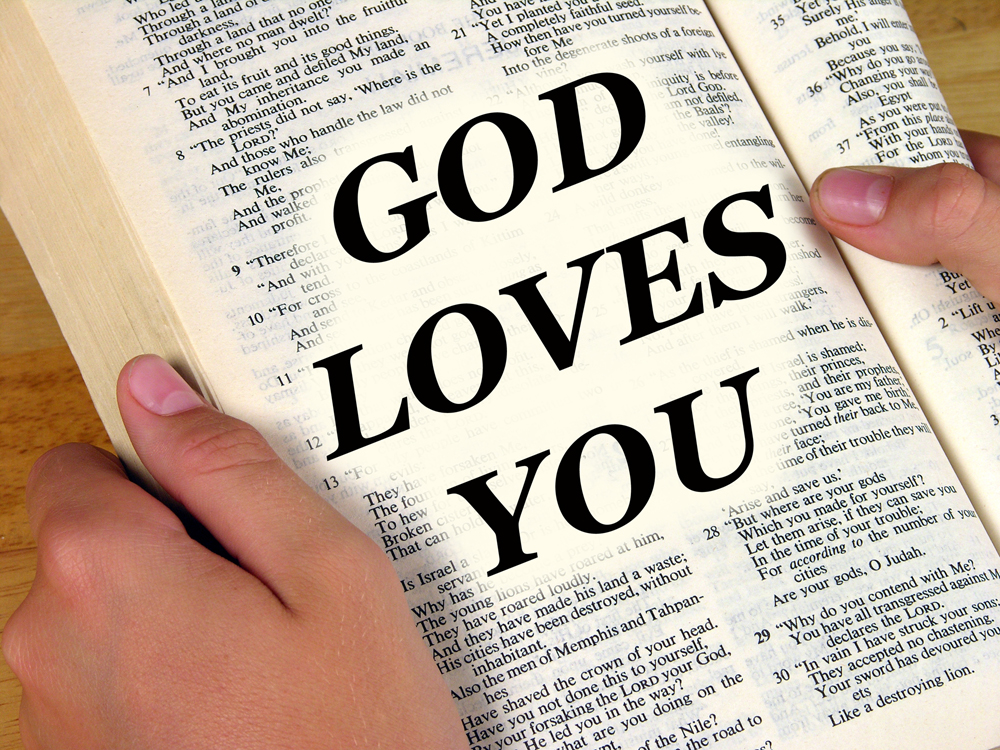 The words, “I don’t love you,” have to be the most hurtful words ever spoken. As human beings, we are born with the desire to be loved. Whether it’s romantic love, family love, brotherly love or even self love, God gave us the desire to be loved and to love God, others, and ourselves.
Love comes from God. “Dear friends, let us love one another, for love comes from God.” (1 John 4:7).
Because human love is so flawed by sin, none of us can ever love ourselves or another human being perfectly. In the same way, until we receive our glorified, perfected bodies, we can’t love God perfectly.
God has no such hindrances. He loves perfectly. On three different occasions, the prophet Daniel was told by the angel Gabriel that he was greatly loved by God. “I have come to tell it to you, for you are greatly loved.” (Daniel 9:23). The same thought is expressed in Daniel 10: 11 and Daniel 10:19.
How sweet those words must have sounded to Daniel! How would you like to hear those words for yourself? Well, you can.
Paul says in Ephesians 2:4-5: “God, being rich in mercy, because of the great love with which he loved us, even when we were dead in our trespasses,made us alive together with Christ.”
God’s love is on display for us in Romans 5:8.“But God shows his love for us in that while we were still sinners, Christ died for us.”
Like Daniel, God sent word to us that we are greatly love. He sent His Word in the form of His Son who demonstrated how much he really loved us by paying the penalty for our sins by His death on the cross
Accept His love. Bask in His Love. Know His love for all eternity.
How Can I Believe in God?
 I’ve never had a problem believing in God. It’s as natural to me as breathing.
That doesn’t mean I’ve ever seen God, or had an angelic visitation, or received some special sign from Him. I’ve never seen any writing on the wall or heard an audible voice, or had some tangible proof He’s real.
My belief in God comes from trust. I trust what the Bible tells me about God. Ironically, the faith to believe in Him, to trust what the Scriptures tell me about Him, is a gift from God.
Ephesians 2:8-9 says, “For by grace you have been saved through faith. And this is not your own doing; it is the gift of God, not a result of works, so that no one may boast.”
Believing in God is not something I can do for myself. The ability to believe in God comes from God.
Any person who sincerely wants to know God will find Him. “You will seek me and find me when you seek me with all your heart.” Jeremiah 29:13.
I believe in God because He created the desire for me to believe in Him; He provided the means for me to believe in Him, and He made the provision for me to believe in Him.
And, He didn’t just do it for me; He did it for you as well.
John 3:16: “For God so loved the world, that he gave his only Son, that whoever believes in him should not perish but have eternal life.”
I Wear A Dusty Crown

I love the way David describes how God treats His children in Psalm 103. David says He “satisfies your desires with good things.”(Psalm 103:5).
Later on in this Psalm, David writes, “He remembers we are but dust.” He writes this in connection with the compassion of God. “As a father has compassion on his children, so the Lord has compassion on those who fear him; for he knows how we are formed, he remembers we are but dust.” (Psalm 103:13-14).
God created human beings out of a common substance, a substance of little worth, just a handful of dirt. Inside this dirt-formed vessel, He placed an image of Himself. When a handful of dirt became a man, something of little value became something of infinite value—a living human being. Every human being born after Adam reflects this God-likeness.
Even though we bear His likeness, we’re still just dirt. He remembers this. He knows our frailties and all our weaknesses. He knows our dirt. He has compassion on our dirt. The Psalmist says, “He crowns you with love and compassion.” (Psalm 103:4).
Even though we’re made of dirt, we have a regal bearing. As God’s children, we wear the crown of His compassion and love.
Perhaps this is why David begins and ends this Psalm with these words. “Praise the Lord, my soul; all my inmost being, praise his holy name.” (Psalm 103:22).
Now That’s Good Advice!
 Here are four pieces of advice I wish I’d been given much earlier in life.
1. Your greatest asset isn’t your own abilities. While you may have been told all you need to do is work hard and keep on keeping on, don’t believe it. Your greatest asset is your utter dependence on God. “Apart from me, you can do nothing.” John 15:5.
2. Your desire to have applause isn’t in keeping with the gospel. While our sinful nature is bent toward making much of ourselves and looking out for our own interests, the gospel tells us to make much of Jesus and look out for His Kingdom. “But seek first the kingdom of God and his righteousness, and all these things will be added to you.” Matthew 6:33.
3. You have no idea what God is doing in your life. There’s no blueprint, formula, or method out there which will enable you to gauge what God is doing in your life. It simply doesn’t exist. If it did, you wouldn’t rely on God when He takes you to places you wouldn’t ordinarily go and has you do things you aren’t equipped to handle. God is too delighted in seeing your faith grow to tell you what He’s up to. Most of what He’s doing can only be understood through a rear view mirror. “For we walk by faith, and not by sight.” 2 Corinthians 5:7.
4. You could be one incredible piece of work if you’re willing to admit you’re not. If God’s Word is any gauge of how God operates–and it most definitely is–then He uses the weak, the nobody, the frightened soul, the lowly, and the despised to be a blessing and give Him glory. If you’re willing to be a piece of clay in the potter’s hands, He’s willing to fashion you into a beautiful vessel for His Kingdom’s work. “But now, O Lord, you are our Father; we are the clay, and you are our potter.” Isaiah 64:8.
What’s Your Name?
 Deciding what to name a child can be challenging. While I’ve passed the stage of naming babies, today, I’m faced with what to name a character in a book. That too can prove challenging.
When a character enters a scene, the person’s name usually pops in my head at the same time. However, before accepting this moniker as the appropriate tag for the person, I do a little research just to make sure it isn’t the name of a celebrity or a politician or some other famous person.
I also want a villain’s name to sound . . . well . . . villainous, and a strong character to have a strong sounding name. Think “Rocky” and you get the picture.
The Bible is full of great names for both babies and characters. These are names that have been around for thousands of years, and have quite literally stood the test of time. But, there are many “one time use” names in the Bible as well.
For instance, in the book of Hosea, God instructs a prophet to name his daughter “No Mercy” (Hosea 1:6). The son who came later was named “Not My People” (Hosea 1:9). Their Hebrew names Lo-ruhama and Lo-ammi never quite caught on as popular names for offspring, but those names portrayed the message God was endeavoring to send His people at that time.
In the book of Ruth, a widow named Naomi, who had lost two sons, decided she wanted to be called Bitter. She wanted this name change because she said, “the Almighty has dealt bitterly with me” (Ruth 1:20).
If you wanted a name to reflect how God has dealt with you, what would you call yourself?
I would call myself Blessed. I pray it would be your name as well. We are all Blessed.
“Blessed is he whose help is the God of Jacob, whose hope is in the Lord his God.”
Psalm 146:5
Being Afraid of God
 Be afraid. Be very afraid. Being afraid of God seems foreign to those of us who view God as the Lover of our Soul, who sing of His blessings, and who trust Him with our eternal soul.
Yet, one can’t read the Bible without encountering the oft-repeated admonition to “fear the Lord.” Throughout the Old Testament, there are numerous examples of God’s children receiving a blessing because they fear God. Also, because of fearing God, they do what He commands them to do. (Genesis 42:18; Exodus 1:17; Exodus 18:21)
Fear of God is not just an Old Testament concept, though. Jesus said in Matthew 10:28, “Don’t be afraid of those who want to kill your body; they cannot touch your soul. Fear only God, who can destroy both soul and body in hell.”
Nevertheless, there are times in my life when I’ve struggled with the concept of what it means to fear God. That’s why, when I recently came across a definition of fearing God in Drew Dyck’s book, Yawning At Tigers: You Can’t Tame God, So Stop Trying, I spent time meditating on it.
Dyck says, “To fear the Lord is to be grounded in reality, to have an accurate view of God’s holy nature and his awesome power.”
Fearing God doesn’t mean we cower in His presence—like a dog who knows he’s displeased his master—nor does it mean we run and hide instead of joyfully approaching Him. Instead, we embrace the fear of God because we recognize His to-be-feared characteristics, such as His all-powerful wrath toward sin, His unending sovereignty, and His unapproachable holiness, are an accurate understanding of who God really is.
The fearfulness of God is a reality, even if we don’t like it very much.
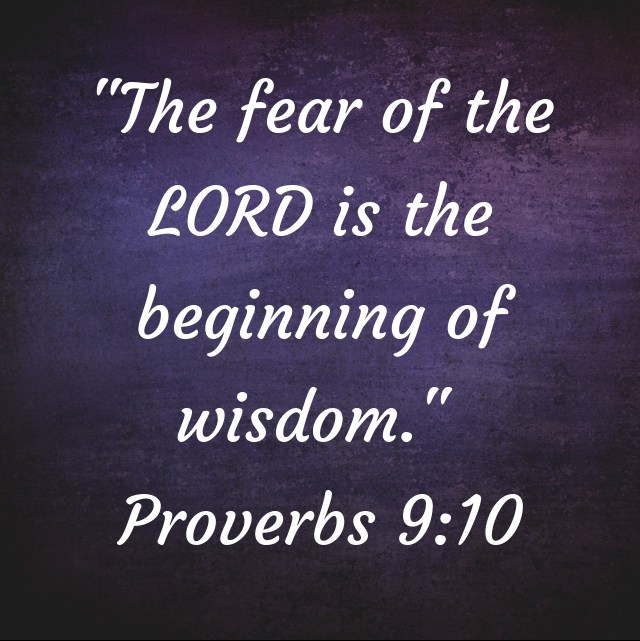
Having a true picture of God is the beginning of wisdom. Proverbs 9:10: “The fear of the LORD is the beginning of wisdom, and the knowledge of the Holy One is insight.”
We should fear God. We should be in awe of His wrath and His judgment. Yet, at the same time, we should have peace, knowing He is shielding us from wrath, sheltering us in His arms forever.
Seeing Light in Light
 I’m a very practical person, and I like for things to make sense, to be understandable, well-ordered. That’s why, whenever I’m reading the Bible and come across a verse that doesn’t make sense, it immediately gets my attention.
I read this verse in my Quiet Time this morning. Psalm 36:9, “For with you is the fountain of life; in your light do we see light.”
It was the last part of the verse that got my attention because, normally, when believers speak of seeing God or drawing closer to God or sensing the presence of God, there is an emphasis on the fact that it’s during the dark days, when God is most easily perceived.
However, like many aspects of living in God’s Kingdom, man’s way of thinking is reversed. Living in God’s Kingdom means “the first shall be last.” God says if you want to be great, “be a servant.” He admonishes believers to “repay evil with good” and “love your enemies.”
Thus, even though it’s true that the light of His Presence can sometimes be more easily seen when darkness envelops our world, the more we walk in His Light, the more we see His Light.
That’s because, as John writes in I John 1:5, “God is light, and in him there is no darkness at all,” so, the closer we walk toward the source of light, the brighter the light becomes.


Book 8 in the Mylas Grey Mystery Series, Click on cover

Book 5 in the Silas McKay Suspense Series, Click on cover

Book 11 in the Titus Ray Thriller Series. Click cover
Book 7 in the Mylas Grey Mystery Series on Amazon. Click cover.

Book 4 in the Silas McKay Suspense Series on Amazon. Click cover.

Book 10 in the Titus Ray Thriller Series on Amazon. Click cover.

PREQUEL to the Mylas Grey Mystery Series on Amazon. Click cover

Book VI in the Mylas Grey Mystery Series on Amazon. Click cover

Book III in the Silas McKay Suspense Series on Amazon. Click cover

Book IX in the Titus Ray Thriller Series on Amazon. Click cover

Book V in the Mylas Grey Mystery Series on Amazon. Click cover

Book II in the Silas McKay Suspense Series on Amazon. Click cover

Book I in the Silas McKay Suspense Series, Available in Winter Deceptions

Ben in Trouble follows Four Steps Missed in the Titus Ray Thriller Series

Book IV in the Mylas Grey Mystery Series on Amazon. Click cover

Book VIII in the Titus Ray Thriller Series on Amazon. Click cover.

Ben in Charge, Follows Three Steps Away in the Titus Ray Thriller Series

Ben in Love, Follows Two Steps Forward in the Titus Ray Thriller Series

Two Days Taken:Book II in the Mylas Grey Mystery Series; Click cover.

Book VII in the Titus Ray Thriller Series on Amazon. Click on book cover

One Day Gone: Book I in the Mylas Grey Mystery Series; Click on Cover

NEWEST BOOK: Available on Amazon. Click on Cover.

Prequel to the Titus Ray Thriller Series is $0.99 on Amazon. Click book cover


Book I in the Titus Ray Thriller Series on Amazon. Click book cover


Book II in the Titus Ray Thriller Series on Amazon. Click on book cover

Book III in the Titus Ray Thriller Series on Amazon: Click on book cover


Book IV in the Titus Ray Thriller Series on Amazon. Click on book cover.


Book V in the Titus Ray Thriller Series on Amazon. Click on book cover.


Book VI in the Titus Ray Thriller Series on Amazon. Click on book cover.


Books 1 & 2 in the Titus Ray Series Available on Amazon. Click on cover.


 His Glory My Joy, a blog of Author Luana Ehrlich
You must be logged in to post a comment.