Archive
The Being of “Not”

I’ve always been fascinated by what John the Baptist said when someone asked him if he was the long-awaited promised Messiah. “I am not the Messiah,” he said (John 1:20).
Why does his answer fascinate me?
First, since they asked him the question, some in the crowd obviously thought he might be the Messiah. The gospel writers don’t tell us whether it was his dress, his demeanor, or his preaching, but evidently some saw this as a possibility.
John could have claimed the title easily enough.
He had an extraordinary, miraculous birth. An angel appeared in person to his father to announce his birth. His mother had been unable to have children, and she was already past the age of bearing children when she got pregnant, plus his father lost his ability to speak throughout his wife’s pregnancy, and his voice only returned when John was born.
But John refused the title of Messiah, despite the fact it would have made him even more popular and more people would have been drawn to him to hear his message.
“I am not the Messiah.”
His answer also fascinates me because by knowing who he was not, John is also indicating he knows who he is. Although he is not the Messiah, he is someone with a message and a mission.
Luke 3:3 says, “And he went into all the region around the Jordan, proclaiming a baptism of repentance for the forgiveness of sins.”
In John’s declaration of “I am not the Messiah,” I find a powerful truth for how God calls me to live my own life. Knowing who I am not—whether it’s an age, a career, a family role, a ministry—is the key to knowing who I am.
No matter who I am not, God has given me a message and a mission, and like John, this message and mission will ultimately point away from me and to the true Messiah.
When John was baptizing one day, he saw Jesus walking along the banks of the Jordan River and he said to those around him, “Behold, the Lamb of God, who takes away the sin of the world!” (John 1:29).
I am not the Messiah, but I know the Messiah who has taken away the sins of the world.
You can know the Messiah too. Learn more here.
Finding Hidden Treasures

Don’t you love to find a word from the Lord in your Bible that you’ve never seen before? That happened to me just recently when I was reading the last verses in the little bitty book of Jude, so small it doesn’t even have any chapters.
The verses I hadn’t noticed before were verses 24-25 of . . . well, just Jude.
“Now to him who is able to keep you from stumbling and to present you blameless before the presence of his glory with great joy, to the only God, our Savior, through Jesus Christ our Lord, be glory, majesty, dominion, and authority before all time and now and forever. Amen.”
While there’s so much in these verses, I’ve highlighted three phrases that blessed me especially.
Present you blameless: I love being reminded when believers stand before his presence one day, we’ll be considered blameless. How great is that? And notice how it happens—through Jesus Christ our Lord.
With great joy: Notice the one doing the presenting of us before His presence will do so with great joy. He—Jesus—will be delighted to make everyone who believes in Him known to His Father. It will be His pleasure to do so. He even asked the Father in John 17 for this to happen. “Father, I desire that they also, whom you have given me, may be with me where I am, to see my glory.”
Before all time: Our God is an eternal God. There has never been a time when He didn’t exist. He was before all time, and He will go on forever through all time, even when time is no more. This is mind-boggling, hard to grasp, and yet, strangely reassuring.
There’s so much more in these two verses, and in the days ahead, I plan to give more thought to the treasures to be found there. I have a feeling I won’t be disappointed.
Happiness?

It’s been a couple of rainy days here in Oklahoma. Not much sunshine. I’m not a person given to depression, and I really like rainy days, but I still found myself longing for some sunshine.
People just seem to be happier when the sun is shining. As I thought about happiness, I remembered a devotional I’d read about mankind’s universal search for happiness.
In the article, this quote is referenced, “All that we call human history–money, poverty, ambition, war, prostitution, classes, empires, slavery–is the long terrible story of man trying to find something other than God which will make him happy.” –C.S. Lewis, Mere Christianity.
A bright cloudless day can’t really make a person happy. Only God can do that.
Turn your face toward the Son. Bask in the warmth and happiness of His Light today.
“You make known to me the path of life, in your presence there is fullness of joy; at your right hand are pleasures forevermore.” Psalm 16:11.
Lost Your Way?
 It’s easy to lose your way in our world today. We’re inundated with a myriad of messages, images, and ideas. How do we choose what to believe, what path to follow, how to live? We can explore all our options, saturating ourselves with philosophies, practices, and beliefs.
But, like hikers exploring a new trail, there are some precautions we should take before we head off into the unknown. Otherwise, we’re sure to lose our way. These practices should serve us well, whether we’re looking at a belief system, a political choice, a new set of friends, or exploring health issues, anything requiring our time, money, and effort.
First, FIND a way to have a Daily Quiet Time.
Spend at least thirty minutes every day in Bible study and prayer. It doesn’t matter how you do this. There’s a Bible reading plan out there that will match up with anyone’s learning style and preferences. The important thing is to put yourself in a position where your Father in heaven can communicate His love, His plan, and His desires for you, and you can catch a glimpse of His Glory each and every day.
Second, FIND a way to worship God in a group setting, even through media.
Praising, loving, and serving God with other people will strengthen and enhance your faith. It’s about gathering with like-minded people who desire to give glory, honor, and praise to an Almighty Creator who sacrificed His only son to make sure we spend eternity with Him.
Third, FIND a way to express your faith.
Our belief in God requires an outlet. Otherwise, stagnation sets in. This expression can take many forms, and it may be different according to personality types. For some, it may mean singing, speaking, teaching, or preaching. For others, it may mean journaling, writing, serving, or counseling.
Hear the words of the prophet Jeremiah in Jeremiah 6:16: “Thus says the Lord: Stand by the roads, and look, and ask for the ancient paths, where the good way is; and walk in it, and find rest for your souls.”
Rest for your soul as you find your way. What could be better than that?
What Love Is This?
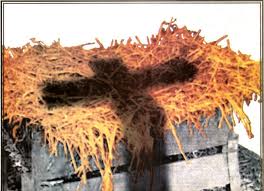
God’s love for you can never be restrained.
It bursts forth in smiles
from a cattle stall.
It shouts out in praise
from a heavenly host.
It cries out in anguish
from an old rugged cross.
And Now For Something Useless
 I was standing beside an elevator, having just pushed the Arrow Down button to call the elevator up to the second floor, when an elderly gentleman walked over and pushed the same button again. Then, he turned to me and said, “I know that was useless. The elevator won’t get here any sooner just because two people push it.”
At the grocery store, a little later that day, I tried to sign my name on a credit card scanner. After several attempts to make a semi-legible mark, the clerk waved her hand at me and said, “Oh, honey, forget it. Your signature won’t mean anything on there. That thing is useless.”
My day of useless things ended when I got home and tried to balance my checkbook. No, it wasn’t balancing the checkbook that proved useless. What was useless was pushing the “C” repeatedly on the calculator, clearing out the old amount before adding a new one. Like the gentleman at the elevator, I suddenly realized pressing the “C” a second time was an exercise in futility. The screen always went blank the first time I pushed it.
There’s a fourth useless thing we may be guilty of as well. It’s forgetting to worship our Creator. God reminds us of this in Isaiah 45:7 when He says, “I form light and create darkness, I make well-being and create calamity, I am the Lord, who does all these things.”
Failure to acknowledge the God of the Universe, He who created light and darkness, who directs every aspect of our lives, is useless. In the same chapter in Isaiah, God says,” By myself I have sworn; from my mouth has gone out in righteousness a word that shall not return:‘To me every knee shall bow, every tongue shall swear allegiance.” (Isaiah 45:23).
By His Stripes We Are Healed
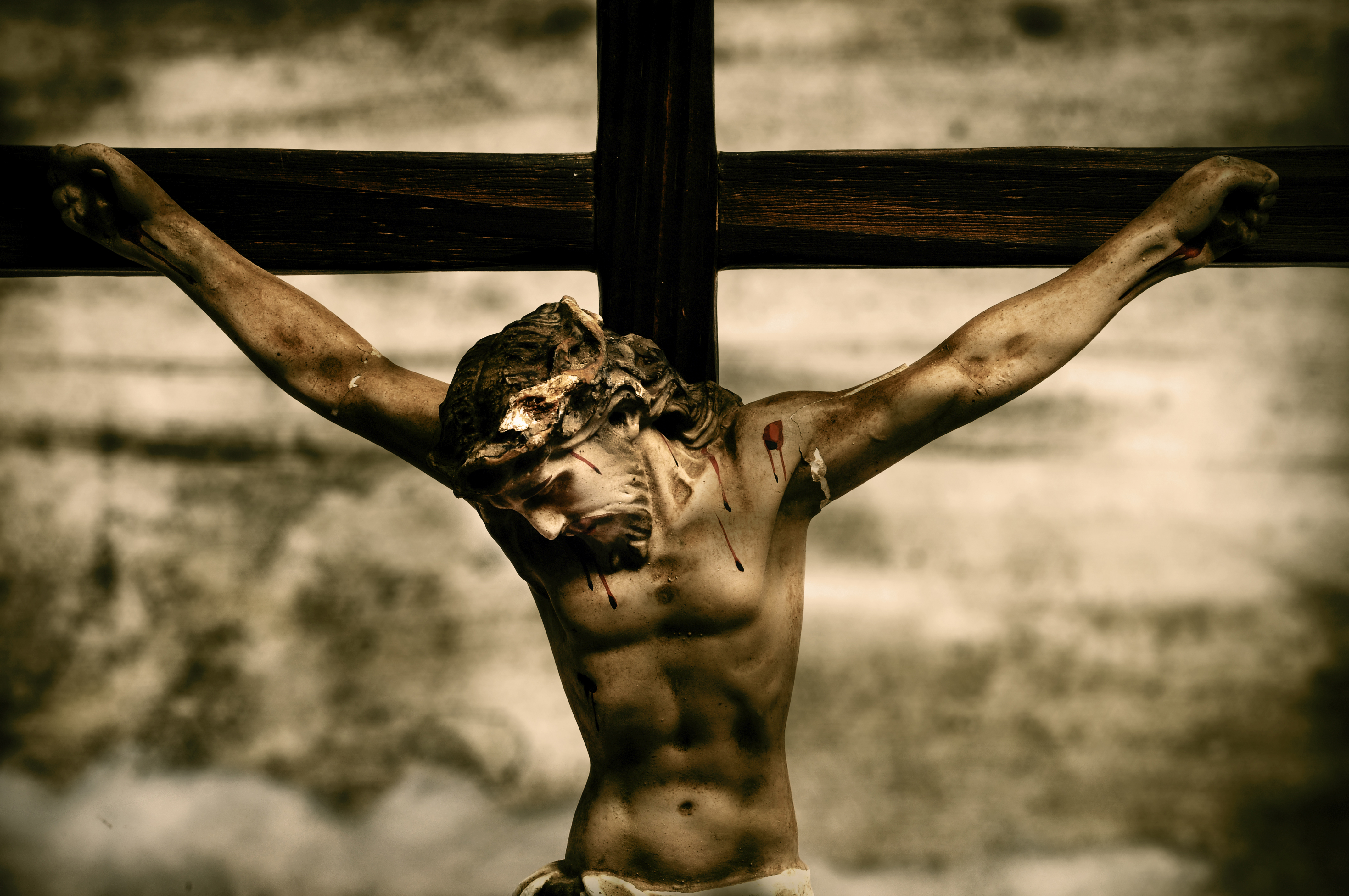
of black and blue and red
of gashes and slashes and stripes
of hits and harm and hurt
He stumbles and bows and falls
He crumbles and bends and kneels
He gasps and cries and moans
for healing and helping and teaching
for blessing and loving and keeping
for hoping and holding and saving
Isaiah 54:4-5
A Devotional Poem by Luana Ehrlich
This Might Work!
 As I continually seek to be a student and teacher of God’s Word, I encounter many different methods, programs, and suggestions about how I should memorize, use, remember, and put into practice what I’ve studied and taught, and it usually doesn’t take me very long to recognize if something will work for me or not.
More often than not, I find myself thinking, “I will never do this” or “I can’t even begin to understand how this would work.” However, here are three helpful suggestions I’ve come across that made me say, “This might work!”
How To Talk To God: In this blog, Lisa gives some pointers about using God’s Word to talk to Him. What happens when you speak God’s own words back to Him? Find out here.
How To Walk By The Spirit: In this sermon from John Piper on 1 Thessalonians 3, you’ll find a wonderful acronym called APTAT, which you can use to remember what to do when asked to do something you don’t believe you can do. Piper ‘s message is entitled “The Word Of God Is At Work In You,” and the application of this (which is about 30 minutes into the video if you want to watch it) is outlined in the written sermon called Applying The Text To Your Life. Watch the video or read the sermon here.
How To View The Bible: Along with many of you, I am reading the Bible through again this year. In my plan I’m about to finish up Genesis, and I’ve seen the grace of God at every turn, from the moment of creation to God’s dealings with Joseph. But this will not be the end of God’s grace. In fact, the grace of God can be found in every book of the Bible. Dane Ortlund outlines how every book of the Bible shows God’s grace. You can read it here.
Maybe these suggestions will make you say, “This might work!”
2 Timothy 2:15: “Do your best to present yourself to God as one approved, a worker who has no need to be ashamed, rightly handling the word of truth.”
Seeing Light in Light
 I’m a very practical person, and I like for things to make sense, to be understandable, well-ordered. That’s why, whenever I’m reading the Bible and come across a verse that doesn’t make sense, it immediately gets my attention.
I read this verse in my Quiet Time this morning. Psalm 36:9, “For with you is the fountain of life; in your light do we see light.”
It was the last part of the verse that got my attention because, normally, when believers speak of seeing God or drawing closer to God or sensing the presence of God, there is an emphasis on the fact that it’s during the dark days, when God is most easily perceived.
However, like many aspects of living in God’s Kingdom, man’s way of thinking is reversed. Living in God’s Kingdom means “the first shall be last.” God says if you want to be great, “be a servant.” He admonishes believers to “repay evil with good” and “love your enemies.”
Thus, even though it’s true that the light of His Presence can sometimes be more easily seen when darkness envelops our world, the more we walk in His Light, the more we see His Light.
That’s because, as John writes in I John 1:5, “God is light, and in him there is no darkness at all,” so, the closer we walk toward the source of light, the brighter the light becomes.
What Love Is This?
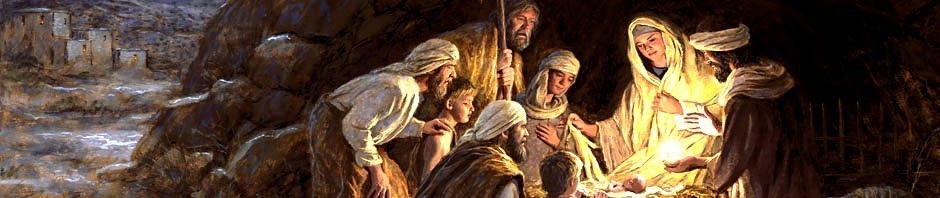
God’s love for you can never be restrained.
It bursts forth in smiles
from a cattle stall.
It shouts out in praise
from the heavenly host.
It cries out in anguish
from an old rugged cross.


Book 8 in the Mylas Grey Mystery Series, Click on cover

Book 5 in the Silas McKay Suspense Series, Click on cover

Book 11 in the Titus Ray Thriller Series. Click cover
Book 7 in the Mylas Grey Mystery Series on Amazon. Click cover.

Book 4 in the Silas McKay Suspense Series on Amazon. Click cover.

Book 10 in the Titus Ray Thriller Series on Amazon. Click cover.

PREQUEL to the Mylas Grey Mystery Series on Amazon. Click cover

Book VI in the Mylas Grey Mystery Series on Amazon. Click cover

Book III in the Silas McKay Suspense Series on Amazon. Click cover

Book IX in the Titus Ray Thriller Series on Amazon. Click cover

Book V in the Mylas Grey Mystery Series on Amazon. Click cover

Book II in the Silas McKay Suspense Series on Amazon. Click cover

Book I in the Silas McKay Suspense Series, Available in Winter Deceptions

Ben in Trouble follows Four Steps Missed in the Titus Ray Thriller Series

Book IV in the Mylas Grey Mystery Series on Amazon. Click cover

Book VIII in the Titus Ray Thriller Series on Amazon. Click cover.

Ben in Charge, Follows Three Steps Away in the Titus Ray Thriller Series

Ben in Love, Follows Two Steps Forward in the Titus Ray Thriller Series

Two Days Taken:Book II in the Mylas Grey Mystery Series; Click cover.

Book VII in the Titus Ray Thriller Series on Amazon. Click on book cover

One Day Gone: Book I in the Mylas Grey Mystery Series; Click on Cover

NEWEST BOOK: Available on Amazon. Click on Cover.

Prequel to the Titus Ray Thriller Series is $0.99 on Amazon. Click book cover


Book I in the Titus Ray Thriller Series on Amazon. Click book cover


Book II in the Titus Ray Thriller Series on Amazon. Click on book cover

Book III in the Titus Ray Thriller Series on Amazon: Click on book cover


Book IV in the Titus Ray Thriller Series on Amazon. Click on book cover.


Book V in the Titus Ray Thriller Series on Amazon. Click on book cover.


Book VI in the Titus Ray Thriller Series on Amazon. Click on book cover.


Books 1 & 2 in the Titus Ray Series Available on Amazon. Click on cover.


 His Glory My Joy, a blog of Author Luana Ehrlich
You must be logged in to post a comment.