Archive
It’s the Best Plan

Do you have a plan this year? A plan to lose weight? A plan to learn a new skill? A plan to pay off your credit cards? A plan to take a vacation? Lots of plans. But what is the BEST PLAN?
The best plan I ever made was to read the Bible through in one year. I chose a method—one that someone else had already figured out—and within a few weeks, I was enjoying reading God’s Word on a daily basis more than I ever imagined.
That was forty-five years ago, and I’ve read the Bible through each year since then. Strangely enough, it still seems fresh every morning. Only the God who made heaven and earth could do that. Only the God who desires a relationship with me could do that.
You’ll find there’s no better plan for your life than committing a portion of your day to discovering God’s revelation of Himself in His Word.
Your life will never be the same.
Why Was He Born?
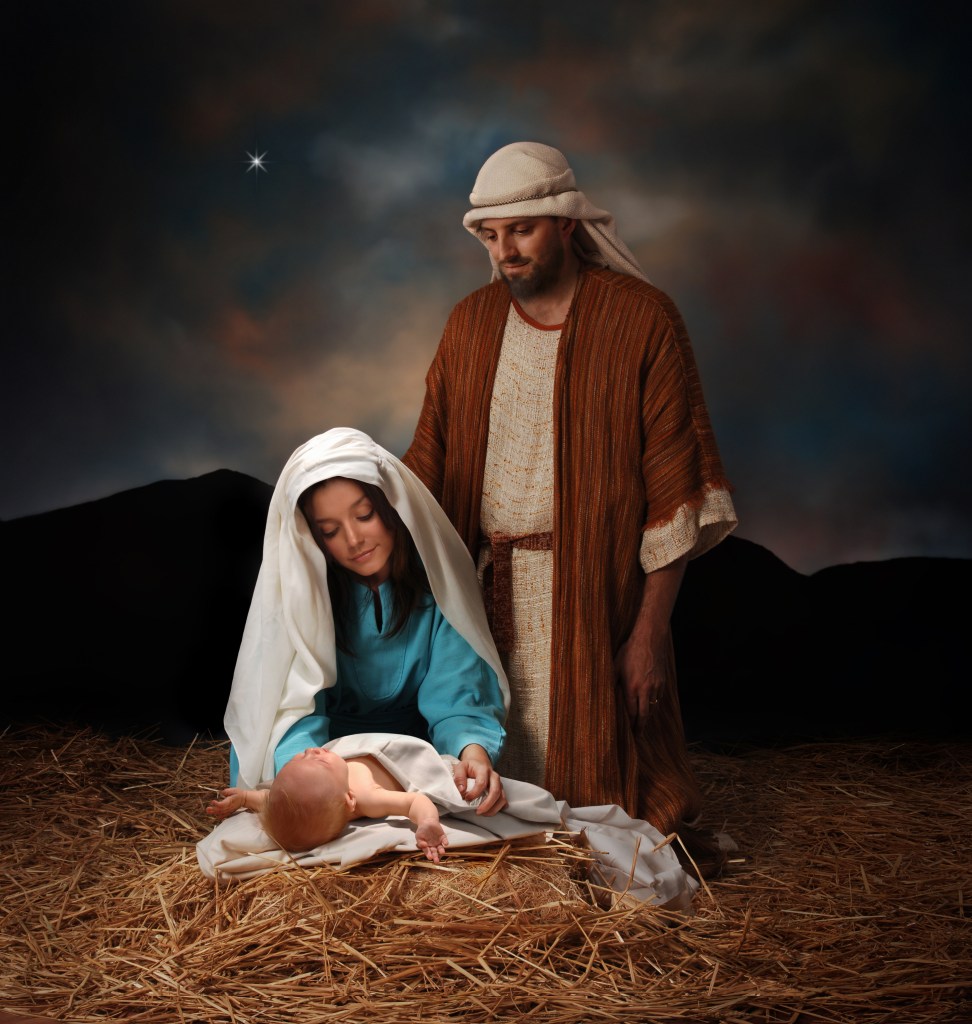
Born to be cursed, not to curse.
Born for sinners, not to sin.
Born to love, not to hate.
Born to accept, not to reject.
Born for failure, not for success.
Born to poverty, not to wealth.
Born for hope, not for despair.
Born for healing, not for affliction.
Born to set free, not to bind up.
Born to reveal, not to conceal.
Born for laughter, not for tears.
Born for compassion, not for anger.
Born to die, not to live.
Born for you.
THE BIG THANK

If I was restricted to only ONE THANK,
to whom would my BIG THANK go?
I’d give it to the ONE who deserves it all.
THANK YOU for being a
grace-giving,
faith-making,
man-saving,
love-providing,
sin-forgiving,
need-supplying,
pride-killing,
joy-flowing,
decision-guiding,
universe-creating,
disease-healing,
sorrow-lifting,
gift-imparting,
eternity-sharing,
GOD
Hidden in Plain Sight

Because I write mystery/suspense/thrillers, I’m always doing research on technology like hidden cameras, spy drones, and everyday objects that can be used for surveillance. Do you know the very best place to hide something? Hide it in plain sight. People tend to overlook things that are right in front of them.
How many people look at a button on a shirt and think it could be a hidden camera? No one but a spy or a thriller writer, which is all the more reason why it’s the perfect spot for one.
But “hidden in plain sight” doesn’t just apply to spies and detectives and hidden cameras. There are all kinds of hidden words for us in Scripture—staring us right there in the face just waiting for us to discover them.
I recently discovered one of these hidden jewels in Jude. Jude? That’s right. No wonder I’ve overlooked it. How often do you read from the book of Jude? It’s the book just before Revelation, so small it doesn’t even have chapters.
Here’s a “hidden in plain sight” treasure from Jude 24-25: “Now to him who is able to keep you from stumbling and to present you blameless before the presence of his glory with great joy, to the only God, our Savior, through Jesus Christ our Lord, be glory, majesty, dominion, and authority, before all time and now and forever.”
There are several reasons why these verses got my attention, but here are just three of them: 1) God not only helps us as we struggle with sin, He’s “able to keep us from stumbling.” 2) When we appear before Him in His presence, He’ll present us blameless in His sight. 3) When he presents us blameless before His presence, he’ll do it “with great joy.”
Okay, here’s one more: So often, we think of Jesus as our Savior, and rightly so, for his sacrifice on Calvary “saved” us from the wrath of God we all deserve. Yet Jude 25 calls God the Father our Savior: “to the only God, our Savior . . .”
No wonder Jude ends his letter with a praise to Him that we give him “glory, majesty, dominion, and authority . . .”
There you go—a magnificent truth hidden in plain sight for you to treasure and enjoy.
A Ready-Made Garden

As I was working in my garden this week, I kept reminding myself of how much I was going to love sitting on my patio this summer surrounded by thriving, flowering plants. I had to keep repeating this mantra because gardening is hard work.
In the midst of one of my many “rest periods,” I thought of the verse from Genesis 2:8, “And the Lord God planted a garden in Eden.” That sounded good to me, especially the part about God doing the planting. When Adam and Eve showed up in Eden, they had a ready-made garden, because God had already done all the heavy lifting for them.
This concept of God “serving” or “working” for His children is present throughout the Bible; yet, most believers are taught the opposite. That is, as followers of Christ, we are urged to find ways to serve Him. While it’s true we are to “serve the Lord with gladness” (Psalm 100:2), we are never to think our service toward God is anything He actually needs, that somehow He would be lacking something if we did not render Him our service.
In fact, when Paul was preaching to the Athenians, he tried to dissuade them from having such an attitude. He says in Acts 17:24-25, “The God who made the world and all things in it, since He is Lord of heaven and earth, does not dwell in temples made with hands; nor is He served by human hands, as though He needed anything, since He Himself gives to all people life and breath and all things.” God doesn’t need anything from us, because he is the Giver of all things; He is the self-sufficient One.
The proper response to our Giver is to receive His gifts with an abundantly grateful heart, acknowledging we have nothing to give in return. Peter tells us to serve “as one who serves by the strength that God supplies—in order that in everything God may be glorified through Jesus Christ.” (I Peter 4:11).
The service that glorifies God is service rendered through Him alone.
Don’t Stay Away!
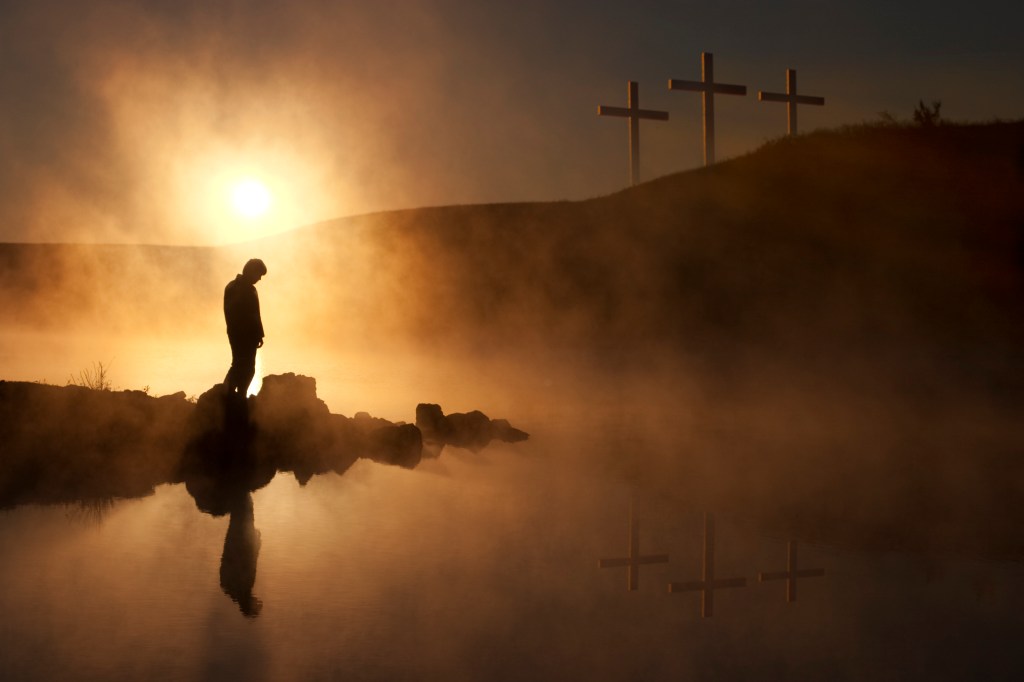
There’s a verse of Scripture in Hebrews that gives me pause whenever I read it. It’s Hebrews 10:22, “Therefore . . . let us draw near with a true heart in full assurance of faith.”
Drawing near to God sounds like a terrific idea. So, why don’t we draw near? What makes us stay away?
Believers don’t stay away from God on purpose. It’s usually the result of not doing something, rather than actually doing something.
Not confessing sin.
After the writer of Hebrews described what Jesus did for sinners by his death on the cross, he writes in verse 27, “If we go on sinning deliberately after receiving the knowledge of the truth, there no longer remains a sacrifice for sins, but a fearful expectation of judgment, and a fury of fire that will consume the adversaries.” Unconfessed sin makes us reluctant to be near the One whose responsibility it is to judge sin. We’re afraid, so we stay away.
Not knowing truth.
The writer uses the word,”therefore,” before telling believers to draw near to God. That’s because he’s been explaining great truths having to do with the meaning of the Lamb-like sacrifice and what the shedding of Christ’s blood did for sinners. He says such knowledge gives us confidence to come before God. The reverse is also true. By not knowing what Christ did when He laid down His life for us, we have no confidence and cannot draw near to Him.
Not having faith.
The writer says we are to come before God “with full assurance of faith.” Hebrews 11:6 says, “Without faith, it is impossible to please Him, for he who draws near to God must believe that He is and that He is a rewarder of those who seek Him,” While our faith in God is a gift from Him (Ephesians 2:8-9), we must be willing to act on that faith or we will never draw near to Him.
What happens when we draw near?
Hebrews 4:16 tells us we receive “mercy and grace to help in time of need,” and Hebrews 7:25 says those who draw near to God will discover, “He always lives to make intercession for them.”
Draw near. Take the pathway into His Presence made just for you.
Don’t stay away!!
Why Was He Born?
Born to be cursed, not to curse.
Born for sinners, not to sin.
Born to love, not to hate.
Born to accept, not to reject.
Born for failure, not for success.
Born to poverty, not to wealth.
Born for hope, not despair.
Born for healing, not for affliction.
Born to set free, not to bind up.
Born to reveal, not to conceal.
Born for laughter, not tears.
Born for compassion, not anger.
Born to die, not to live.
What Does God Know About Worry?

Everything, of course. That’s why we should follow his instructions about living a worry-free life. “Therefore I tell you, do not be anxious about your life.” Matthew 6:25.
Even though it’s worded a little differently each time, the command not to worry appears in all of the gospels, including a double warning in the gospel of John. “Let not your hearts be troubled, neither let them be afraid.” John 14:27.
Paul also teaches the worry-free life in his letters. “Do not be anxious about anything . . .” Philippians 4:6. As clear as that command is, the “how to” of dealing with worry is equally straightforward.
Philippians 4:7, “but in everything by prayer and supplication with thanksgiving let your requests be made known to God. And the peace of God, which surpasses all understanding, will guard your hearts and your minds in Christ Jesus.”
Not surprisingly, Peter echoes Paul’s solution to worry in 1 Peter 5:6-7: “Humble yourselves . . . casting all your anxieties upon him, for he cares for you.”
The writer of Hebrews says we can be sure of his help when we are troubled. He writes, “So we can confidently say, “The Lord is my helper; I will not fear . . .” Hebrews 13:6.
According to God’s Word, by bringing our worries and cares to the Lord, we are rewarded with the strength and peace to deal with life’s inevitable anxieties.
And, because God is always overflowing in his care for us, He promises to do this for us anew every morning. Lamentations 3:22-23, “The steadfast love of the Lord never ceases; his mercies never come to an end; they are new every morning . . .”
What does God know about worry? Everything.
Trust Him. He’s got this. Leave your worries with Him.
The Being of “Not”

I’ve always been fascinated by what John the Baptist said when someone asked him if he was the long-awaited promised Messiah. “I am not the Messiah,” he said (John 1:20).
Why does his answer fascinate me?
First, since they asked him the question, some in the crowd obviously thought he might be the Messiah. The gospel writers don’t tell us whether it was his dress, his demeanor, or his preaching, but evidently some saw this as a possibility.
John could have claimed the title easily enough.
He had an extraordinary, miraculous birth. An angel appeared in person to his father to announce his birth. His mother had been unable to have children, and she was already past the age of bearing children when she got pregnant, plus his father lost his ability to speak throughout his wife’s pregnancy, and his voice only returned when John was born.
But John refused the title of Messiah, despite the fact it would have made him even more popular and more people would have been drawn to him to hear his message.
“I am not the Messiah.”
His answer also fascinates me because by knowing who he was not, John is also indicating he knows who he is. Although he is not the Messiah, he is someone with a message and a mission.
Luke 3:3 says, “And he went into all the region around the Jordan, proclaiming a baptism of repentance for the forgiveness of sins.”
In John’s declaration of “I am not the Messiah,” I find a powerful truth for how God calls me to live my own life. Knowing who I am not—whether it’s an age, a career, a family role, a ministry—is the key to knowing who I am.
No matter who I am not, God has given me a message and a mission, and like John, this message and mission will ultimately point away from me and to the true Messiah.
When John was baptizing one day, he saw Jesus walking along the banks of the Jordan River and he said to those around him, “Behold, the Lamb of God, who takes away the sin of the world!” (John 1:29).
I am not the Messiah, but I know the Messiah who has taken away the sins of the world.
You can know the Messiah too. Learn more here.
Do You Hear Voices?

Voices! We hear voices each and every day. Some are screaming at us from the TV, telling us to order this, pay attention to that, don’t forget this. Others are posting on our Facebook page, Twitter feed, other social media sites, wanting us to sign this, like that, look at this.
Who merits our attention? To whom should we be listening? Whose voice is the worthy voice?
A crippled up old man appears in the gospel of John to answer these questions. (John 5:1-17). He doesn’t have a name in the gospel, but everyone at the pool of Bethesda knew him. He had been lying there for thirty-eight years, unable to take advantage of the pool’s healing properties. Jesus stopped by one day, and, in one instantaneous moment, took care of the crippled man’s lifelong problem.
Following Jesus’ instructions, the Man Made Whole gathered up his bedroll and walked away. Later, when asked by the religious leaders what he thought he was doing carrying his bed around on a Sabbath, he told them he was doing what he’d been instructed to do by the man who had enough authority to make him whole again.
The Man Made Whole was carrying his bed—in defiance of the religious authorities—because he recognized a man who was able to give life to his withered limbs was someone with authority, someone worthy of his attention.
This same man, Jesus of Nazareth, healed me one day.
He healed me of a lifelong sin problem, a sickness so severe I was doomed for eternal destruction. He did so by taking sin’s disease on Himself and paying the price for it Himself. Now, he commands me to take up my life and live it for Him.
His voice is a voice worth hearing.
Listen to His words from the rest of John 5, “Truly, truly, I say to you, an hour is coming, and is now here, when the dead will hear the voice of the Son of God, and those who hear will live. For as the Father has life in himself, so he has granted the Son also to have life in himself.” (25-26)


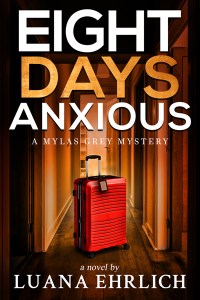
Book 8 in the Mylas Grey Mystery Series, Click on cover
Book 5 in the Silas McKay Suspense Series, Click on cover

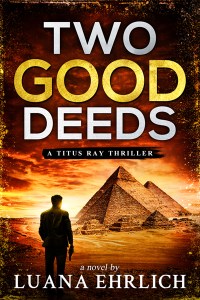
Book 11 in the Titus Ray Thriller Series. Click cover
Book 7 in the Mylas Grey Mystery Series on Amazon. Click cover.
Book 4 in the Silas McKay Suspense Series on Amazon. Click cover.
Book 10 in the Titus Ray Thriller Series on Amazon. Click cover.

PREQUEL to the Mylas Grey Mystery Series on Amazon. Click cover

Book VI in the Mylas Grey Mystery Series on Amazon. Click cover

Book III in the Silas McKay Suspense Series on Amazon. Click cover

Book IX in the Titus Ray Thriller Series on Amazon. Click cover

Book V in the Mylas Grey Mystery Series on Amazon. Click cover

Book II in the Silas McKay Suspense Series on Amazon. Click cover

Book I in the Silas McKay Suspense Series, Available in Winter Deceptions

Ben in Trouble follows Four Steps Missed in the Titus Ray Thriller Series

Book IV in the Mylas Grey Mystery Series on Amazon. Click cover

Book VIII in the Titus Ray Thriller Series on Amazon. Click cover.

Ben in Charge, Follows Three Steps Away in the Titus Ray Thriller Series

Ben in Love, Follows Two Steps Forward in the Titus Ray Thriller Series

Two Days Taken:Book II in the Mylas Grey Mystery Series; Click cover.

Book VII in the Titus Ray Thriller Series on Amazon. Click on book cover

One Day Gone: Book I in the Mylas Grey Mystery Series; Click on Cover

NEWEST BOOK: Available on Amazon. Click on Cover.

Prequel to the Titus Ray Thriller Series is $0.99 on Amazon. Click book cover


Book I in the Titus Ray Thriller Series on Amazon. Click book cover


Book II in the Titus Ray Thriller Series on Amazon. Click on book cover
Book III in the Titus Ray Thriller Series on Amazon: Click on book cover


Book IV in the Titus Ray Thriller Series on Amazon. Click on book cover.


Book V in the Titus Ray Thriller Series on Amazon. Click on book cover.


Book VI in the Titus Ray Thriller Series on Amazon. Click on book cover.


Books 1 & 2 in the Titus Ray Series Available on Amazon. Click on cover.


 His Glory My Joy, a blog of Author Luana Ehrlich
You must be logged in to post a comment.