Archive
To Know Him is to Fear Him
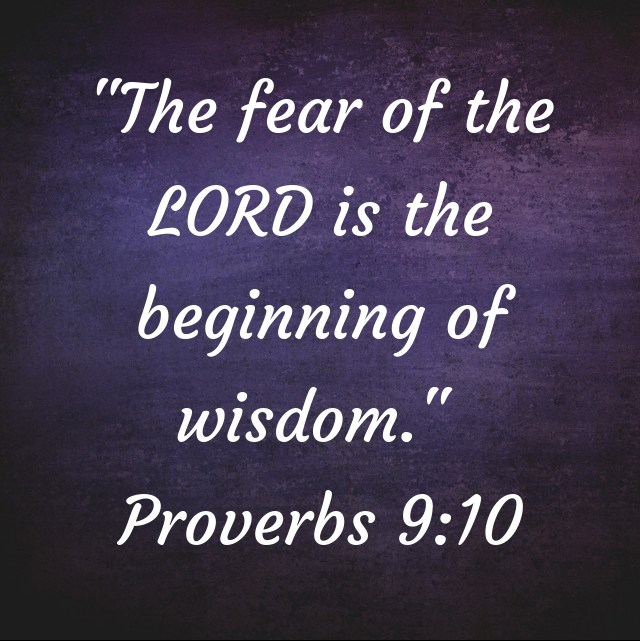
Be afraid. Be very afraid. Being afraid of God seems foreign to those of us who sing of His blessings, who trust Him with our eternal soul, and who pray daily to Him for guidance, for help, for comfort.
Yet, one can’t read the Bible without encountering the oft-repeated admonition to “fear the Lord.” Throughout the Old Testament, there are numerous examples of God’s children receiving a blessing because they fear God. Also, because of fearing God, they do what He commands them to do. (Genesis 42:18; Exodus 1:17; Exodus 18:21)
Fear of God is not just an Old Testament concept. Jesus said in Matthew 10:28, “Don’t be afraid of those who want to kill your body; they cannot touch your soul. Fear only God, who can destroy both soul and body in hell.”
Nevertheless, there are times in my life when I’ve struggled with the concept of what it means to fear God. Yet, I’ve come to realize that having a fear of God gives us a more realistic view of God’s holiness and His power.
Fearing God doesn’t mean we cower in His presence—like a dog who knows he’s displeased his master—nor does it mean we run and hide instead of joyfully approaching Him. Instead, we embrace the fear of God because we recognize His characteristics—His all-powerful wrath toward sin, His unending sovereignty, and His unapproachable holiness—are an accurate understanding of who God really is.
The fearfulness of God is a reality, even if we don’t like it very much.
Having a true picture of God is the beginning of wisdom. Proverbs 9:10: “The fear of the LORD is the beginning of wisdom, and the knowledge of the Holy One is insight.”
We should fear God. We should be in awe of His wrath and His judgment. Yet, at the same time, we should have peace, knowing He is shielding us from wrath, sheltering us in His arms forever.
THE BIG THANK

If I was restricted to only ONE THANK,
to whom would my BIG THANK go?
I’d give it to the ONE who deserves it all.
THANK YOU for being a
grace-giving,
faith-making,
man-saving,
love-providing,
sin-forgiving,
need-supplying,
pride-killing,
joy-flowing,
decision-guiding,
universe-creating,
disease-healing,
sorrow-lifting,
gift-imparting,
eternity-sharing,
GOD
To Be Loved

The words, “I don’t love you,” have to be the most hurtful words ever spoken. As human beings, we are born with the desire to be loved. Whether it’s romantic love, family love, brotherly love or even self love, God gave us the desire to be loved and to love God, others, and ourselves.
Love comes from God. “Dear friends, let us love one another, for love comes from God.” (1 John 4:7).
Because human love is so flawed by sin, none of us can ever love ourselves or another human being perfectly. In the same way, until we receive our glorified, perfected bodies, we can’t love God perfectly.
God has no such hindrances. He loves perfectly. On three different occasions, the prophet Daniel was told by the angel Gabriel that he was greatly loved by God. “I have come to tell it to you, for you are greatly loved.” (Daniel 9:23). The same thought is expressed in Daniel 10: 11 and Daniel 10:19.
How sweet those words must have sounded to Daniel! How would you like to hear those words for yourself? Well, you can.
Paul says in Ephesians 2:4-5: “God, being rich in mercy, because of the great love with which he loved us, even when we were dead in our trespasses,made us alive together with Christ.”
God’s love is on display for us in Romans 5:8.“But God shows his love for us in that while we were still sinners, Christ died for us.”
Like Daniel, God sent word to us that we are greatly love. He sent His Word in the form of His Son who demonstrated how much he really loved us by paying the penalty for our sins by His death on the cross
Accept His love. Bask in His Love. Know His love for all eternity.
God Loves You
 The words, “I don’t love you,” have to be the most hurtful words ever spoken. As human beings, we are born with the desire to be loved. Whether it’s romantic love, family love, brotherly love or even self love, God gave us the desire to be loved and to love God, others, and ourselves.
Love comes from God. “Dear friends, let us love one another, for love comes from God.” (1 John 4:7).
Because human love is so flawed by sin, none of us can ever love ourselves or another human being perfectly. In the same way, until we receive our glorified, perfected bodies, we can’t love God perfectly.
God has no such hindrances. He loves perfectly. On three different occasions, the prophet Daniel was told by the angel Gabriel that he was greatly loved by God. “I have come to tell it to you, for you are greatly loved.” (Daniel 9:23). The same thought is expressed in Daniel 10: 11 and Daniel 10:19.
How sweet those words must have sounded to Daniel! How would you like to hear those words for yourself? Well, you can.
Paul says in Ephesians 2:4-5: “God, being rich in mercy, because of the great love with which he loved us, even when we were dead in our trespasses,made us alive together with Christ.”
God’s love is on display for us in Romans 5:8.“But God shows his love for us in that while we were still sinners, Christ died for us.”
Like Daniel, God sent word to us that we are greatly love. He sent His Word in the form of His Son who demonstrated how much he really loved us by paying the penalty for our sins by His death on the cross
Accept His love. Bask in His Love. Know His love for all eternity.
What Love Is This?

God’s love for you can never be restrained.
It bursts forth in smiles
from a cattle stall.
It shouts out in praise
from a heavenly host.
It cries out in anguish
from an old rugged cross.
What Love Is This?

God’s love for you can never be restrained.
It bursts forth in smiles
from a cattle stall.
It shouts out in praise
from the heavenly host.
It cries out in anguish
from an old rugged cross.
Trust Isn’t To Be Trusted
 Placing trust in someone doesn’t mean they are trustworthy. Trusting a chair to hold you up doesn’t mean it’s sturdy enough to do the job of bearing your weight. Trust must have a basis. Otherwise, it’s not to be trusted.
Trust is a word that’s being discussed a lot these days. That’s probably why I was intrigued by a story about trust in the Old Testament.
Without getting too caught up in the details, here’s the background: The King of Assyria sends an army to fight the Israelites led by King Hezekiah. When the envoy from the King of Assyria arrives outside the gates of Jerusalem with a huge army, he has a message for King Hezekiah.
“Say to Hezekiah, ‘Thus says the great king, the king of Assyria: On what do you rest this trust of yours?'” 2 Kings 18:19
“On what do you rest this trust of yours?” Hezekiah rested his trust in the Lord. His trust was in the Almighty God, the God of his fathers, his Creator. He trusted Him for deliverance rather than an army of thousands. This was a trust to be trusted.
Hezekiah demonstrated his trust by praying for deliverance to a trustworthy God. “O Lord … you are the God, you alone, of all the kingdoms of the earth.”
Hezekiah’s trust was well-placed. God delivered the Israelites from the Assyrian army in a miraculous way (2 Kings 18-20).
One of Hezekiah’s ancestors, King Solomon, left instructions about how to trust the Lord. Those instructions are found in Proverbs 3:5-6. They involve two commands. 1) Don’t rely on your own understanding and 2) Acknowledge the Lord’s right to control your life.
“Trust in the Lord with all your heart, and do not lean on your own understanding. In all your ways acknowledge him, and he will make your path straight.”
“On what do you rest this trust of yours?”
What In The World Is God Doing?
 Often, God’s work in our lives seems hidden, a barely discernible matter. That’s true in the life of an individual, the life of a church, and especially in the world itself. Yet, the Bible assures believers this is simply not the case. God is doing something in all areas of our life, our church, and the world. He’s doing it all the time.
So, what is God doing when we can’t see what He’s doing?
When God made His presence known to Moses through the flame shooting up from the non-burning bush, He told Moses what had been going on with Him while the children of Israel were suffering under the oppression of the Egyptian pharaoh. God said, “I have surely seen the affliction of my people who are in Egypt and have heard their cry because of their taskmasters. I know their sufferings” (Exodus 3:7).
That’s what God was doing then. That’s what God is doing now. He’s doing it in your life and He’s doing it in my life. He’s doing it throughout the world today.
God told Moses He “had surely seen.” Nothing escapes His attention. He sees it all. From the beheadings in the Middle East to the hairs on my head, not one thing gets past God. He’s observing every minutiae and every big thing.
God said He “had heard.” Not one word coming from my mouth escapes God’s ears. He hears my sweet words as well as my harsh words. He hears what your boss utters as well as what you utter about your boss. He hears words of profanity and words of praise. His ears are never closed; He hears it all.
“I know,” God said. God is aware, thoroughly knowledgeable, about me. That means He is completely cognizant of my every thought, my every motive, my every desire, my every sin, my every . . . my everything. This is true of a church body. This is true of a family, This is true of a nation. This is true of our universe.
When God told Moses what was going on with Him, He did so, not to instill fear, but to give Moses comfort. Moses was afraid of God, so God wanted to reassure Moses that the manifestation of His presence wasn’t to be feared. God described what He was up when He spoke from the midst of a flame in a non-burning bush. God did it again when He spoke in the form of His Son Jesus. “The Word became flesh and dwelt among us” (John 1:14).
We can be comforted by what’s going on with God both now and in the future. God not only told Moses what He was doing in the present, He also told Moses what He was about to do for His children. “I have come down to deliver them” (Exodus 3:8).
God will do the same for His children today. “Yes, I am coming soon” (Revelation 22:20).
Filling in The Blue Bar
 If you would have asked me the moment I made my commitment to Christ if I loved the Lord, I would have said yes.
Now though, as I look back on it, it’s hard to measure that kind of love.
That’s because I know more about Him now, so I feel I love Him more. My relationship with Him now, as compared to when I first came into a relationship with Him, makes that initial claim of loving him seem as nothing.
I was thinking about this one day as I sat in front of my computer watching a new program get downloaded. A pop-up box dominated the screen with a line of text assuring me the process of downloading was taking place. Even though I wasn’t able to see it, I was supposed to believe it was going on in the background.
To help me visualize the progress of the download, a long bar appeared in the pop-up box. The bar was clear with no color showing. Because I’d done this before, I knew the moment the software elements were added to my hard drive, the bar would begin to fill up with blue. The colorization would begin on the left side and gradually make its way over to the right, culminating in a solid blue bar. Once that happened, the download was complete, and I was encouraged to begin using my new program.
How this blue download bar related to my thoughts about my love for Christ is easy to describe but hard to explain.
Picture the clear bar as the moment I accepted Him as my Savior. Then, picture the bar as completely filled in at some future moment in eternity when I shall know Him fully and love Him perfectly.
In this comparison, what kind of progress can I see on the blue bar right now? Practically none. Perhaps a little sliver of blue on the far left-hand side. Nothing more.
However, like the message on the pop-up box, God’s Word is continually reassuring me my life is being changed and the elements of my sanctification are being added. Though I may not see any progress, I must believe the message.
One day, Jesus promises His believers they’ll hear, “Well done, good and faithful servant. You have been faithful over a little; I will set you over much. Enter into the joy of your master.” (Matthew 25:23).
One day, the download will be complete, and we’ll be able to use our new program.
In the meantime, be patient and keep reading His Word, His Message of Hope.
Finding Happiness
 As I enjoyed an early morning quiet time on my patio recently, I became captivated by the play of light and dark, shadow and sunlight, across the foliage of my backyard. I had just been reading a devotional about mankind’s universal search for happiness. In the article, C. S. Lewis’ classic, Mere Christianity, is referenced, particularly this quote, “All that we call human history–money, poverty, ambition, war, prostitution, classes, empires, slavery–is the long terrible story of man trying to find something other than God which will make him happy.”
After reading this quote, I glanced up from my iPad and saw the patterns the early morning sun was drawing in my garden. Some flowers were in shadow, while others were in sunlight. The flowers highlighted by the sunlight looked “happier” than those flowers residing in the shadows. Why was that? Well, obviously, it was because the “happier” flowers were basking in the sun’s light, while those in the shadow were not receiving the sun’s full benefits..
Although I’m quite certain flowers do not experience human emotions, my garden’s shadows and sunlight illustrated the truth of my devotional reading. We all seek happiness, but as long as we remain in the shadows–substituting other people, pleasures, and pursuits for God in our lives–we will never be truly happy.
“You make known to me the path of life, in your presence there is fullness of joy; at your right hand are pleasures forevermore.” Psalm 16:11.
Turn your face toward the Son. Bask in the warmth of His Light today.


Book 8 in the Mylas Grey Mystery Series, Click on cover

Book 5 in the Silas McKay Suspense Series, Click on cover

Book 11 in the Titus Ray Thriller Series. Click cover
Book 7 in the Mylas Grey Mystery Series on Amazon. Click cover.

Book 4 in the Silas McKay Suspense Series on Amazon. Click cover.

Book 10 in the Titus Ray Thriller Series on Amazon. Click cover.

PREQUEL to the Mylas Grey Mystery Series on Amazon. Click cover

Book VI in the Mylas Grey Mystery Series on Amazon. Click cover

Book III in the Silas McKay Suspense Series on Amazon. Click cover

Book IX in the Titus Ray Thriller Series on Amazon. Click cover

Book V in the Mylas Grey Mystery Series on Amazon. Click cover

Book II in the Silas McKay Suspense Series on Amazon. Click cover

Book I in the Silas McKay Suspense Series, Available in Winter Deceptions

Ben in Trouble follows Four Steps Missed in the Titus Ray Thriller Series

Book IV in the Mylas Grey Mystery Series on Amazon. Click cover

Book VIII in the Titus Ray Thriller Series on Amazon. Click cover.

Ben in Charge, Follows Three Steps Away in the Titus Ray Thriller Series

Ben in Love, Follows Two Steps Forward in the Titus Ray Thriller Series

Two Days Taken:Book II in the Mylas Grey Mystery Series; Click cover.

Book VII in the Titus Ray Thriller Series on Amazon. Click on book cover

One Day Gone: Book I in the Mylas Grey Mystery Series; Click on Cover

NEWEST BOOK: Available on Amazon. Click on Cover.

Prequel to the Titus Ray Thriller Series is $0.99 on Amazon. Click book cover


Book I in the Titus Ray Thriller Series on Amazon. Click book cover


Book II in the Titus Ray Thriller Series on Amazon. Click on book cover

Book III in the Titus Ray Thriller Series on Amazon: Click on book cover


Book IV in the Titus Ray Thriller Series on Amazon. Click on book cover.


Book V in the Titus Ray Thriller Series on Amazon. Click on book cover.


Book VI in the Titus Ray Thriller Series on Amazon. Click on book cover.


Books 1 & 2 in the Titus Ray Series Available on Amazon. Click on cover.


 His Glory My Joy, a blog of Author Luana Ehrlich
You must be logged in to post a comment.