Archive
The Certainty of Doubt

“I think I figured out who the doubters are.” That’s what a reader emailed me after I released my newest book, Four Doubt.
She followed up that sentence by saying, “But I found more than four doubters in this book. If I counted correctly, there were at least eight. It was like everyone had doubts. Did you realize that?”
I write series, so as a way of making it easy for my readers to know which book to read next, and also as a way of having an author “brand,” I include the number of the book as part of the title.
However, the number also has meaning in the plot of the book. Thus, in this series, the Silas McKay Suspense Series, the number in each of the titles—One Wonders, Two Believe, Three Confess, and Four Doubt, can be linked to certain characters, while also signifying the book order.
For example, in Two Believe, Silas McKay finds it hard to believe in the goodness of God after his wife died of brain cancer. Then, as he and a colleague investigate a robbery, she confesses she doesn’t believe in God. I won’t give any specific spoilers, but by the end of the book, two believe.
The reader who emailed me was right about Four Doubt having a reoccurring theme of doubt running throughout the book. Although the four main characters in the plot expressed doubt of some sort, there were others as well.
The reason doubt was so pervasive among the characters is that I try to make my novels as realistic as possible—in a fictional sort of way, of course—and our culture today is permeated with doubt. We express skepticism toward institutions, government, politicians, medicine, and the list goes on and on. However, doubt isn’t necessarily a bad thing.
There are many instances in Scripture where doubt is expressed, and while Jesus pointed out to his disciples that their doubt showed their lack of faith, he didn’t condemn them for their doubt. Instead, he urged them to believe in Him.
When Silas, the main character in my novel, is asked whether he doubts something, he says, “In my line of work, I never shy away from having doubts. Doubt stems from a desire to know the truth, and if I engage in it, it’s only because I’m pursuing the truth.”
One of the certainties of life is that everyone will experience doubt, but pursuing truth dispels doubt. Where does that search begin?
Jesus said, “I am the way, and the truth, and the life.” John 14:6.
Have no doubt. It begins with Truth himself.
What Can I Give You?

If I asked you, “What can I give you?” you might not be as excited about the prospect of getting something from me as you would be if God Himself were to ask you that question.
After all, this is the God who made heaven and earth, who created man from a handful of dirt, who owns the cattle on a thousand hills, who speaks with the voice of thunder, who is sovereign over all His creation.
While it may sound like I’m engaging in a spiritual fantasy, this actually happened when David’s son, Solomon, was anointed King of Israel. The account is in I Kings 3. At Gibeon the Lord appeared to Solomon in a dream by night, and God said, “Ask what I shall give you.” I Kings 3:5.
Pastors and Bible teachers often use this question to get their listeners to ask themselves what they would do in this situation. “What would you say if God offered to give you anything? What is one thing you would ask God to give you?”
Although there are always some humorous answers like, “I’d ask Him for fifty more things,” most answers aren’t of a selfish nature. In moments like these, most believers focus on eternal values.
Here’s what Solomon answered: “Give your servant therefore an understanding mind to govern your people, that I may discern between good and evil, for who is able to govern this your great people?” I Kings 3:9.
Some might think God would just naturally give Solomon all he needed to do the task he had given him, and Solomon had just wasted this request by asking for wisdom. But how did God feel about it? “It pleased the Lord that Solomon had asked this.” I Kings 3:10.
It pleased Him because before Solomon asked for wisdom, he acknowledged he was humbled to be chosen as King of Israel, but he felt inadequate for the task and could only accomplish it by God’s help.
As unique as it sounds, Solomon wasn’t the only person to be given the opportunity to ask something of God. Jesus said to all believers in Matthew 7:7-8 “Ask, and it will be given to you; seek, and you will find; knock, and it will be opened to you. For everyone who asks receives, and the one who seeks finds, and to the one who knocks it will be opened.”
Like Solomon, God will be pleased to answer your request if you come with a heart of humility and selflessness, acknowledging your inadequacies, and trusting Him to answer your request in a way that honors His name.
“What can I give you?” asks God the Father, who has already given us His Son.
Looking For Something?

As the Christmas holidays get near, I often go to a store “looking for something” to give as a present, without really having something specific in mind. I just know I’ll recognize it as something the person might like or need.
When I was reading through the gospel of John recently, I noticed that God is also “looking.” John 4:23 says, “But the time is coming—indeed it’s here now—when true worshipers will worship the Father in spirit and in truth. The Father is looking for those who will worship him that way.”
So God is “looking” or “seeking,” as some translations say, for people to worship Him.
There’s no doubt God deserves to be worshiped.
Throughout the Bible, from Genesis to Revelation, we are presented with reasons to worship Him—for what He has made, for what He has done, for who He is, for His attributes—so it’s not surprising in Revelation 4:11 that we find worshipers in heaven declaring a beautiful summary of why we should worship Him. “Worthy are you, our Lord and God, to receive glory and honor and power, for you created all things, and by your will they existed and were created.”
But what about now? Jesus said God was seeking people to worship him as we go about our earthly lives. He’s looking for true worshipers, those who give him honor and glory in their spirit as well as in their lives. As He’s seeking, will he find you?
What is God Thinking?

I love looking at NASA’s Hubble image of the day, and I subscribe to several daily news feeds which send me announcements about the latest space and astronomy happenings.
I’m drawn to the heavens because I’m able to see the incredible beauty of God’s handiwork there. “The heavens declare the glory of God and the sky above declares his handiwork.” Psalm 19:1.
Scientists tell us when we look at the heavens above our heads, even with the most powerful of telescopes, we’re only able to see a minuscule portion of the universe. Human beings can never fully grasp the vastness of the world our Creator has made all in order to display His glory.
I believe God intended it to be that way.
God created an incomprehensible universe because He is incomprehensible. The immense heavens reflect an immense God, giving us, at best, only the barest pinhole glimpses of a God of unlimited power.
Someone has suggested perhaps the Universe is just ONE of God’s thoughts. How mind-blowing is that?
Trying to comprehend the power behind a Being who can create the Universe is impossible for a finite human creature. It’s just as impossible to understand the grace of God in making provision through His Son for human beings to live with Him in His Universe forever and to enjoy a personal relationship with him.
Psalm 8:3-4 “When I look at your heavens, the work of your fingers, the moon and the stars, which you have set in place, what is man that you mindful of him, and the son of man that you care for him?”
What to know more about the possibility of a personal relationship with God? Watch the video below.
Hold on! Just wait.

God’s Waiting Room is a familiar place to all praying believers. Those who petition the Father for answers, for relief, for deliverance, for guidance, for comfort, often find such requests are not answered immediately. That’s why God designed His Waiting Room.
If the waiting goes on for months, even years, God’s Waiting Room can become a place of discontentment, anger, frustration, and sometimes, unbelief.
Like most of you, I’ve had lots of experience waiting. So what have I learned from it?
I’ve learned waiting on God doesn’t have to be unbearable as long as I follow some basic principles.
1. Don’t wait alone. Waiting is always easier if it’s shared with someone, even if it’s only virtual sharing.
2. Find something to do while waiting. Occupying body, mind, and spirit makes the waiting easier. If possible, find something you can do to help someone else while you’re waiting.
3. Encourage others as you wait. Empathy for others who may be going through similar circumstances lightens your burden and blesses your soul.
4. Recognize God has a sovereign purpose in the length of your wait. Waiting is no different from anything else in your life—God is working all things for His Glory and your benefit no matter what it is.
Those willing to wait on God are given a special promise. It’s found in Isaiah 64:4: “No eye has seen a God like you, who works for those who wait for him.”
While you’re in God’s Waiting Room, He’s out there working for you.
Keep on waiting.
I assure you, it will definitely be worth the wait.
Hold on!!
He Died for Dirt

I love the way David describes how God treats His children in Psalm 103. David says He “satisfies your desires with good things.”(Psalm 103:5).
Later on in this Psalm, David writes, “He remembers we are but dust,” and he writes this in connection with the compassion of God. “As a father has compassion on his children, so the Lord has compassion on those who fear him; for he knows how we are formed, he remembers that we are but dust.” (Psalm 103:13-14).
God created human beings out of a common substance, a substance of little worth, just a handful of dirt. Inside this dirt-formed vessel, He placed an image of Himself. When that happened, something of little value became something of infinite value—a living human being. Every human being born after Adam reflects this God-likeness.
Even though we bear His likeness, we are still just dirt, and He remembers this. He knows our frailties, our weaknesses, our dirt, and because of this, He has compassion on us. The Psalmist says, “He crowns you with love and compassion.” (Psalm 103:4).
Even though we’re made of dirt, we have a regal bearing because, as God’s children, we wear the crown of His compassion and love. That’s why David begins and ends this Psalm with these words. “Praise the Lord, my soul; all my inmost being, praise his holy name.” (Psalm 103:22).
To Know Him is to Fear Him
Be afraid. Be very afraid. Being afraid of God seems foreign to those of us who sing of His blessings, who trust Him with our eternal soul, and who pray daily to Him for guidance, for help, for comfort.
Yet, one can’t read the Bible without encountering the oft-repeated admonition to “fear the Lord.” Throughout the Old Testament, there are numerous examples of God’s children receiving a blessing because they fear God. Also, because of fearing God, they do what He commands them to do. (Genesis 42:18; Exodus 1:17; Exodus 18:21)
Fear of God is not just an Old Testament concept. Jesus said in Matthew 10:28, “Don’t be afraid of those who want to kill your body; they cannot touch your soul. Fear only God, who can destroy both soul and body in hell.”
Nevertheless, there are times in my life when I’ve struggled with the concept of what it means to fear God. Yet, I’ve come to realize that having a fear of God gives us a more realistic view of God’s holiness and His power.
Fearing God doesn’t mean we cower in His presence—like a dog who knows he’s displeased his master—nor does it mean we run and hide instead of joyfully approaching Him. Instead, we embrace the fear of God because we recognize His characteristics—His all-powerful wrath toward sin, His unending sovereignty, and His unapproachable holiness—are an accurate understanding of who God really is.
The fearfulness of God is a reality, even if we don’t like it very much.
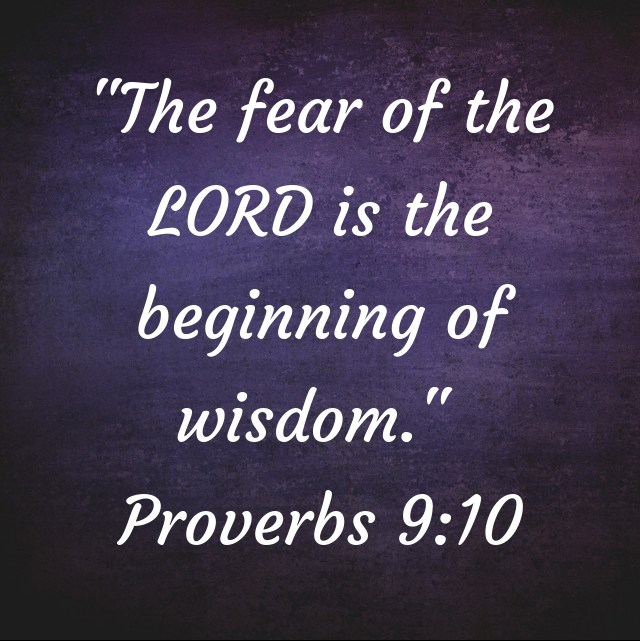
Having a true picture of God is the beginning of wisdom. Proverbs 9:10: “The fear of the LORD is the beginning of wisdom, and the knowledge of the Holy One is insight.”
We should fear God. We should be in awe of His wrath and His judgment. Yet, at the same time, we should have peace, knowing He is shielding us from wrath, sheltering us in His arms forever.
Hidden in Plain Sight

Because I write mystery/suspense/thrillers, I’m always doing research on technology like hidden cameras, spy drones, and everyday objects that can be used for surveillance. Do you know the very best place to hide something? Hide it in plain sight. People tend to overlook things that are right in front of them.
How many people look at a button on a shirt and think it could be a hidden camera? No one but a spy or a thriller writer, which is all the more reason why it’s the perfect spot for one.
But “hidden in plain sight” doesn’t just apply to spies and detectives and hidden cameras. There are all kinds of hidden words for us in Scripture—staring us right there in the face just waiting for us to discover them.
I recently discovered one of these hidden jewels in Jude. Jude? That’s right. No wonder I’ve overlooked it. How often do you read from the book of Jude? It’s the book just before Revelation, so small it doesn’t even have chapters.
Here’s a “hidden in plain sight” treasure from Jude 24-25: “Now to him who is able to keep you from stumbling and to present you blameless before the presence of his glory with great joy, to the only God, our Savior, through Jesus Christ our Lord, be glory, majesty, dominion, and authority, before all time and now and forever.”
There are several reasons why these verses got my attention, but here are just three of them: 1) God not only helps us as we struggle with sin, He’s “able to keep us from stumbling.” 2) When we appear before Him in His presence, He’ll present us blameless in His sight. 3) When he presents us blameless before His presence, he’ll do it “with great joy.”
Okay, here’s one more: So often, we think of Jesus as our Savior, and rightly so, for his sacrifice on Calvary “saved” us from the wrath of God we all deserve. Yet Jude 25 calls God the Father our Savior: “to the only God, our Savior . . .”
No wonder Jude ends his letter with a praise to Him that we give him “glory, majesty, dominion, and authority . . .”
There you go—a magnificent truth hidden in plain sight for you to treasure and enjoy.
Oh, the voices!

Voices! We hear voices each and every day. They tell us to order this, pay attention to that, go there, come here.
Other voices post on our Facebook page, our Twitter feed, our social media sites, wanting us to sign this, like that, watch that, play this.
Who merits our attention? Whose voice is the worthy voice?
A crippled old man appears in the gospel of John to answer these questions. (John 5:1-17).
He doesn’t have a name in the gospel, but everyone at the pool of Bethesda knew him. He’d been lying there for thirty-eight years, unable to take advantage of the pool’s healing properties. Then Jesus stopped by one day, and, in one instantaneous moment, He took care of the crippled man’s lifelong problem.
Following Jesus’ instructions, the Man Made Whole gathered up his bedroll and walked away. Later, when asked by the religious leaders what he thought he was doing carrying around his bed on a Sabbath, he told them he was doing what he’d been instructed to do by the man who’d healed him, by the man who had enough authority to make him whole again.
The Man Made Whole was carrying his bed—in defiance of the religious authorities—because he recognized someone who was able to give life to his withered limbs was someone with authority, someone worthy of his attention.
This same man, this Jesus of Nazareth, healed me one day. He healed me of a lifelong sin problem, a sickness so severe I was doomed for eternal destruction. He did so by taking sin’s disease on Himself and paying the price for it Himself. Now, he commands me to take up my life and live it for Him.
His voice is a voice worth hearing.
Listen to His words from the rest of John 5, “Truly, truly, I say to you, an hour is coming, and is now here, when the dead will hear the voice of the Son of God, and those who hear will live. For as the Father has life in himself, so he has granted the Son also to have life in himself.” (25-26)
I Can Do Anything

I love the story of the little girl whose mother found her crying in the kitchen. When her mother asked her what was wrong, she said, “I’m in the kitchen, but I still don’t know how to cook.” Her mother put her up on a kitchen stool and proceeded to help her bake some cookies. Later, as they munched on the delicacies, the little girl observed, “If I let you do it, I can do anything.”
There are times when I’m standing in the middle of life, and I suddenly realize I don’t know how to do it. That’s when I try to remember to do these three things. By doing so, I feel as if I can do anything.
1. Ask God to take over.
Not long ago there was a popular song entitled “Jesus Take The Wheel.” It’s almost comical to think of Jesus of Nazareth in a long white robe and dusty sandals sitting in the driver’s seat and tooling along the highway of life with me in the passenger seat. However, while the picture may be amusing, the concept is theologically sound. John 16:33, “I have said these things to you, that in me you may have peace. In the world you will have tribulation. But take heart; I have overcome the world.” You can have peace; He’s overcome all the obstacles. Trust Him.
2. Allow others to help you.
It’s an all-American ideal to “make it on our own” or to “act independently,” but, that’s not a Biblical concept. When Paul speaks of believers in Christ, he describes each one as part of a whole. In fact, he sees this whole as if it were a human body. He says in 1 Corinthians 12:14, “the body is not one member, but many.” When I ask help from a fellow believer, I’m functioning in the way God intended His Spiritual body on earth to function.
3. Accept the personality God gave you.
Are you an introvert? Then don’t expect to live as an extrovert. Do you enjoy talking? Then don’t expect to stay silent. God says in Psalm 17, “You are the apple of my eye,” and in Isaiah 44:2, “This is what the LORD says– he who made you, who formed you in the womb, and who will help you:” Perhaps the best passage for understanding the hand of God upon the life of every individual is Psalm 139. The message in these verses is that God made you the way you are, and you glorify Him when you accept this truth.
Ask God.
Allow Others.
Accept Yourself.
Remember this pyramid with God at the pinnacle. “I can do all things through Christ who gives me strength.” Philippians 4:13.


Book 8 in the Mylas Grey Mystery Series, Click on cover

Book 5 in the Silas McKay Suspense Series, Click on cover

Book 11 in the Titus Ray Thriller Series. Click cover

Book 7 in the Mylas Grey Mystery Series on Amazon. Click cover.

Book 4 in the Silas McKay Suspense Series on Amazon. Click cover.

Book 10 in the Titus Ray Thriller Series on Amazon. Click cover.

PREQUEL to the Mylas Grey Mystery Series on Amazon. Click cover

Book VI in the Mylas Grey Mystery Series on Amazon. Click cover

Book III in the Silas McKay Suspense Series on Amazon. Click cover

Book IX in the Titus Ray Thriller Series on Amazon. Click cover

Book V in the Mylas Grey Mystery Series on Amazon. Click cover

Book II in the Silas McKay Suspense Series on Amazon. Click cover

Book I in the Silas McKay Suspense Series, Available in Winter Deceptions

Ben in Trouble follows Four Steps Missed in the Titus Ray Thriller Series

Book IV in the Mylas Grey Mystery Series on Amazon. Click cover

Book VIII in the Titus Ray Thriller Series on Amazon. Click cover.

Ben in Charge, Follows Three Steps Away in the Titus Ray Thriller Series

Ben in Love, Follows Two Steps Forward in the Titus Ray Thriller Series

Two Days Taken:Book II in the Mylas Grey Mystery Series; Click cover.

Book VII in the Titus Ray Thriller Series on Amazon. Click on book cover

One Day Gone: Book I in the Mylas Grey Mystery Series; Click on Cover

NEWEST BOOK: Available on Amazon. Click on Cover.

Prequel to the Titus Ray Thriller Series is $0.99 on Amazon. Click book cover


Book I in the Titus Ray Thriller Series on Amazon. Click book cover


Book II in the Titus Ray Thriller Series on Amazon. Click on book cover

Book III in the Titus Ray Thriller Series on Amazon: Click on book cover


Book IV in the Titus Ray Thriller Series on Amazon. Click on book cover.


Book V in the Titus Ray Thriller Series on Amazon. Click on book cover.


Book VI in the Titus Ray Thriller Series on Amazon. Click on book cover.


Books 1 & 2 in the Titus Ray Series Available on Amazon. Click on cover.


 His Glory My Joy, a blog of Author Luana Ehrlich
You must be logged in to post a comment.